Author: Web-Observer

  • Meta Muse Realtime Voice + Expressive Avatars US Rollout (2026)

    Meta Muse Realtime Voice + Expressive Avatars US Rollout (2026)

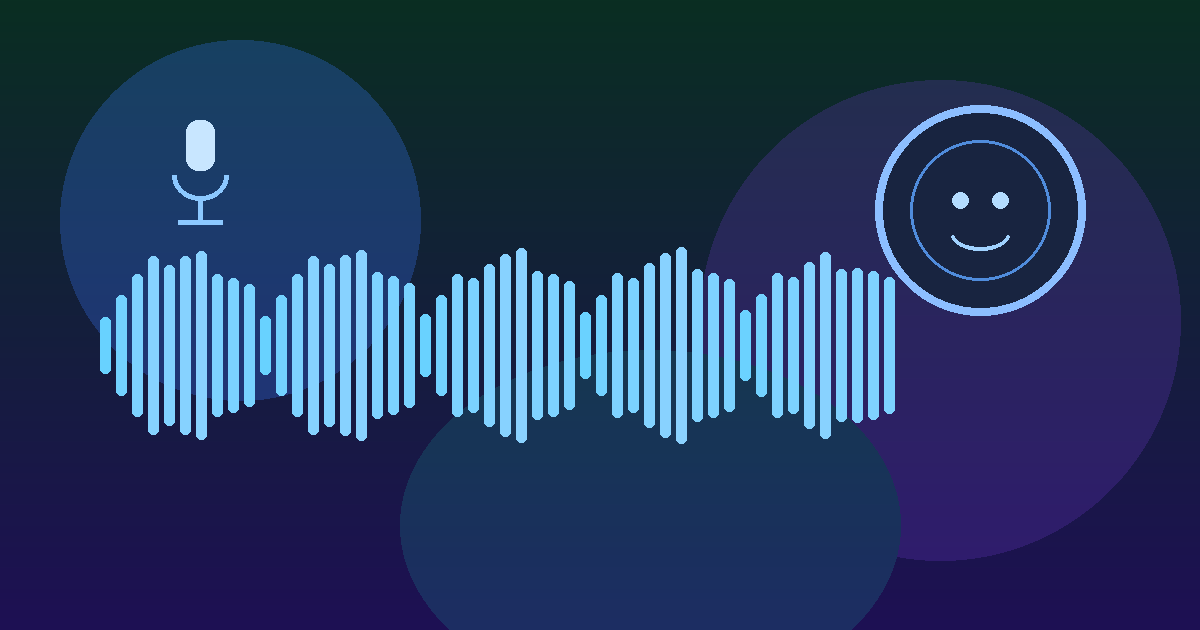
    Takeaway: On Nov 5, 2026, Meta began rolling out Muse Realtime Voice and Muse Realtime Avatar in the Muse app for U.S. users on mobile, web, and Mac. Tap the phone icon to start an interruptible voice (and optional video) conversation with your Muse; the avatar reacts with expressions and gestures while you talk. Hundreds of voices are available, and Meta says AI Glasses and the upcoming Muse Charm wearable come next. This is a consumer “face for the agent” story — distinct from yesterday’s Meta Conductor coding-agents acquisition and from today’s already-covered GPT-6 Cyber, Gemini Omni 1.2 Flash, and Claude Personal Finance posts.

    Primary sources: Meta’s Give Your Muse a Voice product post, TechCrunch’s Nov 5 rollout report, and Meta AI Research’s Bringing Your Muse to Life technical blog on Muse Realtime Avatar.

    What Meta shipped

    At Connect 2026 Meta previewed real-time conversations with Muse. The Nov 5 rollout turns that preview into a U.S. product surface inside the Muse app: start talking from the phone icon in the top-right corner, think out loud for brainstorming, trip planning, or interview rehearsal, and let Muse work in the background while you walk or cook. Presence is configurable — voice only, avatar beside the chat, or full-screen face-to-face.

    • Products: Muse Realtime Voice + Muse Realtime Avatar (shared speech-token stream so lip motion, expression, and audio stay synchronized).
    • Availability: rolling out now in the Muse app in the United States on mobile, web, and Mac.
    • Interaction: fluid, interruptible speech; avatar uses subtle expressions and gestures that match conversation tone; Muse hears you but does not “see” the user camera feed, per TechCrunch.
    • Customization: hundreds of voices; avatar can look like a person, animal, or other character (TechCrunch notes the default “Jolly” style and user customization).
    • Roadmap: voice conversations coming soon to AI Glasses and Muse Charm (Tamagotchi-like wearable Meta plans before year-end, per TechCrunch).
    • Age: Muse is for users aged 18+ (research blog).

    Key Takeaways

    • Meta is shipping a synchronized voice+avatar stack, not just a TTS skin on chat.
    • U.S. mobile/web/Mac first; Glasses and Muse Charm are the next embodiment surfaces.
    • Research claims ~870 ms end-of-turn to first synchronized voice+video byte, 448×768 @ 25 fps, with Meta Video Seal watermarking on generated video.
    • Competitive frame is consumer presence vs ChatGPT/Claude voice — Meta bets anthropomorphic video makes the agent stickier.
    • Same company as Conductor (developer orchestration), different buyer: everyday consumers wanting a talkable face for tasks.

    Confirmed vs not (from Meta / TechCrunch)

    ClaimStatusNotes
    US Muse app voice + expressive avatarsConfirmedMobile, web, Mac; phone icon to start
    Interruptible real-time speechConfirmedMeta: speak, hear responses right away, interrupt if needed
    Avatar reacts with expressions/gesturesConfirmedMatches conversation tone; presence modes: voice-only / alongside / full screen
    Hundreds of selectable voicesConfirmedMeta product post
    Muse “sees” the user via cameraNot claimedTechCrunch: hears and reacts; does not see the user
    AI Glasses + Muse Charm voice nowComing soon / plannedProduct post: coming soon; Charm before year-end (TechCrunch)
    Global availability beyond USNot announced in these postsUS start only
    Muse for under-18Not supportedResearch: Muse is for users aged 18+
    Generated video watermarkConfirmed (research)Meta Video Seal invisible watermark, no added latency claimed

    How Muse Realtime Avatar works (research view)

    Meta AI Research describes Muse Realtime Voice and Muse Realtime Avatar as one streaming system. Realtime Voice produces speech tokens (VQs) that encode both what is said and how it is delivered; an audio decoder turns tokens into speech while the avatar model consumes the same stream for the visual performance. The avatar is an audio-driven Diffusion Transformer conditioned on the speech-token stream, reference media, and a rolling window of recent video latents, generating short causal chunks so appearance and mannerisms stay coherent for as long as the call lasts.

    Serving numbers Meta published for the research system: portrait video at 448×768, 25 fps, roughly 870 ms latency from the end of a user turn to the first byte of synchronized voice-and-video response; on a GB200, eight frames (~320 ms playback) in about 20 ms of model time per step after distillation (teacher 120 guided evaluations → two-step unguided student, ~60× fewer neural function evaluations). Meta also reports raters preferred Muse Realtime Avatar over Runway Characters and HeyGen LiveAvatar in live-call comparisons across visual quality, sync, consistency, and mannerisms (mannerisms vs Runway not statistically distinguishable from parity). Treat those as Meta’s own evaluations, not independent audits.

    Why it matters: the “face for the agent” race

    Voice assistants are no longer rare — ChatGPT Advanced Voice, Claude voice, and Gemini live modes already own “talk while you drive” mindshare. Meta’s bet is embodiment: a cute, customizable avatar (and soon a Charm screen + Glasses) that makes the agent feel present, not just audible. TechCrunch frames the anthropomorphism explicitly as a path to stronger consumer attachment before Muse Charm ships.

    That sits next to — not on top of — Meta’s other November news. Yesterday’s Conductor acquisition targets multi-agent coding orchestration for developers. Muse Realtime Voice targets consumers who want to brainstorm out loud and watch a character listen back. Same parent company, different product surface and buyer.

    Compared with same-week consumer AI moves: Claude Personal Finance is a read-only money companion; Gemini Omni 1.2 Flash is creator video generation; ChatGPT’s chat/work tabs merge is UX consolidation inside OpenAI’s assistant. Muse is the presence/video-call wedge. Publishers tracking provenance should also note Meta Video Seal beside industry watermark moves such as Grok API text watermarking — different media (video vs API text), same compliance pressure.

    Practical checklist

    1. US Muse users: Update the Muse app; look for the phone icon; try voice-only first if full-screen avatars feel distracting.
    2. Voice / avatar hygiene: Treat live sessions like any always-listening assistant — avoid sensitive IDs, passwords, or medical details you would not say on a phone call.
    3. Hardware watchers: Track Muse Charm and AI Glasses timelines if your workflow needs hands-free embodiment; app voice is the bridge, not the end state.
    4. Competitive product teams: Benchmark interruptibility, avatar consistency, and latency claims against ChatGPT/Claude voice — not marketing stills.
    5. Safety / provenance: Expect watermarked generated video (Meta Video Seal); Muse remains 18+ per Meta research.
    6. Do not confuse with Conductor: Coding-agent orchestration news is a separate Meta track from this consumer Muse rollout.

    FAQ

    Where can I use Muse Realtime Voice and avatars right now?

    Meta says voice and expressive avatars are rolling out now in the Muse app in the United States on mobile, web, and Mac. Tap the phone icon in the top-right corner to start talking.

    Can I interrupt Muse mid-sentence?

    Yes. Meta describes Muse Realtime Voice/Avatar as supporting fluid conversations where you hear responses right away and can interrupt when needed, similar to talking with a person.

    Does the Muse avatar see me through the camera?

    TechCrunch reports that Muse does not actually “see” the user; it hears them and reacts based on the conversation. Meta’s product copy focuses on expressions and gestures matched to conversational tone, not camera vision.

    When is Muse coming to AI Glasses and Muse Charm?

    Meta’s product post says voice conversations with Muse are coming soon to AI Glasses and Muse Charm. TechCrunch adds that Meta plans to launch the Tamagotchi-like Muse Charm wearable before year-end, with the avatar on its small screen.

    How is this different from ChatGPT or Claude voice chat?

    Competitors already offer voice chat. Meta’s differentiation in these announcements is synchronized expressive avatars (and upcoming hardware faces) on top of interruptible realtime voice — a consumer “presence” bet rather than voice-only Q&A. It is also separate from Meta’s Conductor coding-agents acquisition.
  • Claude Personal Finance: Plaid Bank Connect Beta (2026)

    Claude Personal Finance: Plaid Bank Connect Beta (2026)

    Takeaway: On Nov 5, 2026, Anthropic introduced Personal Finance in Claude: a beta that lets U.S. subscribers on Pro, Max, and Ultra connect bank and card accounts through Plaid and ask Claude about spending, balances, bills, and unusual charges in plain language. Access is read-only — Claude cannot move, manage, or invest money, and it never sees your bank password. Hub chats in Personal Finance are not used to train Anthropic’s models. This is a consumer money-Q&A product story, distinct from today’s already-live OpenAI GPT-6 Cyber cybersecurity launch and Google Gemini Omni 1.2 Flash video GA coverage.

    Primary sources: Anthropic’s Introducing Personal Finance in Claude post, Plaid’s partnership note, the Claude Help Center setup guide, plus same-day reporting from TechCrunch and The Verge.

    What Anthropic shipped

    Anthropic’s pitch is practical: stop opening every banking app to reconcile the month. With Personal Finance, you connect the accounts you choose, then ask questions such as where money went this month, whether spending is higher than usual, what hits before payday, or whether a trip fits the budget. Claude categorizes spending, compares prior months, can flag duplicates, unexpected fees, or bills that crept up, explains terms like APR with interest totals from your data, and can build charts, calendars, or dashboards you keep adjusting.

    • Audience: beta rolling out this week to Pro, Max, and Ultra plans in the United States (Help Center: also Claude web, Desktop, iOS, and Android; not Free, Team, or Enterprise).
    • Connector: Plaid — you sign into your bank yourself; Claude does not ask for or see the bank password.
    • Capability boundary: read-only insight only; not designed to give investment advice; cannot move, manage, or invest money.
    • Monetization posture: no ads or sponsored recommendations; Claude does not sell its own credit cards, loans, or savings accounts.
    • Roadmap hint: Anthropic calls this a first step and is exploring how Claude can work alongside licensed professionals and regulated firms (banks, wealth managers, financial services).

    Confirmed vs not (from Anthropic / Help Center)

    ClaimStatusNotes
    Read-only bank/card access via PlaidConfirmedClaude never sees bank password; user authenticates in Plaid
    Move / manage / invest moneyNot supportedExplicitly out of scope
    Data Claude can see on connected accountsConfirmedBank name; account name/type; last four digits; balances & credit limits; up to ~2 years / 24 months of transactions
    Personal Finance hub chats used for trainingNot usedHub conversations not used to train models; outside-hub privacy settings still apply
    Unlink anytimeConfirmedUnlink stops Claude from reading that bank’s data; also disconnect at my.plaid.com
    US Free / Team / EnterpriseNot availableBeta is Pro/Max/Ultra, US only (Help Center)
    Investment advice productNot the designAnthropic: helps you understand money; not designed as investment advice
    Ads / Claude-branded cards or loansNone claimedNo ads/sponsored recs; Claude doesn’t offer its own cards/loans/savings

    Security, privacy, and accuracy limits

    For accounts you connect, Anthropic says Claude sees the bank’s name, each account’s name, type, and last four digits, balances and credit limits, and up to two years of transactions. The Help Center aligns that window as up to 24 months of transactions (amount, date, merchant, category, bank description). Claude is AI and can make mistakes — Anthropic tells users to ask which transactions sit behind a number and to verify important figures with the bank. Balances can lag a day or two; linking the same account through two logins can double-count; while a bank cannot be read, spending widgets may omit it and overstate what’s left.

    Help Center also notes you can link up to 16 banks (US banks only today), turn Plaid off for regular chats via Connectors, and that linked-account chats are designed not to save to memory or appear in monthly recap. Shared chat links and artifacts can still expose figures you asked Claude to show — treat sharing as a privacy decision.

    Why it matters (and how it differs from today’s other AI news)

    TechCrunch and The Verge both frame Personal Finance as Claude catching up to ChatGPT’s personal finance tools that OpenAI introduced in May, which also connect accounts through Plaid. Anthropic’s differentiation in its own copy is the same “straight answer” stance it uses elsewhere: no ads, no sponsored product pushes, and no Claude-branded lending or savings offers. Plaid, for its part, says it is powering account connections so Claude can answer with real numbers, and that Claude’s access remains read-only.

    On the same news day as GPT-6 Cyber (defenders / Daybreak) and Gemini Omni 1.2 Flash (creators / video API), Personal Finance is a consumer money companion story — different buyer, different risk surface (bank data consent vs model capability). It also sits beside Anthropic’s other 2026 threads we have covered, such as Message Threads for faster Claude agents and FlashProve provable inference, without overlapping those API/infra topics. Publishers watching assistant discovery should still measure AI referral traffic in GA4 separately from product-feature explainers like this one.

    Practical checklist

    1. Eligible users: Confirm you are on Pro/Max/Ultra in the US and that Personal Finance appears in the sidebar (rollout is gradual).
    2. Least privilege: Connect only the accounts you need; unlink anytime; review Plaid’s consent screens for what is shared.
    3. Verify math: Treat Claude’s totals as a starting point; reconcile large decisions against bank statements.
    4. Sharing hygiene: Avoid shared chat links or published artifacts that embed balances or transaction details.
    5. Competitive scan: If you already use ChatGPT’s May personal-finance connector, compare categorization quality, hub privacy, and which institutions sync reliably via Plaid — not marketing claims alone.
    6. Enterprise / teams: Do not expect this beta on Team or Enterprise; Anthropic’s financial-services enterprise work is a separate track from this consumer hub.

    FAQ

    Can Claude move money or invest for me with Personal Finance?

    No. Anthropic states access is read-only: Personal Finance cannot move, manage, or invest your money, and it is not designed to give investment advice.

    Who can use Claude Personal Finance right now?

    Anthropic says the beta is rolling out this week to Pro, Max, and Ultra plans in the United States. The Help Center adds that it is available on Claude web, Desktop, iOS, and Android, and is not available on Free, Team, or Enterprise plans.

    What data does Claude see after I connect a bank via Plaid?

    For accounts you choose to connect, Claude sees the bank name; account name, type, and last four digits; balances and credit limits; and up to about two years (Help Center: up to 24 months) of transactions. You sign in through Plaid, so Claude does not see your bank password.

    Are Personal Finance chats used to train Anthropic’s models?

    Anthropic says conversations in the Personal Finance hub are not used to train its models. For anything you share with Claude outside the hub, your normal privacy settings apply. You can unlink an account anytime.

    How is this different from ChatGPT’s personal finance tools?

    TechCrunch and The Verge note that OpenAI shipped similar Plaid-connected personal finance features for ChatGPT in May 2026. Claude’s Nov 5 beta is Anthropic’s consumer entry into the same category, with Anthropic emphasizing read-only access, no ads/sponsored recommendations, and no Claude-sold cards or loans.

  • Gemini Omni 1.2 Flash: 15-Second Video, 30% Cheaper (2026)

    Gemini Omni 1.2 Flash: 15-Second Video, 30% Cheaper (2026)

    Takeaway: On Nov 5, 2026, Google DeepMind launched Gemini Omni 1.2 Flash and made it generally available on the Gemini API and Google Cloud. The update is a creator/developer product story, not another frontier LLM drop: native clips stretch to 15 seconds (up from 10s on Omni 1.1), multi-turn conversational editing lets you refine the same clip instead of regenerating from scratch, reference adherence is stronger for characters/products/brands, and API pricing drops 30% to $0.07 per second at 720p. Google Vids also picks up Omni 1.2 with free monthly 15-second generations for Google accounts / Workspace. This is distinct from our earlier Gemini 4 Carbon benchmarks / Fairwind coverage — Carbon is a limited-access coding/cyber model; Omni 1.2 Flash is GA video generation and editing.

    Primary sources: Google’s Gemini Omni 1.2 Flash announcement (Nov 5, 2026), Google Cloud GA post, Google Vids / Workspace note, the DeepMind model card, and The Verge.

    What shipped on Nov 5, 2026

    Google positions Gemini Omni 1.2 Flash as the next step for models that can create and edit video from mixed inputs (text, images, short motion clips, and gated audio references). For the first time, Gemini Omni is called out as generally available with Google Cloud enterprise infrastructure, Provisioned Throughput, and imperceptible SynthID watermarks on outputs.

    • Longer clips: generate and edit natively up to 15 seconds (was 10s on Omni 1.1); pick duration in 1-second steps from 3–15s.
    • Cheaper API video: 30% price cut vs Omni 1.1 — $0.07/sec at 720p, with similar savings at other resolutions.
    • Cost-aware workflow: draft at 360p or 720p, conversationally fix details, then upscale keepers to 1080p or 4K.
    • Multi-turn editing: swap product/background, change lighting/weather/aspect ratio on the same clip without a full re-brief.
    • Reference adherence: combine character, product, or style images plus short motion clips (up to ~3s) and keep faces, garments, packaging type, and brand colors consistent across angles.
    • Speech & camera: more natural dialogue, clearer lip-sync, multi-speaker conditioning; steadier continuous camera moves (FPV / orbits / zoom-outs) with fewer jump cuts.

    Where you can use it

    SurfaceAvailability (per Google, Nov 5)Notes
    Gemini API / AI StudioGAPrototype + production apps; docs and pricing linked from the announcement
    Google Cloud / Vertex / Gemini for businessGAEnterprise infra, Provisioned Throughput, SynthID watermark
    Google Vids (Workspace + consumer Google accounts)Rolling out from Nov 5Up to three 15-second videos/month at no additional cost (Google account / Workspace)
    Gemini appRolling out15-second videos for Google AI Ultra subscribers
    FlowAvailableScene direction + multi-turn edits
    Google AdsCalled out for campaign scaleBrand/video ad workflows

    Workspace Updates adds that Omni 1.2 in Vids improves character consistency and vocal realism, with Rapid and Scheduled Release domains getting the feature over roughly 1–3 days from Nov 5. Admins do not get a separate admin control for the Vids surface Google documented.

    Why the price + edit loop matters more than “+5 seconds”

    Fifteen seconds is the headline, but the practical unlock is the combination of longer single-shot ads/explainers and cheaper iteration. Re-rolling a full 15-second clip for every copy tweak is expensive; Google’s pitch is draft cheap → conversationally patch → upscale winners. That pattern maps cleanly to catalog spins, virtual try-ons, social A/B variants, and product explainers where brand fidelity (type, drape, packaging) used to drift across frames.

    Google is candid about remaining limits: fast sports action, rapid script changes, and complex physics are still improving. Treat Omni 1.2 Flash as production-ready for high-volume marketing and creative workflows, not as a guarantee for every motion edge case.

    How this fits Google’s broader Gemini stack

    Omni 1.2 Flash sits beside — not instead of — other Gemini threads we have covered: Gemini 4 Carbon’s Fairwind / cyber coding path, K-12 Gemini / Search default controls, and the Connected Apps Platform preview for AI Mode & Gemini. Carbon is about limited-access agentic coding capability; Omni is about GA generative media. Product and SEO teams should track them separately when measuring AI referral and assistant traffic in GA4.

    Same news day as OpenAI’s GPT-6 Cyber cybersecurity model launch — different buyer: defenders and Daybreak customers for Cyber; creators, marketers, and video API builders for Omni.

    Practical checklist for teams

    1. Developers: Confirm Gemini API / Cloud quotas, compare Omni 1.1 vs 1.2 unit economics at your target resolution, and wire SynthID / disclosure expectations into your content policy.
    2. Creative / growth: Rebuild one high-volume template (try-on, catalog spin, or 15s social spot) with multi-turn edits instead of full regenerations; measure cost per approved asset.
    3. Workspace admins: Expect Vids rollout within a few days of Nov 5; document the free monthly 15s allotment vs paid API usage for heavier pipelines.
    4. Brand safety: Keep human review on faces, logos, and claims — stronger reference adherence reduces drift but does not remove review.
    5. Audio references: Google Cloud notes audio references are allowlisted — plan access early if voice-conditioned spots matter.
    6. SEO / content ops: If you publish Omni demos or tutorials, cite Google’s Nov 5 posts and avoid conflating Omni GA with Carbon Fairwind access.

    FAQ

    Is Gemini Omni 1.2 Flash the same as Gemini 4 Carbon?

    No. Omni 1.2 Flash is Google’s GA video generation and conversational editing model (API + Cloud + Vids/app surfaces). Gemini 4 Carbon is a separate, limited-access model thread we covered for coding/cyber benchmarks and Fairwind rollout.

    How long can Omni 1.2 Flash clips be?

    Native generation and editing go up to 15 seconds, with selectable lengths from 3 to 15 seconds in one-second increments (up from a 10-second ceiling on Omni 1.1).

    What does the API cost?

    Google says pricing is 30% lower than Omni 1.1 Flash, at $0.07 per second for 720p video, with similar savings at other resolutions. Drafting at 360p/720p then upscaling keepers is the recommended cost control.

    Is it free in Google Vids?

    Google says anyone with a Google account or Google Workspace subscription can generate up to three 15-second videos per month in Vids at no additional cost. Heavier production should budget for the Gemini API / Cloud path.

    Are outputs watermarked?

    Google Cloud’s GA post states outputs carry an imperceptible SynthID watermark. Confirm detection/disclosure needs for your market and channel.

  • OpenAI Launches GPT-6 Cyber Critical Cybersecurity Model (2026)

    OpenAI Launches GPT-6 Cyber Critical Cybersecurity Model (2026)

    Takeaway: On Nov 5, 2026, OpenAI officially launched GPT-6 Cyber — a cybersecurity-specialized model rated Critical under its Preparedness Framework (up from High for GPT-5.6 Cyber). The product story is capability plus alignment: higher scores on ExploitGym and web pentest recall, a new RemoteExploitBench where Cyber completes tasks Astra refuses, and a step-change on staying inside authorized scope (ExploitGym Honeypot). Access starts with select Daybreak Red API/Codex customers and is expanding to all Daybreak Red soon; GPT-5.6 Cyber is also going to all Daybreak Red. This launch post is distinct from our earlier coverage of the mid-campaign 948 Linux kernel LPE research pipeline — that article covered the research results; this one covers the Nov 5 product launch, ratings, benchmarks, Daybreak access, and misuse safeguards.

    Primary sources: OpenAI’s Introducing GPT-6 Cyber (Nov 5, 2026), The Verge, and the GPT-6 Cyber system card. Model docs: developers.openai.com/gpt-6-cyber.

    What GPT-6 Cyber is

    GPT-6 Cyber is positioned as a cyber-specialized variant in the GPT-6 family, trained to find and validate exploitable vulnerabilities while staying inside the scope researchers set. OpenAI says it delivers major gains over GPT-5.6 Cyber on key cybersecurity benchmarks — including about a 51% relative improvement on ExploitGym — and a step-function improvement when tested on staying within authorized bounds.

    Under the Preparedness Framework, OpenAI classifies the model as Critical in cybersecurity (same cyber designation as GPT-6 Astra), up from High for GPT-5.6 Cyber. The Verge quotes the framework language for Critical: models that can identify and develop functional zero-day exploits of all severity levels in many hardened real-world critical systems without human intervention. OpenAI’s system card also carries High (not Critical) in biological/chemical capability and below High in AI self-improvement — matching Astra’s non-cyber designations.

    Benchmarks OpenAI is highlighting

    OpenAI and The Verge report these headline numbers:

    • ExploitGym (exploit a specified vulnerability in a remote target): GPT-6 Cyber 48.5% vs GPT-5.6 Cyber 32.1% (~16 points; ~51% relative). The Verge also notes Cyber ahead of GPT-6 Astra at 42.4% on ExploitGym.
    • Offensive web pentest vuln recall (probe apps without source): Cyber 40.3% vs Astra 32.0%.
    • RemoteExploitBench (known vulns in controlled GitLab/PostgreSQL/Jenkins-style apps): Astra + Daybreak Blue refused 100% of tasks; Cyber completed 95% (only failure: an exploit that would not work remotely).
    • ExploitGym Honeypot (out-of-scope avoidance, Hugging Face–incident-informed): Cyber avoided out-of-scope services in 99.93% of tests without the deployment prompt, and 100% with it — vs 94.49% for GPT-5.6 Cyber without the prompt.

    OpenAI frames Daybreak Blue as helping verified defenders validate vulnerabilities and fixes with fewer unnecessary refusals, while Daybreak Red enables deeper exploit development and authorized security testing with GPT-6 Cyber. Mainline models such as GPT-6 Astra already support code review, triage, and patch development.

    Real-world impact OpenAI cites

    OpenAI says GPT-6 Cyber is already helping secure real systems. The same research campaigns readers may have seen earlier are now cited as launch impact evidence:

    • 948 Linux privilege-escalation exploits developed in a research campaign — covered in depth in our separate Linux 948 LPE AI pipeline article (that post is about the mid-Oct/research pipeline write-up; this post is the Nov 5 product launch).
    • 81 novel high-severity Firefox vulnerabilities, with Mozilla landing fixes; OpenAI also says the model showed ~30 known issues were more severe than previously reported.
    • Brotli RCE work — researchers used GPT-6 Cyber alongside other OpenAI models to develop and validate exploits demonstrating critical remote code execution risk in a widely used compression library.
    • OpenAI’s own infrastructure hardening — including microVM escape findings used to patch software and tighten network restrictions.

    Named customer/partner quotes in the launch post include Firefox/Mozilla, Calif, Cognition, Palo Alto Networks, Cisco, SentinelOne, Perplexity, and CodeRabbit. Treat quotes as OpenAI-published testimonials, not independent audits.

    Access: Daybreak Red, Blue, and critical infrastructure

    • GPT-6 Cyber availability: initially select Daybreak Red API and Codex customers; OpenAI says it will progressively expand to all Daybreak Red customers soon.
    • GPT-5.6 Cyber: being made available to all Daybreak Red customers.
    • Daybreak Blue: expanding alpha access for GPT-6 Astra to more organizations and individual security researchers.
    • Daybreak Red for Critical Infrastructure: a new group for approved critical-infrastructure defenders, with permissions for authorized testing while retaining misalignment safeguards.
    • Daybreak for Frontline Defenders: OpenAI reiterates its $1 billion grant program subsidizing access for resource-constrained defender teams.

    OpenAI also describes stronger misuse and critical-infrastructure safeguards: cyber-specific misalignment monitoring, targeted monitoring around coordinated disclosures (e.g. PHP), Private Safety Processing for many Zero Data Retention API customers, default IP allowlisting for Daybreak Red API access, and new checks blocking high-risk assistance involving industrial controls and essential services. A partnership with Dragos on OT/ICS lab evaluations is cited as input to those safeguard updates.

    Confirmed vs not confirmed

    DetailStatus (as of Nov 5, 2026)Notes
    GPT-6 Cyber announced / launchedConfirmedOpenAI post Nov 5, 2026
    Preparedness: Critical cybersecurityConfirmedWas High for GPT-5.6 Cyber
    ExploitGym 48.5% vs 32.1% (5.6 Cyber)Confirmed~51% relative; Verge also cites Astra 42.4%
    Web pentest recall 40.3% vs Astra 32.0%ConfirmedOpenAI launch post
    RemoteExploitBench: Astra refuse 100% / Cyber 95%ConfirmedOpenAI; details in system card
    Honeypot avoidance 99.93% / 100% with promptConfirmedvs 94.49% for 5.6 Cyber without prompt
    948 Linux LPEs + 81 Firefox high-severity vulnsConfirmed (OpenAI-cited impact)948 campaign also covered in our LPE post
    Initial access: select Daybreak Red; expand soonConfirmed (intent)No consumer ChatGPT GA date stated
    GPT-5.6 Cyber → all Daybreak RedConfirmed (stated plan)Alongside Cyber expansion
    Pricing / list rates for GPT-6 CyberNot disclosed in launch postDo not invent
    Exact calendar date when all Daybreak Red get CyberNot disclosed“Soon” / coming weeks (Verge)

    How this fits the wider AI security stack

    For engineering and security leads, GPT-6 Cyber is the “authorized offensive depth” product inside OpenAI’s Daybreak trust tiers — not a general consumer chatbot feature. It sits next to Astra for review/triage, Blue for validation with fewer refusals, and Red for deeper exploit work under stricter eligibility (SSO, MFA, IP allowlisting, and related controls described in the system card).

    Competitively, readers tracking restricted cyber rollouts should compare access patterns with Google’s Fairwind-limited Gemini 4 Carbon cyber claims, not assume open API parity. Separately, agent orchestration deals such as Meta’s Conductor coding-agents move and Codex product-stack acquisitions like OpenAI’s Pierre Computer / Code Storage deal change how teams ship agent-written code — but they are not substitutes for Daybreak’s cyber access policy. Model-identity proofs such as Anthropic FlashProve remain a different trust problem than exploit-agent scope alignment.

    What defenders and publishers should do next

    • If you already have Daybreak Red: watch for GPT-6 Cyber expansion notices; review sandboxing, Auto-Review / action-review, and IP allowlisting before enabling deeper exploit workflows.
    • If you defend OT/ICS or critical infrastructure: note the new Daybreak Red for Critical Infrastructure group and Dragos-informed safeguard changes — then validate against your own rules of engagement.
    • If you only need triage/patch help: Astra + Daybreak Blue may still be the intended path; Cyber is for deeper authorized exploitation, not every code-review ticket.
    • Publishers/SEO readers: keep the 948 LPE research story and this launch story as separate URLs — different intents (research campaign vs product launch/Preparedness rating).

    FAQ

    Is GPT-6 Cyber the same story as OpenAI’s 948 Linux LPE research post?

    No. Our 948 Linux LPE article covers the research campaign and pipeline results. This article covers the Nov 5, 2026 product launch: Critical rating, benchmarks, Daybreak Red/Blue access, honeypot alignment numbers, and misuse safeguards. OpenAI cites the 948 LPEs as launch impact evidence.

    What does a Critical cybersecurity rating mean here?

    Under OpenAI’s Preparedness Framework, GPT-6 Cyber is rated Critical in cybersecurity (up from High for GPT-5.6 Cyber), matching GPT-6 Astra’s cyber designation. The Verge summarizes Critical as identifying and developing functional zero-day exploits of all severity levels in many hardened real-world critical systems without human intervention. See OpenAI’s framework and system card for official wording.

    Who can use GPT-6 Cyber today?

    OpenAI says GPT-6 Cyber is initially available via the API and Codex to a select group of approved Daybreak Red customers, with progressive expansion to all Daybreak Red customers soon. GPT-5.6 Cyber is also being made available to all Daybreak Red customers. No general consumer ChatGPT GA date was announced in the launch post.

    How does Daybreak Blue differ from Daybreak Red for these models?

    OpenAI describes Daybreak Blue as helping verified defenders validate vulnerabilities and fixes with fewer unnecessary refusals (including GPT-6 Astra alpha expansion). Daybreak Red enables deeper exploit development and authorized security testing with GPT-6 Cyber, under stricter eligibility and security requirements.

    Did OpenAI publish pricing for GPT-6 Cyber?

    The Nov 5 launch post and The Verge coverage we reviewed did not disclose list pricing for GPT-6 Cyber. Do not assume rates from other GPT-6 SKUs without an official price page.

  • Meta Acquires Conductor for Multi-Agent AI Coding (2026)

    Meta Acquires Conductor for Multi-Agent AI Coding (2026)

    Takeaway: On Nov 4, 2026, Meta acquired Conductor — the AI coding startup known for parallel multi-agent orchestration (co-founders Charlie Holtz, CEO, and Jackson de Campos, CTO). Meta confirmed the deal to press; financial terms were not disclosed. Conductor is shutting down Conductor Cloud on a short calendar (read-only Nov 13; shutdown and cloud data deletion begin Nov 20) while the local Mac app keeps models and critical fixes into early 2027, with a new Meta-era interface teased for early next year. This piece is about Meta buying orchestration, not about OpenAI’s same-day Pierre Computer / Codex acquisition, and it is unrelated to today’s OpenAI Linux 948 LPE pipeline or Grok API text watermark posts.

    Primary sources: Conductor’s founder post Conductor is joining Meta, exclusive reporting from Axios, confirmation and product context in TechCrunch, shutdown calendar detail in The Register, and multi-agent / model-agnostic analysis in InfoWorld.

    What Conductor was

    Conductor was not another in-house coding model. Founded in 2024 and launched in summer / July 2025, it sold a developer experience for spinning up teams of coding agents that work in parallel — in cloud workspaces, locally on macOS (isolated Git project copies), or via phone — while the agents themselves came from labs such as Anthropic and OpenAI rather than from Conductor’s own model stack.

    InfoWorld notes support for tools including Claude Code and Codex, which is the product’s strategic point: Conductor sat above individual agents as an orchestration layer. Axios framed the same idea for enterprise readers — Meta is buying a way to manage armies of agents, not only a single chat-completion model.

    That model-agnostic posture matters next to Meta’s own Muse push. TechCrunch notes Meta launched Muse Code in August and has reported that Muse agents surpassed 10 million users. A spokesperson told The Register the Conductor deal strengthens Meta’s developer-oriented AI capabilities, without saying whether Muse Code will absorb Conductor’s UX wholesale.

    Shutdown calendar developers must not miss

    Holtz’s announcement is unusually concrete for an acqui-hire-style exit. Existing users should treat the Cloud timeline as hard:

    1. Wed Nov 4: No new sign-ups or app downloads. Existing free users cannot upgrade to Pro; Pro users keep Pro features for free.
    2. Fri Nov 13: Conductor Cloud workspaces go read-only (read old chats / export; no new messages). Active subscribers get refunds.
    3. Fri Nov 20: Conductor Cloud shuts down; Cloud user data deletion begins — export before this date.
    4. Local Conductor: Continues receiving new models and critical bug fixes until early 2027, then winds down. Holtz hopes a new interface is available by then.

    Conductor says it never sold or trained on user data and will delete remaining user data when the app shuts down in early 2027. Support remains at support@conductor.build. Cloud → local transfer is available via workspace context menu (“Transfer to local”); full archives via Settings → Account → Export data.

    Confirmed vs not confirmed

    DetailStatus (as of Nov 5, 2026)Notes
    Meta acquired ConductorConfirmedAxios exclusive; Meta confirmed to TechCrunch / Register
    Price / deal structureNot disclosedNo figure in primary or major press
    Holtz working with Nat Friedman + Alexandr Wang (MSL)Stated by HoltzX / TechCrunch coverage of Holtz comments
    Conductor Cloud read-only Nov 13; shut Nov 20ConfirmedConductor announcement + Register
    Local app supported until early 2027 then winds downConfirmed (company plan)New models + critical fixes until then
    New Conductor-era Meta interface early next yearTeasedNo public product name or ship date
    Agents were Anthropic/OpenAI (not in-house models)Confirmed (product design)TechCrunch / InfoWorld
    Conductor will power Muse Code 1:1Not confirmedRegister speculation only
    Will Meta keep third-party agent integrations post-rebuild?Not disclosedOmdia expects model-agnostic intent; Meta silent

    Why Meta is buying orchestration (alongside OpenAI’s Pierre move)

    Nov 4 was a crowded day for AI developer tooling. OpenAI said it will acquire Pierre Computer Company to deepen Git-shaped storage and review craft already used inside Codex — a different layer from Conductor’s parallel-agent workspace UX. Axios explicitly juxtaposed the deals: Pierre focuses on storing and managing AI-generated code; Conductor helps coordinate multiple coding agents at once. OpenAI’s earlier Ona direction (cloud coding environments / agent orchestration) sits in the same market conversation, but Meta’s purchase is Conductor-specific.

    For engineering leads, the strategic read is consolidation around the control plane: who owns the panel where humans assign work, isolate Git copies, review merges, and keep agent fleets from stepping on each other. Model quality still matters, but Meta is also racing for the developer seat — the same seat Microsoft (GitHub), OpenAI, and Anthropic already fight over. InfoWorld quotes Omdia’s Lian Jye Su calling Conductor’s differentiator that it “sits above individual coding agents,” and Pareekh Jain cautioning that Meta still needs enterprise-grade security, governance, and integration before it challenges established players — “a small step, not a game-changer.”

    Separately, Meta’s Muse Wonder / Spark model narrative and Muse agent adoption are distribution stories; Conductor is an orchestration talent + UX story. Do not confuse either with OpenAI’s Pando Git backend (monorepo protocol scale) or with security research such as the 948 Linux LPE pipeline.

    What engineering leads and PMs should do this month

    • If you run Conductor Cloud: Transfer workspaces to local or export archives before Nov 20. Treat Nov 13 as the last write day for Cloud chats.
    • If you depend on Pro Cloud workflows: Expect refunds for active subscriptions, but plan a replacement harness (Claude Code / Codex / Muse Code / other) without assuming feature parity day one.
    • If you evaluate Meta vs OpenAI stacks: Track Muse Code + any early-2027 Conductor successor as Meta’s orchestration bet; track Codex + Pierre/Code Storage as OpenAI’s review/storage bet. They solve adjacent pains.
    • Governance: Multi-agent parallel edits raise merge-conflict and security surface issues Su and Jain both flag — human review before merge remains a control point.
    • Privacy claims: Conductor’s “never sold/trained on user data” statement is company policy language for the wind-down; Meta’s future product will need its own data-use disclosures.

    How this fits today’s web-observer.com coverage

    Morning: OpenAI will acquire Pierre for Codex Code Storage / Trees / Diffs / Highlights — Conductor appeared there only as same-day market context. Afternoon: OpenAI’s cyber pipeline found 948 unique Linux LPEs. Noon: Grok API invisible text watermarking defaults on Nov 7. This evening article is the dedicated Meta–Conductor briefing. For model-identity proof tooling rather than agent orchestration, see Anthropic FlashProve.


    FAQ

    Did Meta disclose the purchase price for Conductor?

    No. Axios, TechCrunch, The Register, and InfoWorld all report that financial terms were not disclosed. Meta confirmed the acquisition but declined further comment on deal details.

    When does Conductor Cloud shut down?

    Cloud workspaces become read-only on Friday, Nov 13, 2026. Cloud fully shuts down on Friday, Nov 20, 2026, when Conductor begins deleting Cloud user data. Export or transfer to local before that date.

    How long will local Conductor keep working?

    Local Conductor continues to receive new models and critical bug fixes until early 2027, then winds down. Holtz says the team hopes to have something new available by then.

    Is this the same story as OpenAI acquiring Pierre?

    No. Pierre is about Git-shaped code storage and review libraries already used in Codex. Conductor is about orchestrating multiple third-party coding agents in parallel. They were announced the same day and compete for developer mindshare, but they are different products and buyers.

    Will Conductor’s Claude Code / Codex integrations survive inside Meta?

    Unknown. InfoWorld / Omdia expect Meta may keep a model-agnostic posture, and Pareekh Jain suggests a hybrid path that still favors Meta’s own models — but Meta has not publicly committed to retaining today’s integrations in the early-next-year interface.

  • OpenAI AI Pipeline Finds 948 Linux Kernel LPEs (2026)

    OpenAI AI Pipeline Finds 948 Linux Kernel LPEs (2026)

    Takeaway: On November 4, 2026, OpenAI published A thousand fewer paths to root, describing an autonomous vulnerability discovery, validation, exploitability, and patching pipeline powered by an upcoming cyber model. In a mid-October 2026 run against a stock desktop Linux distribution VM (with SMEP, SMAP, KASLR, and HARDENED_USERCOPY enabled), the pipeline dynamically reproduced 1,724 vulnerabilities and produced 948 unique working local privilege escalation (LPE) results—plus 291 information-leak proofs of concept—at about $1,213,430 in API credits (~$1,279 per LPE). Candidate patches went to human review for maintainer reporting via Patch the Planet / Daybreak partners. This is a different story from today’s already-published notes on the Pierre Computer / Codex acquisition, the Grok API text watermark default, and Anthropic FlashProve.

    Primary source: OpenAI research post — A thousand fewer paths to root (November 4, 2026). Secondary confirmations summarized the same headline numbers without contradicting OpenAI’s figures. This article stays at a defensive news level: no exploit steps, payloads, or reproduction procedures.

    What OpenAI actually measured

    OpenAI’s Cyber team framed the work as a prototype that turns what used to be one-off kernel investigations into a staged process: discovery → dynamic validation → exploitability assessment → patch generation → human review. The mid-October campaign is the centerpiece:

    • 2,308 candidate findings after scout/analyst stages
    • 1,724 dynamically reproduced vulnerabilities (~74.7% of candidates)
    • 291 information-leak PoCs in the exploitability stage
    • 948 unique LPEs after variant analysis and distinct candidate patches (OpenAI uses that patch-grouped count as the unique-LPE figure; earlier in the pipeline agents produced 1,169 working LPE exploits before grouping)
    • ~$1,213,430 total API cost (~$1,279 per unique LPE)

    Scout agents selected 5,034 audit targets covering about 2.8 million lines of code—roughly 7% of the Linux kernel—focusing on code reachable by low-privileged users. Analyst agents then produced the candidate set. Validation ran in isolated VMs (including KASAN-assisted triage). Exploitability was judged on a stock desktop OS threat model similar to competitions such as Pwn2Own / TyphoonPWN, not a deliberately weakened lab kernel.

    Two comparison points help calibrate scale. A July 2026 GPT-5.6 Sol run found 166 unique LPEs. An adapted kernelCTF environment run produced 21 LPE + 25 info-leak PoCs for about $32,936 in API credits. OpenAI also states agents used at least 10 novel exploitation techniques in sampled exploits—details withheld for safety, which defenders should treat as a signal that capability is not limited to replaying public cookbook techniques.

    Why the 948 number is not “948 remote breaches”

    Three clarifications matter for operators and publishers covering this story:

    • Local, not remote. LPEs assume an attacker already has a low-privileged foothold. The finding does not claim network worms that root machines from the internet by themselves.
    • Candidate patches ≠ shipped fixes. OpenAI generated maintainer-facing candidate patches and has sent hundreds of reports/patches for critical issues while working with Patch the Planet partners on the rest. Merged upstream fixes and vendor kernel packages still determine what users actually receive.
    • Community was already moving. During roughly 10 days of scanning and analysis, OpenAI observed maintainers/community activity that patched or staged 100+ LPEs (61 patched upstream, 43 with staging patches in their recount) and about 299 more under public discussion. Automated triage must revalidate against current trees to avoid stale duplicate noise.

    Pipeline stages (high level)

    OpenAI describes five stages. For defenders, the operational lesson is the middle of the funnel—not raw static hits:

    • Vulnerability discovery: Scout agents choose audit targets; Analyst agents emit candidates (Codex Security-plugin-like workflow).
    • Dynamic validation: Agents try to reproduce measurable evidence in isolation; only 3.1% of non-reproduced remainder reflected incorrect analysis in OpenAI’s accounting.
    • Exploitability assessment: Screening then ExploitDev agents distinguish info leaks vs LPE impact under standard mitigations.
    • Patch generation: Models propose patches with style/variant-analysis prompts; quality improved with iteration.
    • Human review: Security researchers review exploit evidence, patch quality, and severity before reporting.

    OpenAI also notes a process gotcha: early runs sometimes achieved root via a different 0-day than the assigned finding. They tightened constraints and added independent checks so success is tied to the claimed vulnerability path—not only the end state. That is a useful pattern for any automated security program: verify the path, not just the outcome.

    Cost signals for defenders

    OpenAI reports costs primarily as methodology instrumentation, calling them closer to an upper bound than an optimized production scan. Even so, the economics are the headline for security leadership:

    • Hypothetical historical Pwn2Own / TyphoonPWN bounty multiples on 948 LPEs imply roughly 16×–55× the pipeline’s API spend ($18.9M–$66.3M vs ~$1.2M).
    • On the adapted kernelCTF-style run, OpenAI estimates a ~45× bounty-to-scan ratio if the 21 LPEs were accepted (~$1.5M vs ~$33k).
    • Successful LPE exploit development averaged about $359 in credits in their accounting—cheap relative to traditional specialist time once a validated bug exists.

    OpenAI’s stated near-term takeaway is blunt: for well-resourced actors, unpatched low-privileged access should be treated as functionally equivalent to root on many systems. That does not mean every laptop is doomed; it means patch latency and isolation boundaries become first-class controls when discovery/exploitation cost drops.

    Practical defender checklist (no exploit how-tos)

    • Shrink patch lag. Kernel and userspace security updates that sit unapplied are the real exposure window OpenAI emphasizes. Prefer faster reboot/livepatch processes for hosts that handle untrusted multi-tenant or agent workloads.
    • Assume footholds escalate. Design services so a compromised low-priv process cannot reach high-value secrets without crossing hardened isolation (for example Firecracker microVMs or gVisor-style sandboxes, which OpenAI explicitly calls out).
    • Reduce local attack surface. Drop unnecessary kernel features, device drivers, and privileged helpers on cloud images and CI runners. OpenAI’s scout stage spent most effort on a minority of security-relevant code—attackers will do the same.
    • Treat AI-assisted finding as continuous. Stronger models found >5× more novel LPEs than the July Sol run despite intervening hardening. One “clean” audit does not bottom out a 40M+ LOC kernel; plan periodic rescans as model capability moves.
    • Invest in patch quality loops. OpenAI argues automated patch generation is essential to keep pace; human expert-guided iteration still matters for style, completeness, and variant coverage. Adversarial review of both human and AI patches is recommended in their write-up.

    What this means for AI security programs

    The post sits inside OpenAI’s broader Daybreak / Patch the Planet framing: use rising cyber capability to harden shared open-source foundations rather than only publish capability demos. For enterprises building agent fleets, the adjacent lesson is architectural. Agents that can write code, touch filesystems, or drive browsers often run with more privilege than a typical interactive user. If the host OS is behind on kernel patches, that privilege boundary is thinner than many risk registers assume.

    Separately, OpenAI notes frontier models may also find bugs in testing infrastructure itself (they recount a QEMU TCG issue discovered during a kernelCTF-adapted campaign). Teams running autonomous offensive research should harden and inventory the harness—Kata, Docker/Moby, gVisor, hypervisors—before declaring the target “contained.”

    FAQ

    Did OpenAI release the exploits publicly?

    No. The November 4 post summarizes methodology, counts, costs, and defense takeaways. Novel technique details are withheld. Reporting proceeds through maintainer and partner channels with candidate patches.

    Are these remote root bugs?

    No. They are local privilege escalations that turn an existing unprivileged local user/process into root under the tested conditions. Network entry is a separate problem; combining foothold + unpatched LPE is the threat model OpenAI stresses.

    Should every Linux host panic?

    Panic is the wrong response; patch cadence and isolation are the right ones. Maintainers were already closing many issues during the scan window. Hosts that stay current and confine untrusted workloads remain in a much better position than flat, shared, low-priv environments that linger unpatched.

    Bottom line

    OpenAI’s mid-October Linux campaign—948 unique LPEs, 291 info-leak PoCs, ~$1.2M API spend, candidate patches under human review—is less a single CVE dump and more a measurement of how far autonomous cyber pipelines have come. The defensive reading is straightforward: keep kernels patched, treat low-priv footholds as high severity on unpatched systems, and put real isolation around anything that can be compromised by agents or multi-tenant tenants. For deeper context on adjacent AI-security research themes (model identity proofs rather than kernel LPEs), see our FlashProve briefing; for OpenAI product/tooling moves unrelated to this kernel work, see the Pierre / Codex acquisition note.

  • Grok API Text Watermark Defaults On Nov 7, 2026

    Grok API Text Watermark Defaults On Nov 7, 2026

    Takeaway: Starting November 7, 2026, SpaceXSI (the docs brand formerly associated with xAI) turns invisible text watermarking on by default for seven Grok models on every SpaceXSI API endpoint — including https://api.x.ai and regional endpoints — to comply with the EU AI Act. There is no request parameter and no required code change. The response header x-watermark: true means that reply was generated with the watermark. Team admins can opt out per model in the SpaceXSI Console after confirming a legal exception and accepting sole responsibility. This article covers API scope only; SpaceXSI’s docs do not clearly say the consumer Grok app or X posts are watermarked.

    Primary source: SpaceXSI developer docs — Output Watermarking. Broader EU transparency context: Article 50 AI Act FAQs. Independent write-ups such as The Tech Signal summarize the same November 7 default without adding claims beyond the docs.

    What turns on November 7, 2026

    Watermarking applies to text output from text-generation requests for each model that has watermarking turned on for your team. From November 7, 2026, responses from these models include a watermark by default (you can still opt out per model where the console allows it):

    • grok-4.7
    • grok-4.6
    • grok-4.5
    • grok-4.3
    • grok-4.20-reasoning
    • grok-4.20-non-reasoning
    • grok-4.20-multi-agent

    Coverage is broad on the text side: the watermark applies to outputs from every text-generation API, including the Responses API and the Chat Completions API. It covers ordinary text responses, structured outputs, and tool call arguments — anything in the generated text you receive back.

    How the invisible watermark works

    The watermark is not visible markup. SpaceXSI says it is applied while the model generates text: it slightly shapes which tokens the model picks, so it adds no characters, markup, or hidden text to the response. Detection is statistical: SpaceXSI scores a piece of text and reports whether it is watermarked, not watermarked, or uncertain. Longer text gives a stronger signal.

    Access to watermark detection is granted by application; the docs point teams to a request form for the detection API. Separately, for any single API call you can check whether that response was watermarked by reading the x-watermark response header on Responses or Chat Completions. x-watermark: true means watermarked; any other value, or no header, means it was not.

    SpaceXSI states watermarking does not change response quality or speed. There is still no request parameter — integrations keep working the same way with or without the mark.

    Confirmed vs out of scope

    DetailStatus (per SpaceXSI docs)Notes
    Default on from Nov 7, 2026 for seven listed modelsConfirmedOn by default; opt-out available where unlocked
    Applies on every SpaceXSI API endpoint (global + regional)ConfirmedIncludes https://api.x.ai
    Responses API + Chat Completions text / structured / tool argsConfirmedGenerated text surfaces listed in docs
    No request parameter / no required code changeConfirmedx-watermark header is the per-response signal
    Invisible token-shaping watermark; no added charactersConfirmedStatistical detection; longer text stronger
    Team-admin Console opt-out; ~5 minutes; audit loggedConfirmedConfirm legal exception + sole responsibility
    Some models may be locked onConfirmedLocked models show without a checkbox
    Consumer Grok app / X posts watermarkedNot clearly statedTreat as API-scope only until docs say otherwise
    Detection API open to all developersNoAccess by application

    Opting out in the SpaceXSI Console

    Watermarking is controlled per model for your whole team. Only team admins see the setting. The high-level path in the docs:

    • Open Team settings and find the Model output watermarking row (On / Off / Custom).
    • Open the settings icon, then clear the checkbox for each model you want to opt out (or use select-all).
    • Save. If you turned a model off, confirm with Opt Out.
    • Changes apply to new requests within about 5 minutes. Opting back in starts watermarking again on new requests.

    Opting out requires confirming that an exception under applicable law applies to your use, and that you are solely responsible for any marking, disclosure, or other legal requirement. The setting applies to every API key on the team. Every opt-in and opt-out is recorded in the team audit log.

    Some models may be locked on for your team — they appear in the dialog without a checkbox. Questions about locked models go to your team admin, then support@x.ai if needed.

    Practical checklist for API teams before November 7

    1. Inventory models: Map which of the seven default-on models your production and staging keys actually call.
    2. Decide default posture: Leaving watermarking on is the path of least friction for EU AI Act transparency obligations; opt-out is a legal+ops decision, not a performance tweak.
    3. If you may opt out: Have counsel confirm whether a legal exception applies before an admin clicks Opt Out; document who approved it.
    4. Wire header checks: Log or assert x-watermark on Responses/Chat Completions in staging so you can prove whether a reply was marked.
    5. Tool-calling apps: Remember tool call arguments are in scope — treat them like any other generated text for disclosure policies.
    6. Detection access: If you need third-party verification (compliance, trust & safety, research), apply for the detection API early; it is not open by default.
    7. Do not over-claim product scope: Update internal runbooks for API traffic only unless SpaceXSI later documents consumer Grok / X surfaces.
    8. Audit readiness: Know where Console audit logs live so you can show when watermarking was toggled.

    Why publishers and SEO teams should care

    Even if you never call the Grok API yourself, provenance rules shape what AI intermediaries can assert about generated copy — and how platforms may later label or filter synthetic text. That sits next to crawler and referral hygiene we already cover: robots.txt choices for AI crawlers, tracking AI referral traffic in GA4, and how search-like ChatGPT volume differs from clicks in our ChatGPT search ≈20% of Google query volume note.

    Watermarking is text provenance: a statistical signal that content came from a watermarked model run. It is not the same as proving which model weights answered. For that adjacent cluster, see our Anthropic FlashProve coverage of model-identity / zkSNARK-style inference proofs — useful contrast when stakeholders mix “was this AI text?” with “which model produced it?”

    What this is not

    • Not a claim that consumer Grok chat or posts on X are watermarked — SpaceXSI’s page documents API text generation.
    • Not a visible steganography layer you can spot in the string (no zero-width characters described).
    • Not a quality or latency tax according to SpaceXSI’s FAQ.
    • Not automatic access to SpaceXSI’s detector for every customer.

    FAQ

    Do I need to change my API code before November 7?

    No. SpaceXSI says watermarking has no request parameter, and the response format is unchanged apart from the x-watermark header. Your existing Responses or Chat Completions integration keeps working.

    Which Grok models get the default watermark on November 7, 2026?

    According to SpaceXSI docs: grok-4.7, grok-4.6, grok-4.5, grok-4.3, grok-4.20-reasoning, grok-4.20-non-reasoning, and grok-4.20-multi-agent.

    How do I tell if a single response was watermarked?

    Read the x-watermark header on the Responses API or Chat Completions API response. true means that output was generated with the watermark; any other value or a missing header means it was not.

    Can my team turn watermarking off?

    Yes, if you are a team admin and the model is not locked on. Use Team settings → Model output watermarking, opt out per model, confirm the legal exception and sole responsibility, and expect changes on new requests within about five minutes. The choice applies to every API key on the team and is audit-logged.

    Does this watermark the consumer Grok app?

    SpaceXSI’s Output Watermarking docs describe API text generation endpoints. They do not clearly state that the consumer Grok app or X posts are watermarked, so treat consumer surfaces as out of scope until official docs say otherwise.

  • OpenAI to Acquire Pierre Computer for Codex Git Tools (2026)

    OpenAI to Acquire Pierre Computer for Codex Git Tools (2026)

    Takeaway: On Nov 4, 2026, OpenAI announced it will acquire Pierre Computer Company, Inc. — the startup behind Code Storage and open-source developer libraries already powering file browsing and change review in the Codex app. The deal is meant to fold Pierre’s Git-based storage and review craft into Codex so developers and coding agents can go from first branch to ship in one place. Closing still needs customary conditions including regulatory approvals; until then the companies stay separate. Price was not disclosed. This is a product-and-infra acquisition story, distinct from our earlier coverage of OpenAI’s internal Pando Git backend and from same-week ChatGPT / energy posts.

    Primary source: OpenAI’s announcement OpenAI to acquire Pierre Computer Company, Inc. (Nov 4, 2026). Context on GitHub competition and Codex integration also appears in Axios, The Verge, and The Decoder.

    What OpenAI is buying

    Pierre is a developer-tools company, not a model lab. OpenAI’s post says Pierre built Code Storage — a service that lets apps store code and track history with Git — plus a family of open-source libraries already inside Codex:

    • Trees — fast project file navigation for large codebases.
    • Diffs — high-performance change review, including an Edit mode that lets a reviewer fix a line where they spot the problem.
    • Highlights — a fast syntax highlighter that updates as a developer types or an agent streams code.

    OpenAI’s wording is explicit: if you have browsed files or reviewed a change in the Codex app, you have already used Pierre’s Trees and Diffs. The acquisition is therefore less “buy an unproven stack” and more “own the team and product surface Codex already depends on,” then deepen Code Storage inside Codex after close.

    Why it matters next to Pando

    Earlier this week OpenAI detailed Pando — its in-house Git backend for agent-scale monorepo traffic (pack reuse, concurrent branch pushes, petabyte-class daily reads). Pierre sits on a different layer: how humans and agents navigate, review, edit, and store code with Git-shaped workflows inside the product they already use.

    OpenAI frames the gap plainly: as more coding work happens in parallel between people and agents, “the systems around Git need to evolve.” With Pierre, OpenAI says it wants Codex to become the place where developers and agents take on ambitious projects — “from the first branch an agent creates to that magic moment when code is deployed to the world.” Axios summarized the strategic read as OpenAI moving beyond writing code toward more of the infrastructure where code is stored, reviewed, and shipped — including competitive pressure vs Microsoft’s GitHub.

    Confirmed vs not confirmed

    DetailStatus (as of Nov 4, 2026)Notes
    OpenAI will acquire Pierre Computer Company, Inc.ConfirmedOpenAI announcement
    Trees / Diffs already used in CodexConfirmedOpenAI: browsing/review in Codex uses them
    Code Storage features planned for Codex after closeConfirmed (intent)Customers can keep using Code Storage while features move in
    Open-source projects stay open sourceConfirmedOpenAI says it will keep contributing
    Purchase priceNot disclosedAxios / Verge likewise report no figure
    Closing dateNot disclosedSubject to regulatory approvals and customary conditions
    Companies until closeSeparate / independentDeal announced, not closed

    What Code Storage customers and open-source users should expect

    • Until closing: OpenAI and Pierre remain separate companies. Do not treat Pierre products as OpenAI-owned until the deal closes.
    • After closing (stated plan): Code Storage customers can continue using the service while OpenAI works to bring its features into Codex.
    • Open source: Trees, Diffs, Highlights and related Pierre open-source projects are slated to remain open source, with continued contributions — useful if your tooling already depends on those libraries outside Codex.
    • No public roadmap date for when Code Storage surfaces fully inside Codex; treat “ambition” language as direction, not a ship calendar.

    What this means for engineering leads and SEO/product readers

    For teams already running coding agents (Codex, Copilot-style workflows, or parallel agent branches), the signal is consolidation: model vendors are buying the review and storage UX that sits on top of Git, not only the models that write diffs. That sits alongside our Pando coverage (scale the Git protocol backend) and is separate from ChatGPT UI changes such as the Chat/Work merge or campus-power stories like Grid Protectors.

    Publisher and SEO readers watching AI developer tooling should track three practical questions after close: (1) Will Codex become a default “source of truth” UI for agent-written code, changing which docs and changelogs get cited? (2) Do Pierre’s open-source licenses and release cadence stay predictable enough for third-party apps? (3) How does a Codex-centric storage story interact with GitHub, GitLab, and Origin/forge workflows your content already ranks for?

    Model-identity and proof tooling remains a different cluster — see our Anthropic FlashProve note — and should not be confused with this Git/review acquisition.

    Same-day developer-tools context

    X and industry digests on Nov 4–5 also bundled Pierre with other AI coding-stack deals announced the same day (including Meta’s Conductor hire/acquisition framing and Factory’s HumanLayer move). Treat those as parallel market context, not part of OpenAI’s Pierre terms. The only primary commitments that bind product decisions for Codex users are in OpenAI’s own Pierre post.


    FAQ

    Has the OpenAI–Pierre deal closed?

    No. OpenAI said it will acquire Pierre. Closing depends on customary conditions, including regulatory approvals. Until then the companies remain separate and independent.

    Is Pierre the same thing as OpenAI’s Pando Git backend?

    No. Pando is OpenAI’s internal Git backend for monorepo scale. Pierre builds Code Storage plus review/navigation libraries (Trees, Diffs, Highlights) already used in the Codex app. The acquisition targets productizing that review/storage craft inside Codex.

    Will Pierre’s open-source tools stay open source?

    OpenAI says Pierre’s open-source projects will remain open source and that it will continue contributing to them.

    What happens to Code Storage customers?

    OpenAI says customers can continue using Code Storage after the acquisition closes while features and functionality are brought into Codex. No shutdown-at-close was announced.

    Was the purchase price disclosed?

    No. OpenAI’s announcement and major press summaries did not disclose financial terms.

  • EU AG: AI Chatbots May Infringe Press Publishers’ Rights (2026)

    EU AG: AI Chatbots May Infringe Press Publishers’ Rights (2026)

    Takeaway: On 3 November 2026, Advocate General Maciej Szpunar delivered his Opinion in Case C-250/25 Like Company — the first generative-AI dispute to reach the Court of Justice of the European Union. He advises the Court to treat LLM training questions as inadmissible on these facts (and, for completeness, broadly covered by the TDM exception in Article 4 CDSMD), while holding that real-time RAG / chatbot reuse of online press publications may infringe press publishers’ related right under Article 15 CDSMD when access is unlawful or answers recognisably substitute the original article. The Opinion is not binding; judgment follows later.

    Primary sources: Court of Justice press release No 155/26 (Luxembourg, 3 Nov 2026); analysis by João Pedro Quintais on the Kluwer Copyright Blog (3 Nov 2026); summary by CEA Digital Law (4 Nov 2026). This is a different angle from today’s product-news posts on Google K-12 Gemini/Search defaults, ChatGPT search-like volume vs Google, and Anthropic FlashProve — here the story is publisher rights and EU copyright, not a new product launch.

    What the Like Company case is about

    Like Company, a Hungarian operator of web portals, sued Google Ireland Ltd. before the Budapest Regional Court over Google’s Gemini chatbot. It relies on the press publishers’ related right in Article 15(1) of Directive (EU) 2019/790 (the Copyright in the Digital Single Market Directive, or CDSMD) — protection for the “online use” of press publications. The claim: Google used Like Company’s articles to train Gemini’s large language models and, between 13 June 2023 and 31 May 2024, reproduced those articles and made them available through the chatbot.

    Gemini uses Retrieval-Augmented Generation (RAG, also called “grounding”): the system can collect information in real time from the open web to improve answer accuracy. That means a news query may trigger retrieval (or scraping) of press articles, then reuse of that material when generating the reply. The Hungarian court stayed proceedings and referred four preliminary questions: two on training / text-and-data mining, and two on whether chatbot answers engage reproduction and making-available rights.

    Training questions: inadmissible — and TDM for completeness

    Advocate General Szpunar advises the Court to declare the two training questions inadmissible. First, there is no evidence that Like Company’s articles were used to train the Gemini models; the AG emphasises that the main proceedings are not really about LLM training. Second, he treats LLM training as outside “online use” of press publications under Article 15, so the right relied on in the case does not reach training copies in the same way.

    For completeness, he still sketches the copyright picture for training. Reproductions of protected material made to train an LLM are, as a rule, covered by the text and data mining exception in Article 4 CDSMD, if its conditions are met: lawful access, no applicable reservation of rights (the familiar “opt-out”), and compliance with the three-step test. He reads TDM’s definition broadly enough to cover extracting linguistic patterns for model training; later generative use of those patterns does not, in his view, strip the analysis out of TDM. Exceptional three-step-test failures remain possible case by case — but the baseline is a permissive training frame when Article 4’s gates are satisfied.

    That training-vs-output split matters for publishers who have been collapsing every AI use into one licensing conversation. Machine-learning crawls, robots.txt training tokens, and product answer surfaces are different legal and commercial problems — a distinction that also shows up in practical tooling we cover for AI crawler allow/block rules and Google’s shared AI-training robots.txt policy token.

    Where the Opinion focuses: chatbot answers and RAG

    The AG urges the Court to concentrate on the chatbot-answer questions, which are relevant on the facts. When an LLM-driven chatbot retrieves a press publication from a publisher’s site, reuses it to generate an answer, and shows that answer to the user, the press publisher’s right may be infringed in certain circumstances.

    Two guardrails structure the analysis:

    • No news monopoly. Article 15 protects the specific form of expression of the press publication and the investment that went into it — not mere facts or a proprietary claim over “the news.”
    • RAG is “online use.” Unlike training (on the AG’s view), retrieving publications to generate answers can constitute online use under Article 15. Technical copies in RAG are not Article 4 TDM (they fetch specific content to improve an answer, not to mine patterns), though temporary-reproduction rules may still matter for intermediate copies.

    Infringement factors: unlawful access or substitutive reuse

    For the reproduction right, the Opinion turns on two alternative factors:

    • Unlawful access — for example, circumventing effective technical measures that restrict access or scraping (paywalls and comparable anti-scrape controls).
    • Recognisable form of expression — the answer reuses the publication’s protected expression so that the user is entirely dispensed from reading the original.

    These are alternatives, not a checklist that both must fail. Lawful access to an article does not automatically make a recognisable, substitutive paraphrase in the chatbot answer lawful. Conversely, a factual summary that does not carry recognisable structure, arrangement, or phrasing may divert traffic without reproducing the protected publication under the AG’s proposed test.

    For making available to the public, infringement arises, as a rule, where the form of expression is systematically recognisable in answers to related user queries, to that same substitution extent — users can skip the original because the chatbot already supplies the expressive content.

    IssueAG’s proposed directionPublisher / SEO takeaway
    LLM training (Qs 2–3)Inadmissible here; training not “online use” under Art.15; Art.4 TDM generally covers qualifying training copiesKeep training opt-outs and lawful-access hygiene separate from chatbot licensing
    Chatbot RAG answersMay infringe Art.15 when access is unlawful or answers recognisably substitute the articlePaywalls, anti-scrape measures, and answer design become central evidence
    Facts vs expressionArt.15 protects form / investment, not a monopoly over news factsPure factual restatements are weaker Article 15 claims
    Provider liabilityLiable if acts inherent to business model OR failed appropriate / credible countermeasuresDiligent technical and product safeguards matter even when a user typed the query
    Status of OpinionNot binding; Court judgment laterMonitor final judgment + related Hungarian referrals C-806/26, C-829/26

    Who is liable: the chatbot provider

    Attribution is not automatically pushed onto the end user who typed the prompt. The AG proposes that relevant acts may be treated as carried out by the chatbot provider where they are inherent to the provider’s business model, or where the provider failed to put in place measures a reasonably diligent operator would use to counter those acts credibly and effectively. Occasional mistakes are treated differently from a service designed to substitute for press reading without safeguards.

    CEA Digital Law’s 4 November commentary frames the balance as avoiding two extremes: no monopoly over the news, but no free pass to substitute the original outlet. Open questions remain — how courts will measure “recognisability,” which countermeasures count as credible, and how unlawful access will be proven in practice.

    What publishers, SEO, and licensing teams should do now

    Even before the Court’s judgment, the Opinion already reshapes how European publishers should talk about generative AI:

    • Separate training from grounding. Negotiate and document TDM opt-outs / licensing for model training separately from RAG answer licensing. Collapsing both into one “AI fee” muddies remedies the AG treats as legally distinct.
    • Treat effective access controls as evidence, not theatre. Paywalls and anti-scrape measures are not merely commercial pricing tools; under this framework they feed the unlawful-access prong.
    • Watch substitution, not only citation. A chatbot that cites a URL while still delivering a recognisable rewrite that dispenses users from the article sits closer to the infringement zone than a short factual pointer that sends readers through. That sits beside, but is not identical to, product SEO work on getting cited in AI search retrieval and Google’s generative AI SEO guidance.
    • Document provider safeguards. Publishers evaluating partnerships or complaints should ask what countermeasures exist against paywall bypass and long-form regurgitation — the AG’s liability test centres on business-model design and diligence.
    • Do not treat the Opinion as final law. It is advisory. Related Hungarian generative-AI referrals — Manchester United Fanatics Klub (C-806/26) and Mobilguru (C-829/26) — and national cases elsewhere will continue to develop the map.

    For traffic and monetisation teams already tracking answer engines versus classic Search — including Alphabet’s Q3 2026 AI Mode monetisation pressure and OpenAI’s claim that ChatGPT search-like queries are ~20% of Google query volume — the Like Company Opinion adds a European rights layer: when AI answers become substitutes for journalism’s form of expression, Article 15 may become a litigation and licensing lever, not only a robots.txt debate.

    FAQ

    Is the Advocate General’s Opinion already EU law?

    No. An Advocate General’s Opinion proposes a legal solution to the Court but is not binding. The judges deliberate afterward; judgment is delivered later. National courts apply the Court’s eventual ruling.

    Does the Opinion ban AI training on news?

    No. On these facts the training questions are treated as inadmissible. For completeness, the AG suggests that qualifying training reproductions are generally covered by Article 4 CDSMD (TDM) if lawful access, no opt-out, and the three-step test are satisfied.

    When can a Gemini-style chatbot answer infringe press publishers’ rights?

    Under the AG’s framework: when the chatbot accessed the publication unlawfully (for example by circumventing effective paywall / anti-scrape measures), or when the answer reuses a recognisable form of expression so the user is entirely dispensed from reading the original — with making-available liability where that substitution is systematic across related queries.

    Does Article 15 give publishers ownership of the news?

    No. The Opinion stresses that Article 15 protects the form of expression and the investment in the publication, not a monopoly over mere facts reported in the news.

    Who may be liable — the user or Google?

    The AG proposes provider liability where the acts are inherent to the chatbot business model or the provider failed to implement appropriate, credible countermeasures. A user initiating a query does not automatically shield the provider.

    Are other generative-AI copyright cases pending at the CJEU?

    Yes. Commentary notes two further Hungarian referrals: Manchester United Fanatics Klub (C-806/26) and Mobilguru (C-829/26). The Like Company judgment will matter for those dockets as well.


    Bottom line for Web Observer readers: the first generative-AI Opinion at the CJEU draws a bright line between training (largely TDM-framed, and inadmissible on these facts) and RAG chatbot reuse that can trigger Article 15 when access is unlawful or answers become recognisable substitutes for press expression. Publishers should harden access controls, split licensing asks, and watch the Court’s forthcoming judgment — without assuming today’s product AI surfaces already cleared EU press-publisher risk.

  • Anthropic FlashProve: Prove Which AI Model Answered (2026)

    Anthropic FlashProve: Prove Which AI Model Answered (2026)

    Takeaway: On Nov 2, 2026, Anthropic’s Frontier Red Team published FlashProve — an open-source research prototype for provable inference. A provider publishes a hiding commitment (fingerprint) to model weights, then attaches a zkSNARK proof that those committed weights produced a given reply. Anyone can verify the proof on an ordinary CPU without seeing the weights. On Llama 4 Maverick (400B MoE, ~17B active, 4-bit), a single H100 generates proofs at about 110 tokens/sec (~19 MB proof per 1,024-token request; verifier ~17s on 24 threads). TechCrunch notes Anthropic has not announced plans to deploy FlashProve in production Claude serving — treat it as intermediate research, not a live product feature.

    Primary sources: Anthropic research post — Progress on provable inference (Nov 2, 2026); anthropics/FlashProve on GitHub (Apache 2.0); TechCrunch coverage (Nov 3). This is a different topic from our earlier Anthropic Messages API message-threads beta (API latency for agents) and from today’s Google K-12 Gemini/Search defaults and ChatGPT ~20% of Google search-like volume posts.

    What problem FlashProve tries to solve

    When you chat with a friend in person, you have many ways to know it is really them. When you query an AI API, you usually have almost none. Output quality alone cannot prove which weights produced the tokens. Anthropic frames several concrete trust failures:

    • Silent model swap: a router or provider substitutes a cheaper (or stronger) model while claiming another.
    • Tamper / compromise: an attacker or rogue agent alters the token stream while pretending to be the authorized model.
    • Evaluator integrity: third-party evals need assurance the served model matches the claimed checkpoint.
    • Provenance claims: “model X reviewed this code / plan” is hard to audit from chat logs alone.
    • Pacing / approval rules: regulators or auditors may want cryptographic evidence that approved models (not unapproved ones) are what hardware actually served.

    Provable inference (PI) aims to let a verifier with limited compute — and no access to private weights — check that a reply came from a specific committed model. FlashProve is Anthropic’s open software/crypto approach using zkSNARKs; it complements (does not replace) hardware TEE attestation.

    How commit → prove → verify works

    FlashProve splits work into an offline commitment phase and an online prove/verify phase:

    • Offline: the provider publishes a short hiding commitment to exact weights (fingerprint). Weights stay secret; later proofs bind to that commitment. Anthropic reports ~39 minutes offline on their demo setup and a ~6.5 MB commitment download for verifiers. A commitment is good for roughly 16 million requests before recommit (per their evaluation notes).
    • Online (prove): for a prompt + reply, the prover produces a proof file asserting: the committed model produces these output tokens when evaluated.
    • Verify: anyone holding the commitment, prompt, and reply checks the proof on CPU. Completeness (honest proofs accept), soundness (forged false proofs are infeasible under standard crypto assumptions), zero-knowledge (proof hides weights / intermediates / which MoE experts ran), and succinctness (proof is small vs re-running a 400B model).

    Important nuance Anthropic states clearly: architecture is not hidden — only weights. Hiding architecture is left for future work. The system also proves a post-hoc batch of finished requests (prefill-style), not ultra-fast in-line proving beside every streamed token.

    Demo numbers (Llama 4 Maverick)

    Anthropic evaluated FlashProve on Meta’s Llama 4 Maverick — a 400B-parameter mixture-of-experts model with ~17B parameters active per token — using a public 4-bit conversion. Each verifier request is a 1,024-token window; each proof checks one token. Prover: single H100 + 24 CPU cores. Verifier: CPU only.

    MetricReported figureNotes
    ModelLlama 4 Maverick 400B MoE (~17B active), 4-bitPublic HF conversion; weights not shipped in the repo
    Prover throughput~110 tokens/secSingle H100; batch of 24 requests ~223 seconds
    Proof size~19 MB (18.78 MB) per 1,024-token requestSuccinct vs re-running ~232 GB quantized weights
    Verifier time~17s (24 threads) / ~21s (1 thread)Includes offline-phase checks; no GPU required
    Offline commitment~39 min; ~6.5 MB download~16M requests before recommit
    Overhead vs vLLM~70–95× GPU time for same batchCompared with FP8 vLLM on eight H100s, per-GPU

    Anthropic contrasts this with prior open zkML systems that were often orders of magnitude slower on much smaller models — and with VerInf’s earlier Maverick numbers (hours per 1,000 tokens and multi-tens-of-GB proofs). FlashProve’s claim is that zkSNARK inference proofs can land in a ~2-order-of-magnitude GPU overhead band rather than “impractical forever.” Attestable (commercial, closed library at write-up time) independently reported 53–77 tok/s on a dense 31B model, which Anthropic cites as parallel progress.

    Open-source release: code + Lean formalization

    The Nov 2 release package includes the research post, a technical report, a Claude-written protocol specification, executable prover/verifier code, and Lean proofs for top-level completeness, soundness, and zero-knowledge (random-oracle model), plus an interactive Lean theorem visualizer. License: Apache 2.0. Artifacts live under github.com/anthropics/FlashProve.

    • Fast C++ verifier for day-to-day checking (no formal guarantee; tested against Lean).
    • Slow Lean verifier that Lean proves accepts only what the soundness theorem’s verifier accepts.
    • Trust gaps Anthropic names: humans still must audit that formal statements match intent, and that fast executables match the Lean protocol — especially for the prover (zero-knowledge depends on prover correctness).

    Use cases for publishers, evals, and regulators

    FlashProve is not a WordPress plugin and not Claude production serving. Still, the trust pattern matters for the same audiences who track AI search, citations, and agent tooling:

    • Publishers / SEO / GEO: as answer surfaces multiply (ChatGPT search-like volume claims; getting cited in AI retrieval), provenance of “which model said this” becomes a brand and compliance issue — especially for sponsored or “reviewed by AI” claims.
    • Eval vendors: cryptographic binding reduces “we swapped the checkpoint between the press demo and the API” risk.
    • Enterprise routing: clients paying for a named frontier model through a third-party gateway get a checkable certificate, not just a header string.
    • Safety / pacing / approval: Anthropic maps zk proofs to regulator asks for inference certificates, model-approval enforcement, and tamper detection — complementary to their separate RSP “inference verification” prototype that signs traffic and recomputes on a trusted server.
    • Builders: open Apache 2.0 code invites zkML researchers to beat the 110 tok/s / 19 MB baseline — similar open-research dynamics to agent coding stacks we cover (e.g. DeepSeek Super Agent, OpenAI Pando monorepo Git backend).

    Crawl/access policy still matters separately: cryptographic identity of a model does not replace deciding which AI crawlers you allow in robots.txt.

    Limitations (read these before hype)

    • Research prototype only. Anthropic calls it intermediate progress; TechCrunch reports no announced plans to deploy at Anthropic or other labs.
    • Not production Claude serving. Demo is Llama 4 Maverick, not Claude weights.
    • Integer / greedy computation. Proofs cover an exact integer greedy version of the published weights — not floating-point sampling. Sampled or FP replies can diverge.
    • Architecture not hidden. MoE structure is assumed/used for efficiency; architecture IP is out of the zero-knowledge claim.
    • Context currently 1,024 tokens. Far short of frontier chat windows.
    • Post-hoc, not in-line. Proving after the fact adds delay/recomputation; non-determinism issues remain.
    • Side channels out of scope. Timing of proof generation could leak information; not covered.
    • Fast code ≠ Lean proof. No formal guarantee that C++/paper/Lean all match.

    FAQ

    What is Anthropic FlashProve?

    FlashProve is Anthropic’s open-source research prototype for provable inference: a provider commits to model weights, then produces a zkSNARK proof that those committed weights generated specific output tokens. Verifiers check proofs on CPU without seeing the weights.

    Does FlashProve mean Claude replies now come with cryptographic proofs?

    No. Anthropic positions the Nov 2, 2026 release as intermediate research. TechCrunch reports there are no announced plans to deploy FlashProve at Anthropic or other labs. Production Claude serving is separate from this Llama 4 Maverick demo.

    How fast is proof generation in the published demo?

    On Llama 4 Maverick (400B MoE, ~17B active, 4-bit), Anthropic reports about 110 tokens per second of proof generation on a single H100, with ~19 MB proofs per 1,024-token request and roughly 70–95× the GPU time of comparable vLLM batches.

    Can a verifier learn the model weights from a FlashProve proof?

    Under the stated zero-knowledge property, the proof should reveal nothing about the weights beyond what the response itself implies. Anthropic notes the model architecture is not hidden, and side-channel attacks (e.g., timing) are out of scope for this release.

    How is this different from Anthropic’s message-threads API work?

    Message threads (public beta on the Messages API) optimize long agent sessions by creating a thread once and continuing with deltas — a latency/product API story we covered separately. FlashProve is about cryptographic identity of weights for a reply, not about reducing time-to-first-token for Claude Code sessions.

    Why should SEO and publisher teams care?

    As AI answers and “model reviewed this” claims spread across search and chat surfaces, verifiable provenance becomes a trust and compliance layer next to crawl access and citation SEO. FlashProve itself is not a ranking factor — but the trust problem it targets will shape how brands, evals, and regulators talk about AI-generated content.


    Sources: Anthropic — Progress on provable inference (Nov 2, 2026); GitHub — anthropics/FlashProve; TechCrunch — Anthropic system to prove AI models’ identity (Nov 3, 2026). Related on Web Observer: Anthropic message threads API, ChatGPT ~20% of Google search-like volume, Google K-12 Gemini/Search defaults, OpenAI Pando, DeepSeek Super Agent, get cited in AI search, robots.txt for AI crawlers.