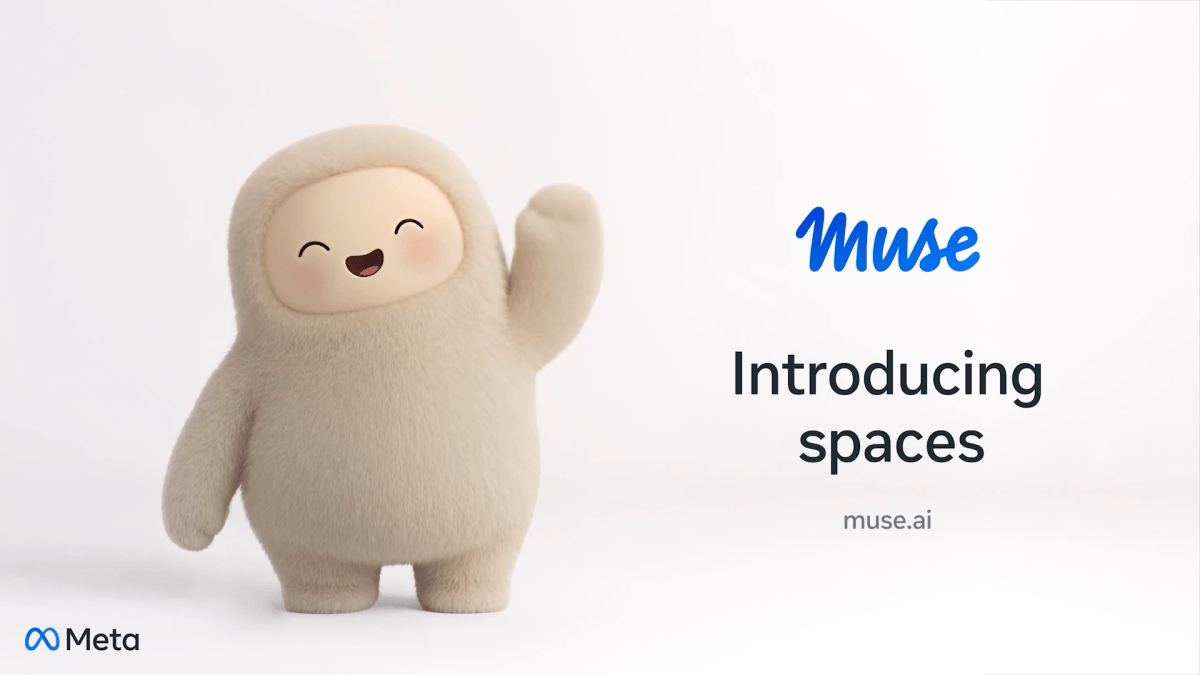
Takeaway: On Nov 6, 2026, Meta introduced Spaces inside the Muse app — custom, interactive experiences you build by describing an idea (gift tracker, school dashboard, trip planner, and more). You can place spaces in the sidebar or main tabs, hide them, and schedule when they appear. The same day, Meta rolled out specialized Muse / Meta AI models trained with Muse Wonder learnings, bringing Active Memory (2.4× less forgetting; Active Memory eval 90% vs 76%) and Active Focus (67% improvement on everyday tasks with unexpected issues). This is distinct from yesterday’s Muse Realtime Voice / Avatar rollout — Spaces is app customization and memory/focus models, not voice or expressive video.
Primary sources: Meta’s Design the Muse App, Just for You Newsroom post, Meta AI Research’s Bringing Specialized Models to Muse and Meta AI, plus The Verge and TechCrunch coverage from Nov 6.
What Meta shipped
Meta frames Spaces as an interactive way to build a more personalized Muse. You describe an idea; Muse builds a custom experience that becomes part of the app. As you use a space, you can keep adjusting it — add what’s missing, try a new look, or change how it works.
- Product: Spaces — custom experiences inside Muse, built from a natural-language idea.
- Placement: sidebar, main tabs, hide when unused, or schedule appearance (e.g. weekly planner on weekdays, weekend plans on Saturday).
- Live updates: connect apps so spaces refresh in the background (concert dates, price changes, savings progress).
- In-space actions: check things off, add notes, and edit without leaving the space.
- Availability: starting Nov 6, Spaces are available everywhere Muse is available.
- Roadmap: Meta is exploring ways to share spaces with others for more collaborative Muse use.
Example spaces Meta highlights
- Shopping hub (holiday/birthday ideas, Instagram saves, Marketplace listings and buyer messages)
- School dashboard that finds kid-relevant events in school emails and adds them to calendar
- Music tracker for artists you follow (new releases, upcoming shows)
- Wedding planner (RSVP list, vendor invoices, to-dos)
- Trivia game on movies, music, or sports
- Podcast studio (episode ideas, research, scripts)
- Order tracker for a small business (orders, customer messages, what needs to ship)
- Client hub for freelance work (projects, deadlines, invoices)
- Trip planner (flights, hotel, reservations, day-by-day itinerary)
Meta also notes half-finished notes-app ideas, messy spreadsheets, or hobbies you want to dive into are fair game for a space.
Active Memory and Active Focus (same-day model update)
Alongside Spaces, Meta says it is rolling out specialized versions of its existing models to Muse and Meta AI, trained using learnings from the Muse Wonder series. The research post focuses on two capabilities first introduced with Muse Wonder:
- Active Memory: remember what matters and recognize when earlier information becomes relevant. Meta reports a 2.4× reduction in forgetting critical information needed for goals, and an Active Memory eval of 90% tasks correctly using critical context for the current Muse model vs 76% previously.
- Active Focus: keep working toward a goal when unexpected challenges appear. Meta reports a 67% improvement completing everyday tasks where issues arise.
- Personal Superintelligence Index: Meta also publishes current Muse at 47% vs previous 38% on that internal index — treat as Meta’s own benchmark, not an independent audit.
Meta says the specialized models also lean into multi-tasking (when to push independently vs collaborate live) and adapting to mid-task steers without getting confused. In Meta AI, the same improvements are positioned as a sharper thinking partner.
Confirmed vs not
| Claim | Status | Notes |
|---|---|---|
| Spaces available everywhere Muse is available (from Nov 6) | Confirmed | Meta Newsroom |
| Describe idea → Muse builds space; iterate afterward | Confirmed | Newsroom + Verge |
| Sidebar / main tabs / hide / schedule appearance | Confirmed | Newsroom example: weekday planner vs Saturday weekend plans |
| Connect apps → background updates | Confirmed | Concert dates, prices, savings cited |
| Check off / notes / in-space edits | Confirmed | Newsroom |
| Sharing spaces with others | Exploring | Not shipped in this announcement |
| Active Memory 2.4× less forgetting; 90% vs 76% eval | Confirmed (Meta research) | Company evals |
| Active Focus 67% improvement on disrupted everyday tasks | Confirmed (Meta research) | Company evals |
| ~10M Muse users US/Canada | Press / earnings cite | TechCrunch: Zuckerberg on Oct earnings; not in Spaces Newsroom post |
| Same feature as Realtime Voice / Avatar | No | Separate Nov 5 voice/avatar vs Nov 6 Spaces + models |
Why it matters
Spaces pushes Muse from a chat-and-avatar companion toward a customizable shell — closer to mini-apps you live in than one-off prompts. That sits next to, not on top of, Meta’s other November Muse news: Realtime Voice and expressive avatars (Nov 5) are about presence and interruptible talk; Spaces (Nov 6) is about organizing the app around routines and goals. Active Memory / Focus try to make those long-running spaces less amnesiac when context returns.
Competitive frame for readers: always-on agent desks like Perplexity Teammates emphasize persistent coworkers for ongoing work; OpenAI’s consumer stack this week includes ChatGPT Business Hub analytics and image tooling (separate post). Publisher-side Meta news — pausing Commercial Terms scrape updates — remains a different track from Muse product UX. Same-week model launches such as GPT-6 Cyber and creator video like Gemini Omni 1.2 Flash are adjacent AI headlines, not Muse Spaces duplicates.
TechCrunch notes Zuckerberg posted that he had built a BBQ game, event tracker, and home control dashboard with Spaces, and cites his October earnings comment that Muse agents had about 10 million users in the U.S. and Canada less than two months after debut. Treat the user figure as a press/earnings citation, not a Spaces Newsroom claim.
Practical checklist
- Muse users: Try one practical space (trip planner or order tracker) before a playful trivia/game space so you learn placement and scheduling.
- App connections: Only connect accounts you are comfortable letting Muse refresh in the background — calendar and shopping data will surface without a fresh prompt.
- Routine design: Use scheduled appearance for work vs weekend spaces so the main tabs stay uncluttered.
- Do not confuse with Realtime Voice: Voice/avatar is a conversation surface; Spaces is a custom experience surface inside the same app.
- Sharing: Collaboration/sharing of spaces is still “exploring” — plan for personal use until Meta ships share controls.
- Eval caution: Active Memory / Focus and Personal Superintelligence Index numbers are Meta’s own evaluations.
FAQ
What are Muse Spaces?
Spaces are custom experiences you create inside the Muse app by describing an idea. Meta’s examples include gift trackers, school dashboards, music trackers, wedding planners, trivia games, podcast studios, order trackers, client hubs, and trip planners. Each space becomes part of Muse so you can keep it where you want and return later.
Can I control where Spaces appear in the Muse app?
Yes. Meta says you can add spaces to the sidebar, move them into main tabs, hide ones you do not need, and schedule when they appear — for example a weekly planner during the workweek and weekend plans on Saturday.
Do Spaces update automatically?
If you connect the apps you use, Meta says spaces keep themselves up to date in the background (new concert dates, price changes, savings progress) without you having to ask. You can also check items off, add notes, and edit inside the space.
When did Spaces launch, and can I share them?
Meta’s Nov 6, 2026 Newsroom post says Spaces are available everywhere Muse is available starting that day. Sharing spaces with others is something Meta says it is exploring, not a confirmed ship in the announcement.
How is this different from Muse Realtime Voice and Avatar?
Realtime Voice/Avatar (announced Nov 5) lets you talk to Muse with interruptible speech and an expressive avatar. Spaces (Nov 6) lets you design custom app experiences and, the same day, Meta rolled specialized models with Active Memory and Active Focus into Muse and Meta AI. Same Muse product family; different surfaces.