Takeaway: Google’s multiturn ads — sponsored placements that can appear on follow-up answers inside an AI Mode conversation — are now showing up in the United States. Search Engine Roundtable’s Barry Schwartz wrote on November 9, 2026 that he saw them while testing AI Mode on Friday afternoon, with ads labeled “Sponsored” at the bottom of the second response and again on the third and fourth follow-ups. Search Engine Land, also by Schwartz that day, described the format as rolling out “as of at least this Friday.” The format itself is not a surprise: Google announced the U.S. launch on October 28. What is new is independent confirmation that the ads are appearing in live follow-up turns, not only in a product blog.
This is an advertising-surface story, not a ranking-algorithm announcement, and it should not be collapsed into last month’s Alphabet Q3 admission that AI Mode queries monetize at a lower rate than traditional Search. If anything, the two sit side by side. Google has said it needs a commercial layer inside a more conversational results page. Schwartz’s screenshots show one way that layer is getting thicker: ads no longer stop after the first prompt.
What Google announced in October, and what Schwartz saw this month
On October 28, 2026, Shashi Thakur, Google’s vice president and general manager for Search Ads and ads on Google experiences, wrote that the company was expanding ads in AI Mode to Australia, Canada, India, Kenya, Malaysia, New Zealand, Nigeria, Pakistan, the Philippines, and Singapore, with additional locales including Brazil, Mexico, and the United Kingdom planned for the fourth quarter of 2026. In the same post, Google said: “To allow ads in follow-up queries in AI Mode, we are launching multiturn ads in the U.S.” It added that ads “will be clearly labeled as ‘Sponsored’” and that it would keep testing new formats.
Schwartz’s October 28 write-up recorded a further clarification from a Google spokesperson: “Multiturn ads show up on responses to follow-up user queries as users engage in back and forth conversations with AI Mode.” Google also told him that when a search or conversation has commercial relevance, ads can appear “directly within or alongside these AI-generated responses (including across follow-up questions in AI Mode) in sections clearly labeled ‘Sponsored’.” That is the official definition. The November observations are the first widely cited evidence that the follow-up units are actually rendering.
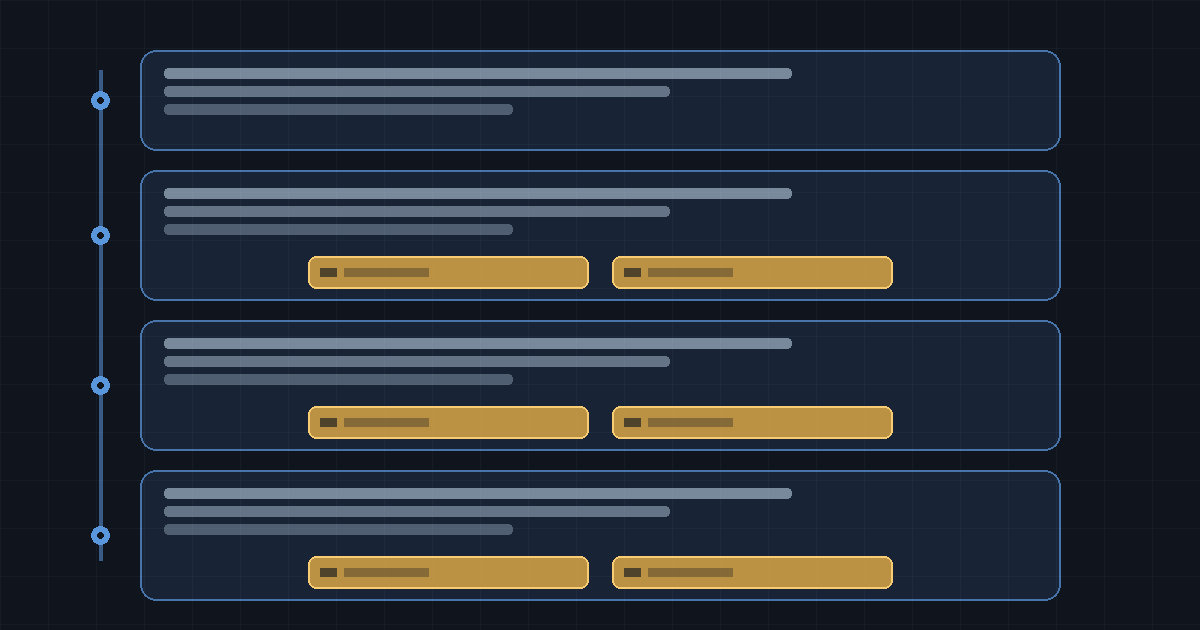
Friday, in the November 9 posts, is November 6, 2026. Schwartz published screenshots and a video on Search Engine Roundtable and summarized the same findings on Search Engine Land. He described scrolling through a first ad unit, asking a follow-up, and seeing ads below the second response — two “Sponsored” placements at the bottom of that result — then seeing additional ads on later turns. He did not claim the format is visible to every U.S. user on every commercial query, and Google has not published a completion percentage for the rollout. The fair reading is that the U.S. format Google announced in October is now appearing in live tests, including deep in a conversation, not that every AI Mode session now carries four rounds of ads.
Where the ads sit, and what Google has (and has not) said about them
In Schwartz’s examples, the follow-up ads sat under the AI Mode answer, marked “Sponsored,” rather than replacing the answer. That matches Google’s “clearly labeled” language. The company has not, in the October post or in Schwartz’s follow-up, published a limit on how many follow-up turns can carry ads, a floor for commercial relevance, or a rule for how those units relate to text links versus product listings. Advertisers and publishers should treat the screenshots as proof of existence and placement, not as a full spec.
Two other Google claims often travel with this story and need to stay in their original scope. First, Thakur wrote that AI Mode queries are, on average, three times longer than traditional searches, citing a Google AI Mode Report for the United States from May 2026 — the same length comparison Sundar Pichai used on the Q3 call. Longer, more conversational queries are the reason Google gives for putting ads on follow-ups at all. Second, Google said click-through rates are “already similar between sponsored and organic product list items within AI Mode,” citing internal U.S. data from August 20 to September 3, 2026. That comparison is for product list items only. In October, Schwartz flagged the gap: the product modules are highly graphical, “but what about the text links?” Google has not answered that in public. Do not read the CTR sentence as evidence that every ad format in AI Mode, including the new follow-up units, matches organic performance.
| Claim | Status as of November 9, 2026 | Notes |
|---|---|---|
| Google is launching multiturn ads in the U.S. | Announced October 28 by Shashi Thakur | Official product blog |
| Ads on follow-up AI Mode answers, labeled “Sponsored” | Announced October 28; observed in testing November 6 and reported November 9 | Schwartz / Search Engine Roundtable and Search Engine Land |
| Ads seen on the second, third, and fourth follow-ups | Observed by Schwartz | Not a published Google cap or guarantee |
| Rollout complete for all U.S. AI Mode users | Not established | No official completion figure |
| AI Mode queries are about 3× longer than traditional Search | Google claim, May 2026 U.S. report; also used on the Q3 call | Context for conversational ads, not a new November figure |
| Sponsored and organic product-list CTRs already similar | Google internal U.S. data, August 20–September 3, 2026 | Product list items only; not a claim about all AI Mode ads |
| AI Mode monetizes at a lower rate than traditional Search | Acknowledged on Alphabet’s Q3 2026 call | Google has not published the gap |
| Multiturn ads will close that monetization gap | Not claimed by Google | Schwartz speculated about “more ads”; that is not guidance |
Why this matters next to weaker AI Mode monetization
Alphabet’s third-quarter results already established the business tension. Search & other ads grew, but Chief Business Officer Philipp Schindler said “the strong growth in AI Mode queries had an impact because of the lower monetization we were seeing in AI Mode.” Google did not disclose how much less those queries monetize, or how large the contribution was. We covered that admission, and what was missing from it, in our Alphabet Q3 AI Mode monetization note.
Search Engine Land’s November 9 piece connects the two facts without inventing a forecast: Google is trying to show more ads inside AI Mode, and last quarter’s call showed why. Schwartz asked, on Roundtable, whether more ads in AI Mode might help the next earnings report. That is his commentary, not a company projection, and it should stay labeled that way. Adding inventory on follow-up turns can raise ad load without proving that revenue per conversational query will match a classic results page. Until Google publishes AI Mode RPM, the gap stays unquantified.
The same week’s competitive backdrop is the other reason to watch the format. OpenAI has claimed ChatGPT search-like volume on the order of 20 percent of Google’s, which is one explanation for why Google keeps thickening the commercial layer inside AI Mode rather than treating it as a sidecar. Ads in follow-up answers are how Google sells a conversation that used to be a single query. They are not, by themselves, a publisher-payment program. That remains a separate track, including the limited AI contribution pilot for publishers.
What this means for advertisers, and what it does not fix for publishers
For advertisers, the operational change is simple to state and harder to measure. A user who starts with a research-style question and then asks a more commercial follow-up — “which of these should I buy,” “book this,” “compare these two” — can now see sponsored units on those later turns, at least in the U.S. tests Schwartz captured. Campaigns already running in Search and in earlier AI Mode placements may appear in those units; Google has not published a separate buy, bid, or asset requirement for multiturn ads in the October announcement. Until it does, the cautious approach is to watch Search Ads reporting for AI Mode surfaces, keep creative and landing pages aligned with follow-up intent, and not assume a new campaign type exists just because a new placement does.
For publishers, the news is less about a new traffic lever than about a busier in-product page. AI Mode already keeps users inside Google’s answer. Reddit’s earlier claim that AI Mode “does not drive traffic” was a logged-in, one-company snapshot, not a universal measurement, but it pointed at the same referral problem. Putting ads under the second, third, and fourth answers adds commercial modules to a conversation that may never produce a click on an organic citation. Google’s October work to make inline links more prominent in AI Mode is the organic counterpart; it has not been withdrawn, and it is still the more relevant checklist for sites that want to be cited. Search Console’s generative AI performance report and inclusion controls remain the official way to see and manage visibility in AI Overviews and AI Mode. Multiturn ads do not change those controls.
Keep the surfaces distinct. AI Overviews are the short snapshots on a classic results page; AI Mode is the multi-turn conversation. Google’s October post mentioned both, but the new format is explicitly about follow-up queries in AI Mode. Citation-card behavior in AI Overviews is a different story. So is the Connected Apps preview, which is about completing actions inside Google rather than about selling ads on the next prompt. Mixing those together makes the monetization picture look more settled than it is.
FAQ
What are Google AI Mode multiturn ads?
They are ads that can appear on responses to follow-up questions inside an ongoing AI Mode conversation, in sections labeled “Sponsored.” Google announced the U.S. launch on October 28, 2026, and a spokesperson told Search Engine Roundtable that the units show up “as users engage in back and forth conversations with AI Mode.”
When did they start appearing?
Google said on October 28 that it was launching the format in the United States. Barry Schwartz reported on November 9 that he saw the ads while testing AI Mode on Friday afternoon — November 6 — including on the second, third, and fourth follow-ups. Google has not published a date on which the rollout reached all U.S. users.
How are the ads labeled, and where do they appear?
Google said ads will be clearly labeled “Sponsored.” In Schwartz’s screenshots, two sponsored placements sat at the bottom of a follow-up answer, and additional ads appeared on later turns. The company has not published a documented limit on the number of turns that can carry ads.
Is this the same as ads in AI Overviews?
No. AI Overviews are the short generated snapshots on a traditional Search results page. Multiturn ads, as Google defined them, are for follow-up queries in AI Mode’s back-and-forth conversation. Some Search pages can include both kinds of generative experience, but the new format is specific to AI Mode follow-ups.
Which countries have ads in AI Mode?
On October 28, Google said it was scaling ads in AI Mode to Australia, Canada, India, Kenya, Malaysia, New Zealand, Nigeria, Pakistan, the Philippines, and Singapore, and that it planned to add locales including Brazil, Mexico, and the United Kingdom in the fourth quarter of 2026. The multiturn format was announced for the United States. The October post did not say those other countries were getting follow-up ads on the same day.
Why is Google adding more ads to AI Mode?
Google’s stated reason is that AI Mode queries are more conversational — on average about three times longer than traditional searches, in its May 2026 U.S. report — and that ads should appear when a conversation has commercial relevance. Separately, Alphabet’s Q3 call acknowledged lower monetization in AI Mode than in traditional Search. Google has not said multiturn ads will close that gap.
Do AI Mode ads perform like regular Search ads?
Google has not published a full comparison. It has said click-through rates are already similar between sponsored and organic product list items within AI Mode, based on internal U.S. data from late August and early September 2026. That is a product-listing comparison, not a statement about text ads or about the new follow-up units. Overall AI Mode monetization remains lower than traditional Search, on the company’s own Q3 comments, by an undisclosed amount.
What should publishers and advertisers do now?
Advertisers should expect sponsored units on commercially relevant follow-ups in U.S. AI Mode and watch existing Search Ads reporting until Google documents a distinct multiturn product. Publishers should not treat the format as a new organic traffic source. Citation, inline links, and Search Console’s generative AI report are still the practical levers for being visible in the answer itself; the new units are ads under that answer.