Takeaway: On November 16, 2026, Hugging Face and OpenRouter announced that chat models on Hugging Face Inference Providers now run through OpenRouter’s routing. Existing Hugging Face tokens and API code remain compatible, according to both posts. OpenRouter can also send a trace of each request to a Hugging Face Storage Bucket you own. If you already call models from a Hub page, the change is in how those calls are routed, not in a new signup.
The partnership is a practical one for people who already use open-weight models through a hosted API. OpenRouter says 160 models from 38 labs are available this way today — every model it serves that already has a Hub page — and that open-weight models carried about 70% of paid tokens on its network in October. Hugging Face, citing OpenRouter’s October 2026 write-up, reports a related figure: open-weight share rose from 26.8% of tokens served in October 2025 to 71.7% at the end of September 2026.
What routing actually does now
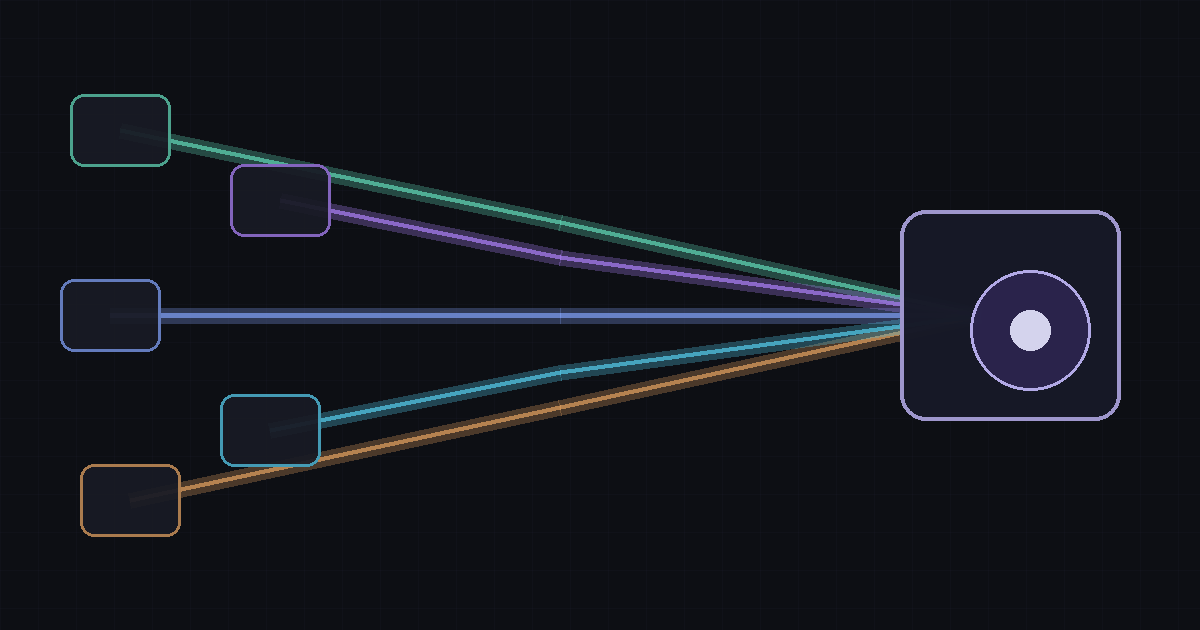
Many chat models on Hugging Face are served by more than one provider. Hugging Face says Inference Providers now uses OpenRouter’s routing to choose among those providers based on live price, speed, and reliability, and to retry a failed request on the next provider inside the same call. If a provider is down, the idea is that the call can still complete without you writing retry logic.
You can still steer the trade-off. Hugging Face says that adding a suffix to the model ID, such as :fastest, :cheapest, or a provider name, tells OpenRouter what to prioritize. Requests work through OpenAI’s Chat Completions and Responses APIs or Anthropic’s Messages API. A conversation, the post says, stays on the provider that holds its prompt cache, which matters if you are paying for cache hits or depending on warm context.
Each model page now has a Providers tab with live price, speed, and uptime for every provider. You can see spend by provider and turn off any provider you do not want to use. That is the control surface if you have a preferred host, a data-residency constraint, or a provider you have already decided not to trust.
The October experiment, and how to read it
OpenRouter says it rebuilt this routing in October and ran a live experiment. The measured results, in its words, were 46% fewer requests hitting a capacity error, 16.9% faster time to first token, and 16.3% higher throughput, for 6.0% higher cost per request. It says everyone building on Hugging Face now gets the same routing. Hugging Face’s announcement cites the same reliability and speed improvements, without restating the 6.0% cost figure.
Those figures are OpenRouter’s, from its own October experiment. They are useful as company-reported reasons for the switch, not as a guarantee of what you will see on a particular model or provider this week. The cost number also cuts against a simple “this is cheaper” headline: the experiment traded a modest increase in cost per request for fewer capacity errors and better speed and throughput. If you care more about unit cost than about retries, look at the Providers tab and the :cheapest suffix rather than assuming the default route is the lowest-price path.
Which models are in the first cut
OpenRouter’s post names several of the open-weight models it says developers use most on its network, including DeepSeek V4.1 Flash, MoonshotAI Kimi K3.1 Pro and Kimi K3, Z.ai GLM 5.3 and GLM 5.3 Flash, Qwen3.8 27B, MiniMax M3.1 Flash, Xiaomi MiMo-V2.6-Flash, NVIDIA Nemotron 3 Ultra, and OpenAI gpt-oss-120b. The 160-model / 38-lab count is OpenRouter’s broader inventory: every OpenRouter-served model that already has a Hub page, as of the November 16 announcement.
If you already have a workflow for calling free or paid models through OpenRouter directly, this does not replace that API. It puts the same style of routing behind Hugging Face Inference Providers. Our earlier guide on using free AI models on OpenRouter remains the starting point for the OpenRouter-native path. The new work is for people who want to stay in the Hub token, model page, and “View code” flow.
What stays on Hugging Face, and what breaks
Hugging Face is explicit about scope. Image, video, and audio generation continue to run directly through Hugging Face Inference Providers, without going through OpenRouter, and you can still use tens of thousands of LoRAs with the same token and API. Pricing, the company says, does not change: you pay the provider’s price on your Hugging Face bill, and Hugging Face does not add a markup. PRO users get $2 of credits every month, and Team and Enterprise organizations get $2 per seat, according to the same post.
There is one breaking change for language models. Because those requests now go through OpenRouter and are billed to your Hugging Face account or organization, you can no longer use your own API key for a provider with chat models. You can still pin a provider with a model:provider suffix or turn providers off in settings, and Hugging Face says your code stays the same. Custom keys for image and video providers keep working.
Traces on the Hub, still in beta
The integration also runs in the other direction. OpenRouter can now send a trace of each request to a Hugging Face Storage Bucket you own. OpenRouter describes Storage Buckets as a Broadcast destination in beta. Each file is a JSON record of the input messages, the model’s output, token counts, and cost. Images and other media are left out.
The intended use, as both companies describe it, is to turn real traffic into material for an evaluation set or a fine-tuning run on an open-weight model. You can organize files by date or by API key. That is only useful if you are comfortable storing prompts and completions in a bucket you control. It is not a default log of all Hugging Face traffic; you have to turn Broadcast on and supply credentials.
How to start, according to the official posts
On Hugging Face, the announced steps are: create a token at the Hugging Face token settings page with the “Make calls to Inference Providers” permission; open a supported model’s page on the Hub and either chat there or use View code for setup, including coding agents such as Claude Code, Codex, OpenCode, Pi, and Hermes Agent; and use Inference Providers in your Hugging Face settings to choose which providers may serve your requests.
To send traces to a Storage Bucket, OpenRouter’s setup guide says to create a bucket, create an access token with Write permission, generate S3 credentials from it, then in OpenRouter go to Settings > Observability, turn on Broadcast, open Hugging Face Storage Buckets, and enter your namespace, bucket name, access key ID, and secret access key. A path template such as a date- or key-based pattern is supported. Use the companies’ current setup guides for the exact fields, because the feature is still described as beta.
This announcement is about routing and traces, not about a new flagship model. It sits alongside other November model news, including launches we have already covered such as Qwen4-Max, but it is a change in how you reach models rather than a new model card.
| Item | What official posts say |
|---|---|
| Announcement | November 16, 2026, Hugging Face blog and OpenRouter blog |
| What changed | Hugging Face Inference Providers routes chat-model requests through OpenRouter |
| Compatibility | Existing Hugging Face tokens and API code remain compatible |
| Routing behavior | Live price, speed, and reliability; retries on another provider inside the same call |
| Steering | Model ID suffixes such as :fastest, :cheapest, or a provider name |
| APIs | OpenAI Chat Completions, OpenAI Responses, Anthropic Messages |
| Prompt cache | A conversation stays on the provider that holds its cache |
| October experiment (OpenRouter) | 46% fewer capacity errors, 16.9% faster TTFT, 16.3% higher throughput, 6.0% higher cost per request |
| Inventory (OpenRouter) | 160 models from 38 labs, described as every OpenRouter-served model with a Hub page |
| Open-weight share | OpenRouter: about 70% of paid tokens in October; Hugging Face cites 71.7% of tokens served at the end of September 2026 |
| Pricing (Hugging Face) | Provider price on the Hugging Face bill; no Hugging Face markup |
| Scope that does not change | Image, video, and audio generation stay on Hugging Face Inference Providers, not OpenRouter |
| Breaking change | Custom provider API keys no longer work for language models; image and video custom keys still work |
| Traces | Optional OpenRouter Broadcast to a Hugging Face Storage Bucket you own (beta); JSON without images/media |
FAQ
Do I need a new API key?
Not according to the announcements. Existing Hugging Face tokens and API code remain compatible. The token does need the “Make calls to Inference Providers” permission if you are setting up a new one. Hugging Face says you can no longer use your own provider API key for language models, because those requests are now billed to your Hugging Face account. Custom keys for image and video providers still work.
Can I still pick a specific provider?
Yes. You can add a provider name as a model ID suffix, and you can turn providers off in Hugging Face Inference Providers settings. The Providers tab on a model page shows live price, speed, and uptime.
Is the default route the cheapest option?
Not necessarily. OpenRouter’s October experiment reported better reliability and speed at 6.0% higher cost per request. If you want to prioritize price, the posts describe a :cheapest suffix and provider-level controls.
How many models are included?
OpenRouter says 160 models from 38 labs, matching every model it serves that already has a Hub page, as of the November 16 announcement. That inventory can change as models are added or removed.
What happens if a provider fails mid-request?
Both announcements say a failed request is retried on the next provider inside the same call. A conversation is also kept on the provider that holds its prompt cache, so cache reuse and failover are not the same behavior.
Are my prompts stored on Hugging Face automatically?
The Storage Bucket trace feature is optional and described as beta. You have to enable Broadcast in OpenRouter and point it at a bucket you own. The JSON files include input messages, outputs, token counts, and cost, but not images or other media.
Is this a replacement for the OpenRouter API?
No. You can still call OpenRouter directly. This announcement is about Hugging Face Inference Providers using OpenRouter for routing, plus an optional path to send OpenRouter traces into a Hugging Face bucket.
Which APIs can I use?
Both announcements say requests work through OpenAI’s Chat Completions and Responses APIs or Anthropic’s Messages API. Image, video, and audio generation stay on Hugging Face Inference Providers and do not go through OpenRouter. Use the current View code snippet on the model page for the exact client setup.