Exploring Low-Code and No-Code Development: A Comprehensive Guide

The introduction of low-code and no-code development platforms has impacted the technology sector by enabling individuals and organizations to create software without requiring significant technical knowledge. These platforms focus on expediting application development through drag-and-drop functionality, ready-made models, and buildable pieces that can be reused. In this blog post, we explain the basic ideas, benefits, and applications of low-code and no-code development, showing readers how these tools are transforming software development.
We will look at the differences between low-code and no-code platforms, the advantages of each, and the context in which each performs best. Moreover, we will analyze some worked case studies and discuss possible problems related to the use of these technologies. This guide will help business executives, developers, and even technology hobbyists understand the impact and boundaries of these innovative tools.
What is Low-Code Development?

Drag and drop, as well as point-and-click tools, visually represent processes to simplify hand coding in software low-code development. The approach accelerates the application development processes for both professional coders and novices. Low-code platforms simplify processes, enabling faster market readiness, better collaboration, and reduced development expense.
Understanding Low-Code Development Platforms
In case the questions you mentioned pertain to understanding low-code development platforms, let me give you a very brief answer in the first person.
Visual means of coding and including components make it easier for me to construct other applications, thus, low-code development frameworks streamline my work processes. Not only do they make it easier for me to work with other people regardless of whether or not they are knowledgeable in technology, but low-code development frameworks also lower the expense incurred for development. Such development approaches enhance focus on innovation as the burden of traditional shaping complexities is set aside.
The Development Process in Low-Code
The straightforward approach to application development uses “low-code” development features, which significantly simplify and accelerate the entire development process. Most applications change according to the following phases:
- Determining Requirements
The first task encompasses gathering app requirements, analyzing processes, and determining organizational objectives. Active collaboration with stakeholders captures the clarity on features, workflows, and integrations that need to be included within the application.
- Building the Application
The creation of a user interface, workflows, and other planning elements of the application can be accomplished through visual design mode, utilizing drag-and-drop components or templates. Many low-code platforms come equipped with WYSIWYG (What-You-See-Is-What-You-Get) editors, which allow for effortless design.
- Logic and Functionality Configuration
Through rules-based logic, more sophisticated flows and automation of repetitive tasks without the need to write elaborate custom code can be done. Additional business logic may need to be integrated. Most platforms have API support for other systems and databases which enables integration.
- Management of Users and Data
The platform itself handles data structure design and user role management. Developers control permission levels of the data to be accessed in order to maintain compliance and secure sensitive data. Moderate compliance platforms facilitate easy modification and integration with relational databases such as MySQL, PostgreSQL, as well as NoSQL such as MongoDB.
- Testing and Tuning
Most low-code platforms have integrated testing capabilities that allow for practicing debugging cycles before the application is deployed. There is always continuous feedback between users and developers which promotes quick fixing of problems.
- Deployment and Support
Applications are now frequently launched or showcased with just a click, and these can be made available on all channels at once including mobile, desktop or web. These low-code platforms have automated scalability and also monitoring capabilities for new versions that are built.
Common Technical Parameters for Low-Code Platforms
- Ease of Use
There should be a graphical user interface with drag-and-drop features and easy-to-use templates so that users will not require extensive onboarding or training.
- Integration Support
Connect APIs for integration with CRM (Salesforce), ERP, and other analytics applications. Typically, REST and SOAP APIs are available.
- Scalability
Must be capable of managing extensive datasets, high user activity, and supporting deployment on AWS, Microsoft Azure, or Google Cloud.
- Security
Support for encryption standards such as AES-256, user authentication via OAuth2 or SSO, and compliance with GDPR or HIPAA regulatory frameworks.
- Multi-Platform Compatibility
Developed applications must function on web, Android, and iOS devices without any issues.
Through low-code platforms, users can concentrate on the app’s intention and groundbreaking features, expediting the time to market and broadening the scope of development-ready teams.
Key Development Tools in Low-Code
Guiding an application through the supervision and administration of low-code development involves utilizing the following features: effortless drag-and-drop layouts for intricate, multifaceted user experiences, ready-made templates, and appropriate integration tools for linking with external services. In addition to these features, most platforms provide visual step-by-step processes that aid in logic construction while including neat built-in preparations for deployment, or completely automated steps that facilitate transition from development to production. Microsoft Power Apps, OutSystems, and Mendix are the industry’s foremost tool vendors, demonstrating outstanding market attributes, including scalability, sustained construction, simultaneous cooperation, and extreme configurability. Such instruments empower teams by blending ease and complexity to improve productivity while enabling the development of detailed applications with no-code tools.
How Does No-Code Development Work?
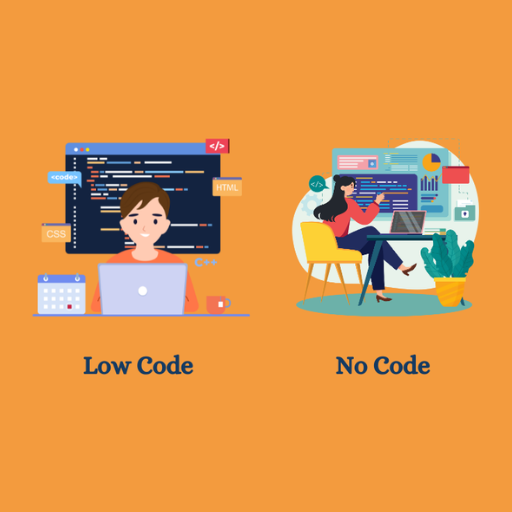
Even though no-code development guarantees the same empowerment, usually through providing end users with a design interface like an empty canvas filled with components of prebuilt blocks, guiding them with selection menus and strategic toolbox buttons, users without any background in traditional programming can accomplish a lot through dragging and dropping blocks. Tools that are categorized under no-code creation aid unskilled creators move from picture edits into smooth deployable digital functional applications without breaking a sweat by simply formulating the components required into place, building simple rules, and adding configurable do-it-yourself features. Such platforms handle all the base code and system technical setup, giving the creators the well-deserved attention towards the form and functionality instead.
Advantages of No-Code Platforms
The following are some of the most relevant benefits that no-code platforms provide, which are very attractive to individual creators and businesses alike:
- Speed of Development
Applications make it possible to build and deploy new applications significantly faster than traditional development approaches.
Example metric: Development timelines can be shortened by approximately 70%.
- Cost-Efficiency
The need to employ a full-time specialized developer, or even entire IT departments for a project, is no longer necessary, translating to reduced project costs.
Typical savings range from 40 to 60 percent of the traditional costs of development.
- Accessibility
Non-technical users can now implement ideas without any programming knowledge.
Simplified processes are enabled through visual interfaces and drag-and-drop tools.
- Scalability and Flexibility
As user demand increases, many no-code platforms with cloud hosting enable scalability.
These platforms often have supported integrations, including APIs, databases and third-party services.
- Maintenance and Updates
Complete updates to the platform provided tools and integrations are performed, meaning lower maintenance efforts by users.
Limitations and Technical Considerations
No-code options, while versatile, offer limited customization:
- Customization Limitations
- Very specific business logic will often need to be custom-coded or a separate application added.
- Example issue: Custom access is not available for the system’s backend.
- Performance Constraints
- Applications that work with large amounts of data or have many users interacting with it tend to do not perform as well.
- Recommended technical constraints suggest that latency should not exceed 100ms and databases are subject to reasonable concurrent user limits.
- Vendor Lock-In
- Users may be locked into a specific platform and face issues if the vendor stops supporting the system or raises rates.
- Mitigation Strategy: Use platforms that allow for simple data exports and easy migrations.
- Security and Compliance
- Access control must be implemented carefully, and critical industry standards such as GDPR, ISO 27001, and HIPAA (in the case of healthcare) compliance must be fulfilled.
- Ongoing feature and version updates have to be done to remain compliant.
Addressing the issues provided while assisting with project goals enables more effective risk management when using these platforms.
Benefits of No-Code Development
No-code development is advantageous to everyone, from companies and developers to non-technical users. Here are some of the notable advantages:
- Quick Expedited Development
No-code platforms eliminate the need for a piecemeal development process, significantly improving time-to-market.
Businesses can adapt swiftly to market changes due to rapid prototyping and iteration.
- Economical in Nature
Operational and development costs are reduced significantly because there’s no need to hire a full-scale development team.
Most no-code platforms run selected subscription models, enabling clients to access scalable pricing.
- Enables Non-Technical Users
Non-developers can build usable applications through simplified drag-and-drop interfaces.
Encourages innovation outside of IT departments, decreasing their reliance on such tech teams.
- Increased Scalability and Flexibility
Contemporary no-code tools guarantee that applications can scale up with user growth.
Businesses looking to expand their capabilities can utilize APIs, third-party services and other integrations.
- Built-In Compliance and Security
Leading platforms offer effective security features such as data encryption and compliance with GDPR, SOC 2, and HIPAA.
Routine updates are done to ensure apps are free from emerging vulnerabilities.
- Better team collaboration
No-code platforms eliminate siloes between technical and non-technical teams which enhances workplace collaboration.
Technical Parameters to Consider:
- Scalability: Handle growing workloads, including having autoscaling features.
- Integration: Usage of REST APIs, webhooks, and other integrations with external systems.
- Security: Check for SSL encryption, access control over the data, and compliance with ISO 27001, GDPR,and SOC 2.
- Performance Optimization: Ensure low latency, caching, performance monitoring, and metrics tracking.
- Support and Community: Comprehensive tutorials, active user forums, and customer support.
Understanding these parameters and using no-code platforms allows businesses to accelerate innovation, reduce development constraints, and maintain technical rigor.
What Are the Benefits of Low-Code and No-Code?
Both low-code and no-code platforms bring great value to an organization by increasing the speed and ease of application development. To begin with, development timelines are greatly reduced as teams can create complex applications in just a few days or weeks as opposed to the traditional months. In addition to this, there is less reliance on highly skilled programmers as non-technical users or “citizen developers” can take a more active participatory role in the development processes. Along with all of the above, these platforms reduce costs as there is a lower need for specialized coding talent and lengthy development cycles. Furthermore, responsiveness is increased, which allows businesses and organizations to rapidly adjust to changing market conditions and perform seamless updates. Last but not least, numerous platforms come with out-of-the-box compliance, security, performance optimization, and other value-added features to enhance quality and assurance.
Advantages of App Development
It is fairly obvious that in my case, the most important benefits for app development are its accessibility, cost-effectiveness, and flexibility. These user-friendly interfaces and development tools that I can code with little to no knowledge help me get involved with the process. They save a lot of money by optimizing processes and reducing large development teams, which saves time. Moreover, these platforms enable me to respond to shifts in market demands or user needs adaptably, which helps me keep my app functional. I do not need to worry about my app’s compliance and security features because they are already built into the application, which guarantees optimal performance while meeting industry standards.
Impact on Software Development
Flexibility and efficiency abound when it comes to software development environments after the integration of low-code platforms, as they bridge business needs and technological execution. The drag-and-drop features, along with pre-built templates, enable even non-technical team members to work over projects, significantly reducing the barrier to entry.
Lowe-code platforms have changed the software developement ecosystem by easing the application creation complexity, speeding up the development lifecycle, and enabling rapid app creation using frameworks that need minimal coding. Frameworks allow quick prototyping and fast deploys so that developers can meet very tight deadlines without having to compromise on quality.
Development Parameters to Note:
- Development Time: Shaved off by 50-70% due to repositories of reusable components and visual aids.
- Scalability: Allows the integration of APIs along with other 3rd party services, broadening platform capabilities.
- Security Compliance: Follows app deployment standards such as GDPR, HIPAA, or ISO 27001 for safe and compliant app deployment.
- Performance Optimization: Ensures optimal app performance with the use of built-in performance tuning aides for debugging and testing.
- Version Control: Simple iteration in development can be done collaboratively and with effortless rollbacks.
Effort isn’t the only thing that is enhanced, but rather the optimization of resources implemented through low-code platforms serve as the mechanism for transformation in tech driven initiatives and adaptability in drone-map speed technologies.
How Low-Code Platforms Boost Efficiency
Low-code platforms have enhanced efficiency significantly by further escalating automation and the simplification of complex coding tasks within the existing frameworks. Here’s some of they accomplish this:
- Visual Development: Pre-assembled modules and drag-and-drop interfaces on low-code platforms automate and facilitate coding processes, earning them the ability to prototype and deploy faster. As an illustration, developing standard CRUD (Create, Read, Update, Delete) operations, which might take days with traditional methods, can be accomplished in hours with low-code development.
- Integration Capabilities: These tools often include APIs and prebuilt connectors for effortless integration with databases, legacy systems, and third-party tools. Popular low-code platforms Mendix and OutSystems offer pre-configured connectors for industry-grade applications, including Salesforce, SAP, and even Microsoft Office 365.
- Built-in Testing and Debugging: Low-code platforms allow developers to instantly test and debug applications with built-in automated testing tools. This reduces errors while enhancing the outcome quality in an effortlessly executable manner. Appian’s “Health Check” flagging suboptimal application performance casts its nets far, recommending optimization strategies hosted on lower-level tools.
- Scalability and Cloud Deployment: Microsoft Power Apps and many others are cloud-native low-code platforms, hosting vast scalability options for the user. Users can change the working environment or device, with mere minimal configuration changes.
- Reduced Time to Market: Traditional coding and automating busy work make responding to market demands quicker, because business development cycles are shortened. Gartner states that low-code development platforms can improve development speed by 50-70% compared to traditional methods.
- New Height of Business Collaboration Accessibility: Low-code platforms facilitate collaboration and enhance teamwork through real-time app editing, version control, friendly user interfaces, and editing. All of these features allow non-skilled technical business users known as “citizen developers” to partake in the app-building process without complex coding skills.
Using these features allows organizations to develop cost-effective and secure scalable solutions in no time, thus improving operational efficiency.
What Are the Differences Between Low-Code and No-Code?
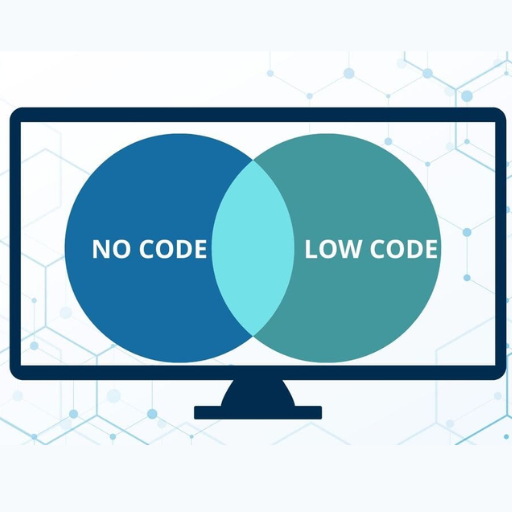
Both low-code and no-code platforms aim to ease the process of developing apps, however, they do differ in the level of customization each one offers. Drag and drop tools combined with some level of programming make up low-code platforms, allowing developers to meet specific requirements. These platforms work best for more complex applications that require at least some form of programming. Platforms that do not need any prior coding experience, have fully visual aspects, and allow one to quickly build applications are known as no-code platforms. Though best for straightforward applications, no-code platforms tend to be less flexible than low-code ones, which are better suited for large, enterprise-grade projects.
Comparing Development Environments
Low-code platforms, in my opinion, serve as a middle ground between coding from scratch and no-code solutions. Based on my research, they seem to be a better fit for developers seeking high speed and flexibility in customization for more complex projects. Optimized for ease of use with no technical knowledge required, no-code platforms allow any non-technical individual to smoothly create apps. In the end, the deciding factors are the technical skills of the user, size of the project, and the need for adaptability.
Use Cases for Low-Code vs No-Code
- Custom Enterprise Applications:
Critical enterprise-grade applications that need special workflows, integrations, and customization scalability are easily handled by low-code platforms. For large enterprises, the platforms are useful because a developer can tailor logic and API integration.
- Checking existing system (CRM, ERP) integration, more than adequate API servicing, and complex data structure handling capability.
- Rapid Prototyping
Customization is maintained while a focused time frame is provided for idea testing, creation of MVPs, and other low-code services.
- Supporting fast iterations. Creation of distinct building blocks is needed alongside the sequence of changes control. Advanced Control Management System.
- Scalable Business Solutions
E-commerce sites or employee management systems are fit for projects needing prolonged scaling and low code customization with improved performance and strong system integration.
- Cloud public or private scaling capabilities, more than one user access provisioning, and performance boosting tool availability.
Use Cases for No-Code
- Straightforward Tools for Small Enterprises
No-code applications aid in creating workflows and web or mobile applications like booking systems and landing pages for businesses.
- Technical Parameters: These include drag-and-drop interfaces, alterable templates, and lenient demands on server resources.
- Internal Tools and Dashboards
Non-technical members of the organization will be able to develop their dashboards for tasks, analytics, or reporting, under no-code and without hands-on programming experience.
- Technical Parameters: Defined parameters for data representation, limited reasoning rules, and connection with popular software (Google Sheets, Slack et cetera).
- Fast Solutions for Non-Technical Users
Creation of forms, surveys, and even simple e-commerce websites can be done by non-technical individuals or companies, all thanks to no-code platforms.
- Technical Parameters: simple and intuitive interface, mobile-first design approaches, and immediate provisioning.
Determining the scope and needs of your project is crucial in choosing between low-code and no-code solutions. Complex, extensive, or intricately tailored projects require the detail provided by low-code solutions. Simpler, faster, and more intuitive solutions however, are best served by no-code options.
Choosing the Right Development Platform
While choosing the right development platform, it is important to look into these factors:
- Project Complexity
When it comes to complex projects with distinct feature requirements, external system integrations, and high customization needs, a low-code platform will suffice. It allows for flexibility in detail-oriented projects as well as provides help with faster development timelines.
- Development Speed and Ease of Use
By far, the easiest and fastest way to achieve no-code is by deploying no-code platforms. These platforms allow people without any development experience to easily build operational applications, which makes them perfect for startups or basic workflows.
- Scalability and Growth
In comparison to other platforms, low-code platforms provide more reliable resources for scaling your application. Investing in a low-code solution upfront can prove to conserve precious resources if your business is expecting rapid-growth or increase in functionality demands in the future.
- Technical Skills and Resources
With most no-code platforms, users require no technical skills. Unlike no-code platforms, low-code requires some background in development. Determine the skill set of your organization’s team along with the resources available, to choose the best option.
Aligning these portions of key considerations will aid you in formulating project goals and being ready to choose between the low-code and no-code development platforms confidently.
What is the Future of Low-Code and No-Code?
The potential of low-code and no-code platforms sits at an all-time high as companies search for new ways to implement software development within their organizations. Expected to ease the pressure caused by the deficit of developers, these platforms, along with emerging technologies like AI and machine learning, will be able to address sophisticated tasks with little coding required. Their user-friendly design allows them to be tackled by non-technical personnel, thereby encouraging the sharing of ideas throughout entire organizations. As businesses transition to a digital-first approach, almost every industry will likely encounter the use of low-code and no-code solutions in their everyday development processes.
Key Trends in Application Development Platforms
- The Rise Of Low-Code and No-Code Platforms
Key Elements:
- An interface for visual development
- Drag and drop functions
- Templates and components that can be used out of the box
These platforms help with the quicker delivery of applications. They also allow users who are non-technical to build practical software on their own.
- The Integration Of Artificial Intelligence (AI)
Key Elements:
- Coding suggestions empowered by AI
- Code reviewing and correction processes done automatically
- User input through natural language dialogue systems
A more greatly efficient development pace is achieved through AI integration, as stronger applications with greater adaptability can be built.
- Development in the Cloud
Key Elements:
- Server or container orchestration with Kubernetes
- Serverless systems, like AWS Lambda and Azure Functions
- CI/CD pipelines for the automated deployment time
These strategies that depend on the cloud encourage flexibility, sustainability, and effortless expansion through different environments.
- Directed Toward Breaches and Compliance Controls Focused On Security
Key Elements:
- APIs that are secure and RBAC
- Controlled Access based on roles
- Built-in encryption structures for data
The degree associated with gaps around secure development environments encourages modern platforms that change with the rate of breaches regarding data, diagnosis, and address regulations compliance gaps.
- Cohesion Breaking And Splash- Cross Operating System Platforms Compatibility
Key Elements:
- Frameworks like Flutter and React Native are now being incorporated
- Integrated System Interfaces for mobile
- Unified web applications
The systems and devices that we use are now fully responsive across operating systems. Development with intention across working platforms is becoming common, therefore making these devices ideal to append.
All of these suggestions highlight how businesses' development requirements have shifted to now accentuate rapid application development that is easily modifiable in response to evolving market demands.
The Role of Visual Development
A new era of technology emerges with visual development as it simplifies the creation of tools in such a manner that anyone, regardless of their programming knowledge, can actively partake. Applications can be developed with little to no coding, alongside the use of interfaces that employ features such as drag-and-drop as well as pre-built elements, hence, this discipline is more commonly known as low-code development. Customization and flexibility are now essential features within the visual interface of an application. The time efficiency it offers is unmatched,as visual development automatically minimizes the time required to develop applications while also eliminating the necessity for intensive coding expertise.
Key Benefits and Features
- Reduced Difficulty in Creating Applications.
Engineers and product managers can work freely on prototypes, encouraging faster iterations.
Active participation of non-engineers and engineers.
- Wide-reaching usage across many platforms
Expedites the use of APIs and integration of secondary applications.
Capable of being both on cloud/open premise.
- Flexibility and Growth
Facilitates updates through modular construction.
They make it easy to deploy without mistakes using WYSIWYG, or what you see is what you get.
- Technical Parameters
Framework Compatibility
These modern frameworks, Angular, Vue.js, and React, have counterparts throughout the industry, enabling strong compatibility with development pipelines.
Performance Optimization
- Uses responsive design structures, enabling seamless performance across devices (mobile, tablet, desktop).
- Support for Low-Code/No-Code Development
- Platforms such as Bubble, OutSystems, or Mendix assist in task automation through their supporting tools.
- Visual development is invaluable for companies that wish to rapidly shift their strategy without spending too much on IT. By removing unnecessary constraints, it helps redefine what we imagine technology can be, forever changing the fabric of application development.
Opportunities for Development Teams
As development teams, we have an opportunity as low-code/no-code platforms allow us to reduce the amount of code written. These tools help to shift focus towards innovation and user experience while still maintaining the ability to create scalable, robust solutions. By integrating these technologies, gaps between technical and non-technical members of the team can be bridged. This allows greater collaboration and inclusivity within the team. This empowers us to remain agile in a fast-evolving digital world.
References
- 10 Best Low-code Platforms in 2025 - A Detailed Guide - A comprehensive guide to popular low-code platforms like Appsmith, Zoho Creator, and Microsoft Power Apps.
- What is low-code/no-code development? Guide and Best Platforms - An overview of low-code/no-code development and the best platforms available.
- Low-Code/No-Code: The Future of Development - Insights into how low-code/no-code development is shaping the future of software creation.
Frequently Asked Questions (FAQ)
Q: What is low-code and no-code development?
A: Low-code and no-code development refers to development methods that allow users to create software solutions with minimal or no programming language knowledge. These platforms provide visual programming environments to simplify the development process.
Q: How do low-code and no-code platforms work?
A: Low-code and no-code platforms allow developers to use visual programming interfaces to build applications. These platforms provide pre-built components and templates, enabling rapid application development without needing to write code extensively.
Q: What are the benefits of using low-code development?
A: The benefits of low-code development include reduced development time, cost savings, and the ability for non-developers to contribute to development projects. Low-code tools also facilitate rapid prototyping and iterative development, making it easier to adapt to changing business needs.
Q: Who can benefit from low-code and no-code development platforms?
A: Both professional developers and non-technical users can benefit from low-code and no-code development platforms. These platforms allow developers to accelerate the app development process, while non-technical users can create no-code solutions without the need for extensive programming skills.
Q: What types of applications can be created using low-code and no-code tools?
A: Using low-code and no-code tools, users can create a wide range of applications, including web applications, mobile apps, business process automation, and internal tools. The scope of applications depends on the features and capabilities of the selected platform.
Q: How do low-code application platforms compare to traditional software development?
A: Low-code application platforms streamline the development process by providing visual tools and reusable components, which contrasts with traditional software development that often requires extensive coding and longer development cycles. This approach reduces the need for deep technical expertise and accelerates delivery timelines.
Q: Are there any limitations to using low-code and no-code development platforms?
A: While low-code and no-code development platforms offer many advantages, they may have limitations in terms of customization and scalability compared to traditional software development. Complex, highly specialized applications may still require custom coding to achieve specific functionality.
Q: How can businesses get started with low-code app development?
A: Businesses can start by evaluating different low-code platforms to find one that suits their needs, considering factors like ease of use, integration capabilities, and scalability. Once a platform is selected, teams can begin by developing small-scale projects to familiarize themselves with the tools and processes.
Q: What are some popular low-code and no-code development tools available today?
A: Popular low-code and no-code development tools include Microsoft Power Apps, OutSystems, Mendix, Appian, and Bubble. These platforms offer a range of features and pricing models, catering to different types of users and business requirements.