Category: Developer

  • Deep Double Descent in Large Language Models: A Unified View of Grokking

    Gaining insights into the behavior and performance of large language models (LLMs) is undoubtedly one of the intricate challenges in modern AI research. Deep double descent and the grokking phenomenon intricately reveal the model optimization and generalization process, which is far from straightforward. This blog post aims to richly integrate these two phenomena through the lens of large-scale training paradigms.

    In this article, I am going to provide a blend of theories and beliefs about those ‘magic moments’ when model performance starts to increase after non-monotonically correlating with model parameters or data volume with deep double descent and when the model can generalize well after being exhaustively trained on sparsely populated datasets, a process dubbed as grokking. This article motivates and guides the thinking about those elusive model behaviors and their implications in the context of rational large-language model design and deployment. This post seeks to capture the underlying processes of these powerful forces defining modern AI model development, from the details of the mechanisms involved to practical solutions.

    What is Double Descent in Large Language Models?
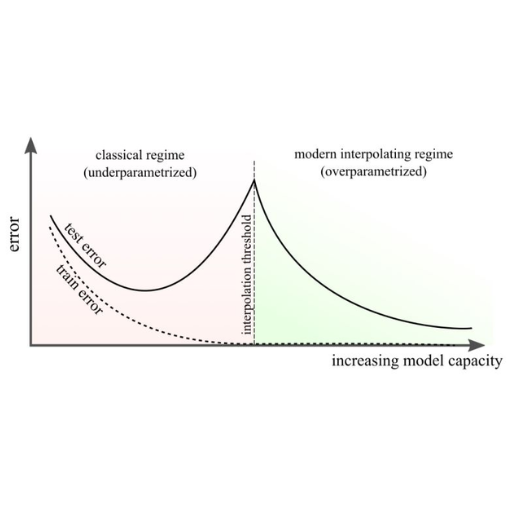
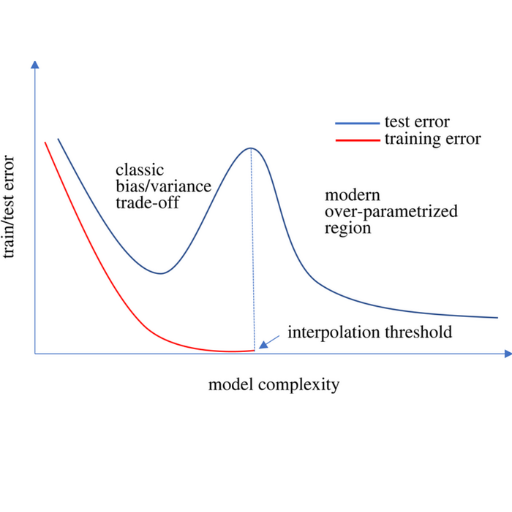
    The term “double descent” relates to a peculiar observation made of the majority of models used in machine learning, especially the large language models (LLMs), where the generalization error decreases following a model inversion \textit{-} which occurs at the augmentation of the model size or greater complexity of training set. The double descent that appears in machine learning derives its name from the type of error plot it creates and can usually be decomposed into distinct phases. In LLMs, double descent is commonly attributed to the interactions of model capacity, data complexity, and the training process. This further illustrates that existing paradigms on overfitting and underfitting have gaps, positing that over-parameterized models yield excellent performance when well-trained. This behavior must be deeply understood for optimal model and training strategy design.

    Understanding the Double Descent Phenomenon

    Double descent is a model’s generalization performance following a U-shaped curve that declines after what is traditionally deemed the point of overfitting. Classical models have faced a trade-off between bias and variance. Still, over-parameterized models—models with more parameters than training data—tend to lessen this trade-off to achieve peak performance. This is because with significant increases in the model size comes the ability to capture essential patterns in the data and minimize critical noise. Being familiar with this behavior and proper regularization techniques is imperative to aid in using double descent for better and more precise predictive model designs.

    How Double Descent Differs from Traditional Learning Curves

    Double descent challenges the learning curves by providing a new perspective on model effectiveness. As with more traditional learning curves, models driven by double-descent learning typically show a steady decline in errors as they become more complex. This means the addition of parameters or any other form of complexity enhances the model until it adequately captures the data to the point of overfitting, which leads to errors beyond a specific limit.

    Mistakes can go back down – Take note of this crucial detail regarding the double descent curve. The range of complexity within the model can reach a level where it is exceedingly overfitted, yet errors can decrease. This can be attributed to the communication between the underparameterized and overparameterized regimes.

    1. Underparameterized Regime:
    • This is where the model has not built enough capability to capture the data’s complexity fully.
    • Both training and test errors are high.
    1. Interpolation Threshold:
    • The complexity midpoint where model complexity is equal or slightly greater than the training data.
    • This results in the model perfectly fitting the training data. However, this leads to overfitting and a test error peak.
    1. Overparameterized Regime:
    • Model complexity goes beyond the interpolation threshold.
    • Surprisingly, the test error decreases due to the model’s enhanced ability to depict varying data patterns through low and high parameter counts.

    Key Technical Parameters:

    • Model Complexity, seen as the depth of neural networks or the number of their parameters, increases performance in the double descent curve
    • For a given model, performance is optimal when overparameterized and sufficiently regularized.
    • Regularization Techniques:
    • Applying dropout, weight decay, or early stopping helps reduce error and stabilizes learning.
    • Data Size:
    • Increased data lowers the peak at the interpolation threshold, lessening the severity of double descent.

    This phenomenon reshapes our understanding of model generalization; overparameterization can leverage data in superior ways. This is important in contemporary machine learning, especially with highly overparameterized models like neural networks.

    The Relationship Between Double Descent and Overfitting

    Double descent disputes the traditional concept of overfitting by illustrating that exceeding a model’s complexity beyond the interpolation threshold does not abandon generalization; in fact, it can improve upon it. Overfitting usually means poor performance on new data due to excessive attention being given to the training set. Still, double descent showcases a secondary improved performance phase as model capacity increases. This accentuates that careful observation of data and model architecture in an overparameterization scenario like neural networks can reduce overfitting, transforming it into a resource for better learning results.

    When Does Deep Double Descent Occur in Neural Networks?
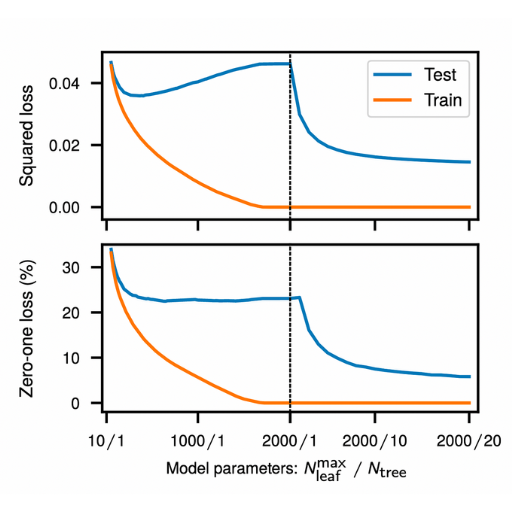
    Deep double descent is commonly seen in neural networks during the model’s shift from an underparameterized state to an overparameterized state. At first, an increase in model capacity results in overfitting, leading to worse generalization. After a certain number of parameters are reached, performance improves once more, achieving generalization due to the model’s greater flexibility in solution fitting. This is common when training large datasets with complex architectures, emphasizing the dynamic dependency between model size, dataset scale, and optimization.

    Model-Wise Double Descent: Impact of Number of Parameters

    About the impact of model-wise parameters, the double descent phenomenon states that performance does not reduce proportionally alongside overfitting. The concept exists that when parameters are added to the model, it causes delays or worsens the model’s performance with overfitting. Once a specified region is surpassed, the parameters enable the model to delve deeper into the solution space, explore it freely, optimize alongside numerous additional parameters, and enhance performance. This explains the complex relations among model architecture, data complexity, and optimization methods.

    Epoch-Wise Double Descent: The Role of Training Time

    Epoch-wise double descent pertains to the phenomenon whereby a model’s performance (in terms of generalization error) improves during a training session but worsens temporarily as an overfitting stage begins to set in until it improves once again with more training. This behavior is perplexing, underscoring the relationship between model sophistication, time spent in training, and generalization.

    The main contributor leading to epoch-wise double descent is the transition from underfitting to overfitting and finally to effective generalization. In the early epochs, the model learns several patterns from the data, gradually decreasing the training and validation errors. However, as the training proceeds past a certain point (depending on the dataset and model architecture), overfitting begins to set in, causing an increase in validation error, even as the training error continues to decline. After this overfitting phase, the model is allowed to start exploring; convergence to a model that generalizes from the training set causes a first phase of error reduction.

    Technical Parameters to Note:

    1. Learning Rate (0.001-0.01): A low learning rate can prevent overshooting during prolonged training phases and facilitate the achievement of a good solution.
    2. Epochs (50-500): The larger the dataset, the more training epochs are usually needed to reach the specific threshold for double descent.
    3. Batch Size (e.g., 32-256): Lesser batch sizes can help strike a computation-efficient balance in discovering better minima.
    4. Model Complexity (parameters): More parameterized networks display double descent behavior more dominantly because they are more likely to overfit, followed by generalization.
    5. Regularization Techniques: Dropout (e.g., 0.2-0.5) or weight decay (e.g., 1e-4 to 1e-5) techniques can control overfitting and alter the double descent timing.

    One must carefully adjust these parameters to balance generalization and model stability throughout prolonged training to comprehend and take advantage of epoch-wise double descent.

    Data-Wise Double Descent: When More Data Can Hurt Performance

    In a double descent scenario, model performance worsens after an initial improvement as the size of the training dataset increases. This occurs due to the model’s inability to manage extra complexity introduced with additional data, which can only counter it when the dataset size reaches a certain threshold. The model adapts better to the underlying patterns as the dataset grows, resulting in improved generalization. The key takeaway is that additional data is not always beneficial, and clever and robust modeling techniques are required to avoid these issues while curating the data.

    Why Do Larger Models Show Different Double Descent Patterns?
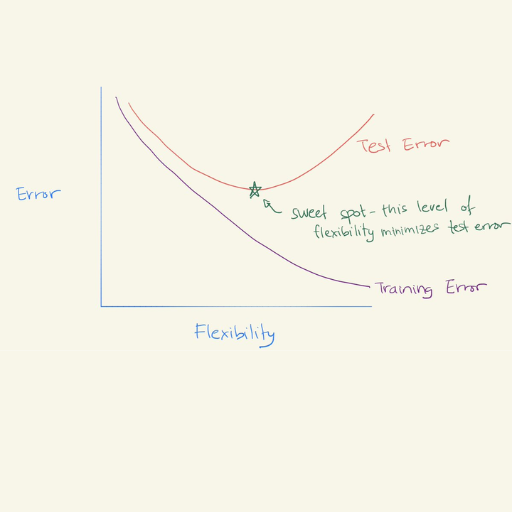
    The expression of overfitting and regularization results in more complex patterns of double descent for larger models due to their capacity to resolve complex data distributions coupled with their ability to fit diverse datasets. Such models tend to overfit to smaller or noisy datasets first and then easily uncover complex patterns in larger datasets, which is why they perform better. This further highlights the relationship between model complexity, data size, and regularization when optimal generalization is the aim.

    The Paradox of Bigger Models and Generalization

    Generalization becomes paradoxical with larger models owing to the tradeoff between capacity and robustness. I believe larger models with more parameters can often generalize better because they can represent more complex functions. However, this depends on appropriately regularized training and significant amounts of it. Inadequate amounts can result in overfitting, where noise is captured rather than meaningful patterns. A few, but not all, important parameters to think about comprise the number of layers, their width (neurons per layer), and dropout or weight decay regularization. As does the batch size, schedule-dependent learning rate modulation also depends, which affects the updates’ volatility. To circumvent overfitting or underfitting, it is critical that these parameters, given the dataset’s size and complexity constraints, are met appropriately to ensure optimal performance.

    How Model Size and Training Data Interact

    The relationship between model size and training data is crucial in any learning algorithm. Models with a larger number of parameters and features can capture complex patterns; however, these models also necessitate a large volume of quality training data to ensure effective generalization and mitigate overfitting. On the other hand, smaller models can work reasonably well with less training data, but their ability to model complex or large datasets is often significantly limited.

    When building a model and mapping it to the training data, take into account the following settings:

    • Number of Parameters: Large models (for millions of examples, tens of millions of parameters) and small models (for small datasets, thousands of parameters).
    • Regularization: Apply L2 weight decay or dropout 0.2-0.5 to large models to avoid overfitting when working with smaller datasets.
    • Dataset Augmentation: Enrich the smaller datasets by using augmentation techniques such as flipping, rotation, or scaling.
    • Batch Size: Start with 32 or 64, depending on the model size and memory.
    • Learning Rate: Set mid-range learning rates with Adam optimizer (1e-3) and adjust with schedulers as needed.
    • Epochs: Use early stopping to prevent over-training and monitor performance on validation data to set epoch numbers.

    Ultimately, scaling model size alongside the quantity and intricacy of training data is essential to attain dependable and effective model performance.

    Double Descent in Deep Neural Networks vs. Traditional Models

    Double descent describes the difference between classical models and deep neural networks in performance with increased model capacity. Traditional models tend to obey the bias-variance tradeoff; they suffer from high training errors due to excessive complexity, but overfitting deteriorates their performance on the test results. However, traditional deep neural networks have a peculiar trait: they have a reduction in test error referred to as ‘second descent’ beyond the interpolation threshold, showing that the models with even higher capacity do test better.

    Key elements of the thesis scope are:

    1. Model Capacity
    • Advanced deep learning networks feature a fixed polynomial degree of a particular layer and the parameters given to the model.
    • With deep neural networks, the radius of the layer, the number of nodes in the layer, and the number of parameters redefine the model’s capacity.
    1. Dataset Size
    • Large corpi of data are required so that deeper, later learning can take advantage of the benefits of the so-called second descent.
    • In contrast, the traditional model underrepresents a class of high-dimensional data in cases where the dataset is limited in size.
    1. Regularization
    • Such models depend exclusively on regressions such as Lasso or Ridge.
    • In deep learning, some other ways to reduce overfitting are used: dropout, weight decay, and batch normalization.
    1. Training Epochs
    • Both have limitations in avoiding unnecessary training and tend to use early stopping combined with validation monitoring or develop a system that is too complicated.

    Through these distinctions, researchers can optimize deep learning performance and balance traditional methods by properly adjusting models and maximizing double descent.

    Grokking and double descent are connected in their concern with generalization in deep learning. Grokking describes a model achieving an understanding of some patterns or capabilities after a training phase with low training error, often requiring long training times and specific conditions. This goes hand in hand with double descent, as both phenomena describe how overparameterized models can achieve better generalization. Examining grokking helps researchers understand why models show unexpected improvements, which is part of studying the double descent dynamics.

    The Unified View of Grokking and Double Descent

    The integrated view of grokking and double descent suggests that both rely on the model’s capacity, its training, and the structure of data for building their model. Both instances are abundant in overparameterized models that possess sufficient capacity to capture complex patterns instead of only interpolation. In the case of grokking, prolonged training usually demonstrates enhanced generalization, precisely when small datasets are combined with regularization techniques such as weight decay or learning rate schedules. Analogously, double descent further emphasizes the capability of potent models to generalize effectively after reaching the interpolation threshold.

    Corresponding Technical Parameters:

    1. Model Capacity:
    • Overparameterization is crucial, meaning that the model has an overwhelmingly high number of parameters relative to the size of the data, which is not ideal.
    • Architecture examples consist of large transformer models or deep neural networks.
    1. Training Time:
    • Grokking requires extensive training measured in epochs that far exceed typical convergence values (100-1000 epochs).
    • Validation loss and accuracy improve late in the training cycle and disallow the model to develop fully.
    1. Regularization:
    • Weight decay is required to keep the model in check and prevent it from strongly overfitting (typical values range from 0.01 to 0.0001).
    • Training may be stabilized using dropout or gradient clipping.
    1. Learning Rate Schedule:
    • Adaptive schedules commonly assist in grokking, while Cosine Annealing or warm restarts may improve double dissipation’s behaviour.
    1. Characteristics of Dataset:
    • Small or organized datasets that have underlying patterns are ideal for witnessing grokking.
    • The application of double descent is seen across almost all data scales and complexities, but the improvement of generalization is quite distinct among large and varied datasets.

    Because certain technical attributes of both ideas align, this framework provides direction to researchers attempting to understand the sophisticated ramifications of generalization within machine learning systems.

    How Models Learn Through the Second Descent

    I think models undergo a second descent while learning due to over-parameterization and pattern recognition in complex datasets. At first, as the model begins to memorize training data, the generalization performance becomes stagnant or begins to decline. In the second descent, further training improves the model’s prior learning processes so that it is able to capture broader patterns rather than simply memorizing data. This leads to better performance on new data.

    Some critical parameters that affect this include:

    1. Model capacity and architecture – relative to other models, over-parameterized models with greater capacity tend to exhibit the double descent phenomenon more profoundly.
    2. Regularization techniques – appropriate use of L2 regularization or dropout increases generalization while decreasing overfitting.
    3. Training duration: Prolonged training almost always aids the second descent, but this needs to be controlled to avoid convergence problems.
    4. Learning rate schedules – adjusting the learning rate over time ensures the model functions as intended.
    5. Dataset complexity – relatively large and varied datasets allow the model to distinguish between noise and valuable signals.

    Adjusting these parameters can help us better understand and exploit the second descent in machine learning systems.

    Distinguishing Between Grokking and Double Descent

    Grokking and double descent are two phenomena of double nature in machine learning that are deeply connected. Grokking explains “overfitting” as a model achieving a perfect generalization after going through a lengthy training process, irrespective of the outcome produced at the onset of the model output. Double descent, conversely, explains the phenomenon where model performance dips after a specific capacity or training has reached a point where performance improvements can be made. Both concepts have particular features of overfitting and generalization, and the groping emphasizes learning over time. At the same time, double descent focuses on how model complexity and the data fed into the model fit.

    What Practical Implications Does Double Descent Have for Training Language Models?
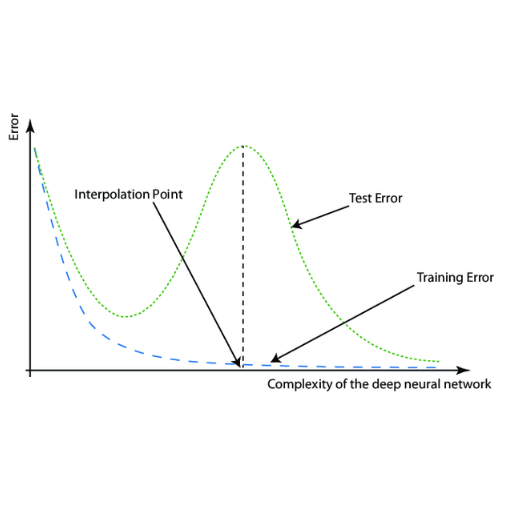
    Practitioners should note that double descent argues that more care needs to be given to replicating already constructed language models due to the interplay between model performance and the model’s capacity in any task. Increasing the complexity of the model or extending the training periods may bring adverse outcomes at first, but these practices could potentially be rewarding. They should attempt to use bigger models or set more extended training periods to capture optimum performance even when these models contradict normal expectations. On top of that, double descent underlines a need for better data to permit lower performance without suffering from poor generalization to guarantee that the language model is accurate and competent.

    Optimal Model Complexity for Different Dataset Sizes

    Model complexity intricately correlates with the level of the dataset available alongside its volume. In particular, simpler models work best for smaller datasets, as they are less likely to overfit and can generalize well. In contrast, for larger datasets, complexity increases, and more powerful models that utilize the available data to fit complex patterns without overfitting the data become the most appropriate choice.

    However, extreme model complexity heavily depends on the available computational resources. More powerful models require extensive memory and time alongside the appropriate hardware. Given this, validation and experimentation are the best solutions to determining the optimum complexity for the dataset at hand.

    Strategies to Leverage Double Descent When Training Models

    In utilizing double descent in model training, I try to balance model complexity and the size of the dataset. Smaller models are less likely to underfit when the training dataset is large enough, and I can take full advantage of overparameterization. With the large models, overgeneralization techniques such as L2 regularization and dropout are also necessary to gain additional control while improving generalization.

    The learning rates and batch sizes are also very important. For example, I know that starting with a learning rate of 0.001 allows for optimal convergence, so I start there and monitor performance before adjusting. Training is guaranteed to pay the most dividend in double descent generalization when paired with monitoring validation performance and setting stopping times. Last, I have found that modifying the model architecture with the training schedule creates the most leverage in fully unleashing double descent generalization.

    Key Technical Parameters:

    1. Model size (e.g., number of layers or parameters): It should be proportionately aligned to the dataset to avoid underfitting and overfitting.
    2. Learning rate: Start from 0.001, adjust accordingly.
    3. Batch size: More often than not, 32-256, hardware and dataset dependant.
    4. Regularization: Employ L2 regularization (e.g. λ=0.01) or dropout (e.g. rate=0.2).
    5. Early stopping: Monitor validation loss and suspend training if improvement ceases.

    As with many approaches, testing and flexibility are crucial to success with these strategies.

    When Bigger Models and More Data Improve Performance

    Based on my experience, tasks that involve complex identified patterns or large amounts of data, such as Natural Language processing or image recognition, work exceptionally well with larger models and extensive datasets. Larger datasets offer a wider range of data to learn and capture deep and intricate relationships for better generalization. Regularization, efficient training, and incorporating high-quality additional data are essential for improved productivity, alongside avoiding the pitfalls of computational inefficiency, overfitting, or diminishing returns.

    How to Observe Double Descent in Your Deep Learning Models?
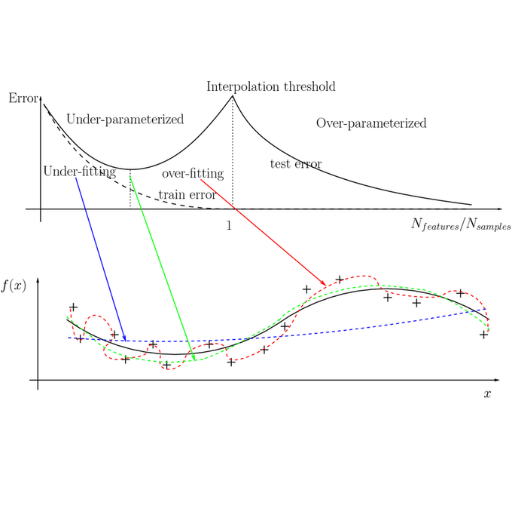
    To see double descent in your deep learning models, start by carefully keeping track of the model performance throughout the training phases. Monitor the training and validation error curves together with the increase of the model’s capacity or the size of the training dataset. A double descent is generally present when the error drops for the first time, increases, and then falls again with an increase in capacity or data size. It is essential to test different model complexities, like changing the depth of layers or the number of parameters, and evaluate the impact on the error rates. Learning curves and loss graphs help capture and analyze these errors and are essential.

    Experimental Setup to Measure Double-Descent Curves

    Practical experimentation with a double descent curve requires a fully structured experiment. The dataset selection, strategized steps, and requisite technical parameters are below.

    1. Dataset Selection:
    • When selecting a dataset, make sure that it includes some simple ones, such as CIFAR-10 or MNIST, and even some complex ones, such as image classification or a simple synthetic dataset, which can be used for controlled experimentation.
    • Make certain that the chosen dataset is of adequate size to accommodate both under parameterized and over parameterized models.
    1. Model Selection:
    • Adopt a model family with modifying capacity. Fully connected neural networks, convolutional networks, or transformer architecture can serve as models.
    • Of key importance are the following parameters:
    • The number of layers can be anywhere between two to twenty.
    • The number of units or filters per layer. For example, 32, 64, 128, or even higher.
    • The total number of parameters can range from thousands to millions.
    1. Training Protocol:
    • Adopt a well-defined training pipeline to reduce any unwanted influences.
    • Suggestive parameters:
    • Optimizer can either be SGD, Adam or AdamW with the learning rate oscillating between 1e-3 and 1e-5.
    • Batch size can vary from 32 to 256 depending on the dimension of the dataset.
    • Number of epochs has to be great enough to obtain convergence which can range from 50 to 200.
    • Learning rate scheduling- sine cosine annealing or step decay.
    1. Regularization Techniques:
    • Make sure to include experiments that have regularization to understand their impact better.Parameters that require testing:
    • The dropout rate can vary from 0.3 to 0.5.
    • L2 weight decay, which can be 1e-4 or 1e-5.
    • Strength data augmentation.
    1. Scaling Experiments:
    • Modify the dataset size and examine how it affects training data on double descent. Testing subsample sizes of 10%, 50%, and 100% may surface significant interactions.
    1. Evaluation Metrics:
    • Record both training and test loss for each experiment conducted.
    • Employ training error, test error, and accuracy for primary metrics to assess the presence of the double descent phenomenon.

    Double descent behavior will be captured and comprehended through systematic manipulation of the parameters and observing the resulting error plots as a function of model or dataset size.

    Interpreting Test Error Across Increasing Model Size

    Test error usually decreases during the early stages of model fitting’s complex double descent nature due to overfitting in the middle stage. Still, it increases with test size after a certain point because large models with sufficient training data usually underperform. This behavior is often attributed to the phenomenon known as double descent.

    Don’t forget to pay attention to the following essential issues:

    • Model Size: Refer to the number of parameters or layers that comprise the model. Initially, start with low configurations and gradually increase.
    • Dataset Size: Ensure that the training dataset is big enough. Larger models usually overfit when trained on small datasets.
    • Regularization Techniques: Control overfitting using L2 regularization or dropout and other methods.
    • Learning Rate: The optimal value speeds convergence but also ensures stability of lower order and slowest increase.
    • Epochs: Change the number of training epochs if the model is underfitting or overfitting the data at desired levels and changes incrementally.

    Adjusting these parameters one by one, together with charts of test error as a function of model size, makes it possible to observe the existence of double descent and exploit it to set the best parameters.

    Tools and Techniques for Visualizing Double Descent

    To observe the double descent phenomenon, I often rely on visualization aids, such as generating visually appealing, comparative plots of the training and test errors with Python libraries, Matplotlib, and Seaborn. I concentrate on the error curves created using different model capacities (for example, number of model parameters) or sizes of the datasets to illustrate the various phase transitions. Using TensorFlow or PyTorch, I run epoch-long experiments to capture the model’s metric evolution during the training. Moreover, visualization aids that automate hyperparameter tuning, like Optuna or GridSearchCV, help adjust parameters to reveal the most critical aspects of double descent in the visualizations.

    References

    1. Unified view of grokking, double descent and emergent abilities: A comprehensive study on algorithm task – This study explores the relationship between double descent and grokking, providing predictions and insights into emergent abilities in large language models.
    2. Deep double descent for time series forecasting: avoiding undertrained models – This paper discusses deep double descent in Transformer models and its implications, which may also be relevant to language models.
    3. Unified view of grokking, double descent and emergent abilities: A perspective from circuits competition – This research delves into grokking, double descent, and emergent abilities, offering a deeper understanding of neural models.

    Frequently Asked Questions (FAQ)

    Q: What is the introduction to double descent in large language models?

    A: Double descent is a fascinating phenomenon in deep learning where model performance follows a non-intuitive pattern. As model size increases, performance improves, worsens, and then improves again – creating a “double descent” curve. This challenges the traditional U-shaped bias-variance tradeoff in machine learning. In large language models, we observe this pattern as models first memorize training data, reach a critical interpolation threshold where they fit the training data perfectly, and then generalize better as they grow even more significant. This concept was popularized by Mikhail Belkin and colleagues, showing that overparameterization can benefit generalization in modern deep learning systems with large datasets.

    Q: How does the number of training data points affect double descent in large models?

    A: The amount of training data significantly impacts double descent behavior. With a small data size, models quickly reach the interpolation threshold (where training error becomes zero) and exhibit double descent earlier. As training data points increase, the interpolation threshold shifts to larger model sizes, delaying the double descent curve. Interestingly, with vast amounts of training data, models might not show the first descent before entering the regime where “more data hurt” – a phenomenon where additional training data temporarily degrades performance until the model grows large enough to utilize it effectively. This relationship between model size and training data size is fundamental to understanding grokking and double descent in large language models.

    Q: What is grokking, and how does it relate to double descent?

    A: Grokking is a phenomenon in deep learning where a model initially appears to memorize training data without generalizing but then suddenly “groks” or understands the underlying pattern after extensive training. This relates to double descent because both involve non-monotonic learning behaviors. In the context of double descent, grokking can be viewed as a temporal manifestation of the same underlying dynamics – where, with enough epochs of training, models transition from memorization to generalization. The unified view suggests that both phenomena emerge from the interplay between memorization and generalization circuits within neural networks as a function of model size, data size, and training time. This perspective helps data scientists better understand why large language models sometimes require excessive training before suddenly improving performance.

    Q: How does the model size influence the double descent phenomenon?

    A: The model’s size is a critical factor in double descent. As model parameters increase, we see improvements in test error (first descent), followed by a performance degradation around the interpolation threshold where the model perfectly fits training data but may overfit. Then, surprisingly, as we move to a broader range of model sizes with even more parameters, the test error decreases again (second descent). This counterintuitive behavior challenges classical machine learning wisdom that larger models should overfit more. The phenomenon of double descent shows that huge models can generalize better, which helps explain why massive large language models with billions of parameters can perform well despite their capacity to memorize training data. The relationship between model size and generalization is now a key area of study in modern deep learning.

    Q: What causes the “more data hurt” phenomenon in double descent?

    A: The “more data hurt” phenomenon occurs when increasing the number of training data points temporarily worsens model performance – a counterintuitive finding since more data typically improves learning. This happens in a specific regime where the model is large enough to memorize a smaller dataset but not properly generalize on a larger dataset. When we add more training data, the model struggles at the interpolation threshold, where it’s forced to fit all examples perfectly. This increases the complexity of the fitted function, potentially introducing more erratic behavior on test data. The phenomenon disappears once the model becomes large enough relative to the data size, allowing it to enter the second descent phase where more data and a larger model size improve performance. This insight is crucial for optimizing training strategies in large language models.

    Q: How do memorization and generalization circuits explain double descent?

    A: The theory of memorization and generalization circuits explains double descent mechanically. Neural networks appear to develop specialized subcircuits – some that memorize specific training examples and others that learn generalizable patterns. During early training and with smaller models, memorization circuits dominate as the model tries to fit training data. Around the interpolation threshold, these memorization circuits can interfere with generalization, causing the performance dip. As the model grows, it has enough capacity to develop robust generalization circuits alongside memorization circuits, leading to the second descent in test error. This theory explains why large language models can simultaneously memorize rare training examples while generalizing well to new inputs and why extensive training sometimes leads to sudden improvements as generalization circuits mature.

    Q: What implications does double descent have for training large language models?

    A: Double descent has several practical implications for training large language models. First, it suggests that increasing model size beyond what traditional machine learning theory recommends can improve generalization. Second, it indicates that training instabilities around the interpolation threshold are expected and may require adjustments to learning rates or regularization. Third, it explains why models sometimes need to be trained for many more epochs than early performance suggests – they may be developing generalization capabilities that only manifest after extensive training. For data scientists and ML engineers, understanding double descent helps inform decisions about model architecture, data science practices, and resource allocation, mainly when working with large datasets and models at the cutting edge of natural language processing.

    Q: How has research on double descent evolved since its introduction at the International Conference on Learning Representations?

    A: Since its formal introduction at Belkin and colleagues’ International Conference on Learning Representations, research on double descent has rapidly evolved. Early work focused on documenting the phenomenon across different architectures and datasets. More recent research has developed theoretical frameworks to explain it, including studies on the neural tangent kernel, information bottlenecks, and phase transitions in learning dynamics. Researchers have expanded investigations to include the effects of optimization algorithms, noise in data, and architecture-specific behaviors. The unified view connecting double descent to grokking represents a significant advancement, suggesting these are manifestations of the same underlying principles. Current research directions include developing practical methods to predict and navigate the double descent curve, understanding how it relates to other emergent phenomena in large language models, and leveraging these insights to build more efficient training paradigms to achieve generalization with fewer resources.

    Q: How do models with different architectures exhibit double descent?

    A: Double descent manifests differently across model architectures. Transformer-based large language models often show pronounced double descent due to their massive parameter counts and ability to form distinct memorization and generalization circuits. Convolutional networks typically display more evident double descent curves than fully connected networks, possibly because their inductive biases make the transition between memorization and generalization more distinct. Recurrent architectures show double descent concerning both width and depth parameters. Even decision trees and random forests exhibit versions of this phenomenon. The specifics vary – the location of the interpolation threshold, the severity of the performance dip, and the speed of the second descent depend on architecture details. This diversity suggests double descent is a fundamental property of statistical learning systems rather than an artifact of any particular architecture. However, its practical implications may be significant for large models with complex data distributions.


  • Large Language Models Explained: Unlocking the Power of LLMs

    Creating large language models (LLMs) is one of the most complex problems solved so far in artifi cial intelligence. These models process and create human-like language. They can perform multiple tasks, such as responding to questions, summarizing content, writing articles, and translating between various languages. Their multidimensional functionality has led to increased adoption in different sectors, academic fields, and among the general public.

    This post aims to arm readers with concrete information about sophisticated language models, the technologies and methods used in their development, and what they might be able to do in the future. First, I will discuss the most essential ideas of language models, like the deep learning techniques neural networks employ. After that, we will look closely at the training methodology and the model’s comprehension and generation of text formats in human language. In the end, we’ll be able to cover the possible practical usages of LLMs, the social concerns surrounding their use, and what restrictions LLMs might place on AI. After reading this guide, you will understand the basic concepts of large language models and how disruptive technology will be to our world.

    What are Large Language Model?

    AI has come a long way, especially when discussing LLMs or large language models. You can even converse normally with computers; they will respond in human language. LLMs immerse themselves in significant volumes of data, and this knowledge helps them understand words, phrases, and even sentences. Neural networks are compelling computing systems, and with these tools, LLMs can translate information, summarize it, and create new texts. Because of their meticulous engineering, deferred information is predicted and postulated meaningfully through the user’s input. The possibilities for using LLMs are boundless.

    Understanding Natural Language Processing

    Universal Language Processing is a domain that interlinks human language and computing. Understanding the significance of the translation, NLP helps machines communicate with humans more effectively. It plays a vital role in sentiment analysis, conversing robots, text summarization, and translation. Without a doubt, Unsupervised Learning technologies powered with large datasets and modern algorithms make it possible to deeply comprehend languages, context, and the sentiment behind the words. NLP generates and comprehends results, thus modern systems based on LLMs such as chatbots get devised to automate solving everyday problems related to human language. Don’t hesitate to ask for further support!

    How Machine Learning Models Enable Language Understanding

    Computer software’s ability to comprehend language using machine learning models is made possible through sophisticated algorithms, training data, and computation methods. Neural networks, including the transformer architecture models known as BERT and GPT, are at the heart of these models. These frameworks scan enormous volumes of text to comprehend how meaning and context interrelate semantically.

    Factors You Should not Omit:

    1. Training Dataset Size: To train models accurately and effectively, high-quality, heterogeneous datasets, such as Common Crawl and Wikipedia, which contain billions of words, are required.
    2. Model Architecture: The most prominent model is a transformer model, which has features like attention layers for analyzing the importance of the words in the context. For example,
    • layer count (for instance, 12 for the BERT-Base model, 24 for GPT-3)
    • hidden-unit dimension (such as 768 for BERT-Base and 12,288 for GPT-3)
    1. Tokenization: To prepare input text for the model, the text is split into smaller sections known as tokens, such as WordPiece or Byte Pair Encoding. This method guarantees that any representation on the model achieves subword level and is flexible.
    2. Hyper Parameters:
    • Rate of learning (usually varies between the values 1e-5 and 5e-4)
    • Size of the batch {32, 64 or any more significant number if training distributed)
    • The number of epochs in the training processes; this estimate fluctuates with the size of the dataset but is typically 3 to 10
    1. Loss Function: In sequence prediction problems, models frequently apply cross-entropy loss associated with the AdamW optimization strategy for gradient updating.
    2. Pretraining and Fine Tuning:
    • Pretraining requires unsupervised training on big corpora to capture basic language systems.
    • Fine-tuning requires application of the pretrained model to specific tasks, like sentiment detection or summarization, through supervision with labeled data.

    With these components, machine learning models accomplish specific language comprehension tasks, like question answering, summarization, or sentence formation, with high accuracy. Their flexibility and scalability support these models being at the core of contemporary NLP systems.

    The Role of Neural Networks in LLMs

    Neural networks underpin the functioning of large language models (LLMs), enabling the processes of text comprehension and generation in a human-like manner. These models primarily depend on transformer neural networks that optimize self-attention capabilities when dealing with sequential data. The self-attention-based architecture, proposed by Vaswani et al. in 2017, enhances the traditional recurrent neural networks (RNNs) by allowing parallelized input processing, which increases the speed and scope of computing even further.

    Some of the neural network components within LLMs include but are not limited to:

    • Self-Attention Mechanism: Evaluates the relevance of distinct words in a sequence to facilitate the model’s comprehension of contextual dynamics.
    • Multi-Layer Perceptrons (MLPs) add non-linearity to the model’s decision-making process through stepwise transformations and predictions in layers.
    • Embedding Layers: Enable text rendering into a numerical representation by converting input tokens to dense subset fixed-size vectors.
    • Residual Connections and Normalization: Protect against the disappearing and exploding gradient problem whilst preserving the flow of the gradient during backpropagation.

    Traditional LLMs usually encompass these parameters:

    1. Model Size:
    • GPT-4 (estimated): ~175-200 billion parameters
    • BERT-Large: 340 million parameters
    1. Training Data:
    • Models were trained on datasets spanning several domains, including books, articles, and code, which total more than 400 billion tokens.
    1. Compute Resources:
    • Training periods usually require thousands of parallel GPUs within supercomputers.
    • The required GPU hours for pretraining might vary from thousands to even millions.
    1. Optimization Algorithms:
    • Efficiently, the learning process is adjusted by optimizers, e.g., AdamW.
    • Large batch sizes (512-8192) and learning rate modifier (warm-up or decay) schedule guaranteed stable training.

    LLMs’ designs are exceptionally versatile. They allow the rapid generation and comprehension of intricate language and facilitate their diverse functions, including serving as conversational AI or providing thorough text summaries.

    How Do Large Language Models Work?

    The mechanisms used in LLMs enable them to comprehend and produce text by drawing from a significant bank of training data. These models are based on artificial neural networks, specifically transformer models, which process and encode contextually complete input text. Models of this type depend on attention, which allows them to concentrate on particular sections of the text and forecast words, phrases, sentences, or even whole passages, including translations and summaries. Considerable efforts are spent on the training stage, where billions of parameters are adjusted based on the patterns in data to increase accuracy and adapt to various language tasks.

    The Mechanics of Transformer Models

    Using self-attention control features in transformer models enables them to assign value to words about one another and their context when processing text. A subset of text related to a specific concept or idea is called a token and is stored within the most recently opened folder. Transformers, capable of operating in parallel mode, are unprecedentedly fast and remarkably adept at summarizing text generation and translation tasks. Performance efficiency highly depends on the scale and the quality of the training set a model is exposed to, and great quantities of parameters have to be adjusted within the model to recognize and understand the functions and implement them in the multi-language tasks.

    Training with Large Amounts of Data

    Training sophisticated AI models requires data sets with high volumes and genera, both in terms of the nature of their contents and the range of language they use. In my understanding, extensive and varied data sets enable models to identify more profound and complex patterns that will allow these models to enhance precision. Data set size, batch size, and the number of parameters a model possesses are some of the key technical aspects. For example, when training transformers such as GPT (which has 175 parameters), a suitable batch size of 256 to 2048 is required in conjunction with a text corpus containing information from different fields. In addition, there is a requirement for these parameters to be optimally set to avoid overutilization of resources when the model is being trained without leading to overfitting.

    The Importance of Fine-Tuning in LLMs

    The ability to perform fine-tuning on large language-centered models is crucial because it permits shifting a general-purpose model to specific tasks or domains. With them being trained on smaller granulated data sets with particular tasks, accuracy, and relevance can be maximized while ensuring that overfitting does not occur from the larger sets. This approach brings the model to the required performance level to be used or applied while avoiding the exhaustive training processes in terms of time and computational power needed. Furthermore, fine-tuning ensures that better alignment with user needs is created to make the solutions more effective and easy to use.

    What are the Use Cases for LLMs?

    LLMs have countless applications. These technologies can be employed in different areas, such as content development, where articles, marketing copies, and emails must be generated. In customer support, chatbots that need to provide automatic and precise answers are developed. Moderately complex LLMs offer instant translation of phrases, which helps overcome language barriers. LLMs also assist in the summarization of texts and extracting information from them. Because of their ability to comprehend human languages, they are also effective in aiding virtual assistants, recommending tools, personalized engagements, and educative devices.

    Applications in Natural Language Generation

    LLMS possesses astonishing Natural Language Generation (NLG) capacity, making various applications possible. It can generate coherent and context-sensitive text for content writing, report generation, storytelling, and automated customer service communication. Advanced structures, such as OpenAI’s GPT or Google’s T5, easily provide both long and short fluent content.

    Some of the significant technical parameters that relate to performance and NLG are:

    1. Model Size: The dimensions of a model are measured in terms of the number of its parameters, which controls the sophistication and coherence of the text. The best example is GPT-3, whose parameters are 175 billion, which produces overly fluent text.
    2. Training Data Volume: The quality and variety of training data primarily determine the model’s ability to generalize. GPT-4 is an example of such a model, as it was trained on enormous multi-faceted datasets of books, articles, and Internet content.
    3. Temperature: This value determines the degree of randomness of responses (0-1). Higher values produce more creative results, while lower values produce predictable results.
    4. Top-k and Top-p Sampling: The integration of top-k sampling (limiting the word choices to k highest probable words) and nucleus sampling (top-p which allows a set probability of dynamic words) helps in optimizing originality and coherency of the text.
    5. Fine-tuning: LLMs can be fine-tuned with domain-specific data to aid in targeted applications to perform better and be aligned with specific needs within the industry.

    Through LLMs, NLG automates monotonous writing across all industries to produce personalized work while fostering innovation and coping with immense language variety. The promise for further advancement is still intact.

    Utilizing LLMs for Sentiment Analysis

    Employing LLMs sentiment analyses is done by interpreting many texts that define emotions or sentiments. With pre-trained models offered to us, identifying whether texts are positive, negative, or neutral becomes very easy and accurate. This method is crucial when analyzing customer feedback, keeping track of social media posts, and conducting market analysis because it makes detecting crucial information from unstructured texts possible. As technology progresses, models capture more context-specific and sophisticated sentiment language, enhancing performance in sentiment analysis tasks.

    Enhancing Conversational AI with LLMs

    With the aid of Large Language Models and LLMs, it’s possible to achieve exceptionally fluid and contextual interactions, making a hugely critical difference in Conversational AI. These automata utilize parameters, such as large-scale pre-trained datasets, attention-based techniques, and transformer architectures, to synthesize and process human-like dialogue. For a successful integration in Conversational AI, a few technical parameters made a mark:

    • Model size and parameters: Models with billions of parameters, like 175 billion in GPT-3, are deeply contextual, yet such deep models are resource-intensive computationally.
    • Pre-training datasets: Effective handling of disparate dialog scenarios and domains is skilled with diverse and splendid datasets.
    • Fine-tuning: Custom fine-tuning on specific data allows task-efficient LLM adaptation to customer support, healthcare, finance, etc.
    • Latency optimization: Pruning or quantizing models enables efficient inference speeds for real-time responsiveness in conversational systems, which is crucial in maintaining the seamless flow of the conversation.
    • Context window size: Enhanced conversations require proper control over coherence, which is enabled by a broader context window (4k to 8k tokens).

    Well-tuned LLM parameters result in accurate, dependable, and flexible responsiveness from ever-evolving Conversational AI systems, meeting user expectations effectively.

    How are LLMs Trained?

    The procedures necessary for training large language models involve:

    1. The initial step is Data Collection: Large language models (LLMs) operate by training them using different datasets, including text materials such as books, websites, and other written documents that serve linguistics for contextual knowledge and understanding with context intertwining.
    2. Secondly, there is a step known as Preprocessing. During this step, all relevant data is sanitized and adequately prepared by eliminating duplicates, cleaning irrelevant text, and tidying issues and inconsistencies to guarantee the highest-quality data input for training.
    3. Then there is Model Architecture: LLMs such as GPTs are constructed using cutting edge technology such as the transformers, the LLMs can learns the relationships that exists in combined data processes efficiently.
    4. Then, there is a minutely outlined training process: LLMs are trained through monitored learning and reinforcement learning, and because learning is supervised, significant computational resources are required. Optimization techniques such as gradient descent are utilized to correct prediction errors.
    5. Then comes the Fine Tuning stage: A model receives the mid-level training and might use domain specific or detailed task data to enable the model perform better to achieve its objective.
    6. Lastly, Evaluation and Validation follows: The acquired model is analyzed and evaluated by different datasets to test its efficiency and coherence as well as accuracy to a high degree and how well it can generalive different tasks.

    With these maelon hundred workflows, it remains unquestionable in deploying LLMs in AI systems that engage users, creates purposeful and context centered user responses.

    The Process of Data Collection and Preparation

    The data collection focuses on obtaining high-quality datasets from various trustworthy sources to train a language model effectively. Collecting text from books, articles, and websites into a corpus involves abiding by various ethical and legal limitations such as copyright laws. After collecting the datasets, they are cleaned and preprocessed to eliminate noise, inconsistencies, or irrelevant information. Tokenization, normalization, and character filtration are some of the commonly used techniques for preprocessing. This helps structure the model inputs to foster a better understanding and improve its performance.

    Understanding Generative Pre-trained Models

    GPT and other Generative Pre-trained Models implement unsupervised learning on a large volume of language data to understand context and coherently produce sentences. These algorithms consist of several transformer blocks, a type of neural network architecture for sequential data. Technical metrics characterizing these models include:

    1. Depth (the number of layers): 12, 24, or more (as in the case of GPT-3, which has 96 layers on the most significant model).
    2. Width (hidden units per layer): In larger models, 768 to 12,288, specifying the amount of information processed by the given level.
    3. Model practitioners allocate 12, 24, or more attention heads and can quickly focus pay attention to input sequence relationships.
    4. The diversity in text data is often hundreds of gigabytes to terabytes, commonly called the training data size.
    5. Ranging from millions to hundreds of billions enabling nuanced understanding and generation capabilities are model parameters (example: GPT-3 with 175 billion parameters stands unparalleled).
    6. It refers to a tokenization method, breaking a text into smaller pieces while retaining its meaning, BPE or similar approach uses Byte Pair Encoding.

    Generative models realize astounding versatility about language understanding and content creation by pre-training followed by task specific fine-tuning along with adjusting these parameters.

    Challenges in Training Large Models

    The challenges encountered when training large-scale generative models many on computational, data, and environmental problems:

    1. Computational Resource Requirements

    Like every large model, GPT-3 and GPT-4 require many. This makes it imperative to have hundreds, if not thousands, of high-range GPUs or TPUs functioning simultaneously.

    1. Extensive Data Needs

    Another facet of these models is the massive, high-quality, and diverse datasets required to train them. The datasets must be balanced across multiple domains, such as books, dialogue, news, and even code, to avoid niche or biased content. Coding these datasets adds more complexity due to their tedious nature, such as tokenization and de-duplication.

    1. Optimization and Memory

    With the introduction of billions of parameters, optimizing the paradigm becomes more complex, with challenges such as memory bottlenecking and gradient vanishing/explosion. Megatron-LM also extensively uses memory management, mixed precision training, decentralized training methods, and gradient checkpointing.

    1. Cost and Energy Consumption

    The persistent issue of high energy consumption continues to be of concern. For example, the energy cost of training GPT-3 is estimated to be in the millions. This cost affects the projects’ budgets and carbon impacts, and there is a clear need for more energy-efficient algorithms and low-carbon AI solutions.
    1. Overfitting and Generalization

    When large models are trained with limited or biased datasets, they are highly susceptible to overfitting and may not generalize well. To address this, dropout regularization, augmenting the data, and adding diversity to the dataset in the preprocessing phase can be employed.

    1. Ethical and Bias Challenges

    Unfiltered biased models reproduce feedback loops that enhance stereotypes. To eliminate such factors, adversarially trained inclusive data curation and post-deployment auditing are needed.

    Implementing these advanced techniques, while at the same time being mindful of the design, will allow the construction of effective and ethical large language models.

    What are the Benefits of Large Language Models?

    Artificial Intelligence technology has revolutionized numerous industries for the most part because of the fundamental benefits it offers. To begin with, understanding and producing human language-like text is a specialty of these systems, allowing them to use NLP techniques to develop chatters, virtual aides, and even self-writing programs. Moreover, how they can digest vast amounts of data makes them essential for summarizing information, translating, or researching. Besides, these AI models help users change their language and help those in need, which enhances accessibility. Moreover, these models have supported businesses by enabling better customer relation management and integrating non-business functions. These models are required in any industry or sector due to the innovation and productivity they provide, which is greatly needed in today’s technology-heavy world.
    Improving Human-Machine Interaction

    To promote interaction between humans and machines, systems need to be built that are user-friendly, proactive, and can easily be modified. The first step towards accomplishing this is understanding the advancements of NLP, which can help facilitate easier communication by adequately interpreting the user’s input and the context surrounding it. Second, the adaptive learning models can also improve the overall experience of the individual user over time. This can be achieved by integrating new parameters that help the system adapt to individual user behaviors. Specific technical limitations must still be respected, such as average latency that should not exceed 300ms and achieving over 90% accuracy in core NLP functions like speech recognition or text analysis. Furthermore, the datasets used must focus on diversity to mitigate biases. These priorities would improve human-machine interaction, from effectiveness to user-friendliness.

    Advancements in Text Generation Capabilities

    The progress in text generation capabilities has been phenomenal, especially with the emergence of new AI systems like GPT, whose context relevance and accuracy are nearly one hundred percent. The technology uses large datasets alongside a transformer structure that aids in understanding grammatical particulars of language, making it useful in content generation, customer relations, education, and many more. Also, the active work for bias elimination coherence and contextual understanding enhancement guarantees the reliability of the tools in the most versatile situations.
    Facilitating Multimodal Model Applications

    Multimodal systems employ algorithms to automatically analyze and interpret information from different sources, including text, videos, images, and audio, providing more prosperous and well-rounded results. Introducing Multi-Modal Systems improves the execution of tasks such as interactive multimedia content development, visual question responses, and dialog systems. Recent advancements highlight user-friendliness, adaptability in real-time, and interactivity, thus enabling progress in fields like medicine and education, as well as entertainment. Balancing the acceleration of technology development and applying ethical principles is a challenge that needs to be addressed to provide better and more creative outcomes.

    How Do LLMs Compare to Other AI Models?

    Although Large Language Models (LLMs) can process and generate human-like text, they stand apart in their construction and intended use from other AI models. LLMs have been fed enormous amounts of text, which translates to them being effective at various tasks, including but not limited to translation, summarization, and conversational interface creation. Relative to other AI models with a clear focus, such as vision and audio interfaces, LLMs do not have actual Multimodal capabilities unless integrated with peripheral systems. Different models may outperform them in areas like the recognition of images or the processing of audio. Still, the strength of LLMs is the flexibility they offer in language tasks across various industries.

    Differences Between LLMs and Traditional Models

    1. Training Dataset
    • A wide range of human-like text is drawn from different sources for inclusion in the dataset and this is precisely the reason as to why LLMs have broad contextual understanding and human-like language generation capabilities.
    • Usually, more trivial and uncomplicated models are created using simple, singular datasets specific to one domain or an area of a task.
    1. Scale and Parameters
    • Large language models usually have billions of parameters. These models enable the user to manage better and deal with more complicated language and contextual issues. For instance, GPT-4 is estimated to have over 175 billion parameters.
    • General-purpose models are designed with fewer parameters as they work more efficiently and accurately. Fewer parameters mean there is no scope for generalization in multiple contexts.
    1. Application Focus
    • Apart from industry-specific applications, LLMs can perform text summarization, translation, and sentiment analysis competently.
    • Traditional models are exceptionally good at automating procedures or classifying rules.
    1. Multimodality
    • LLMs can be trained to generate and process text data and work with other data types.
    • Traditional models can handle non-textual data, such as images or audio, as they are specially designed for other modalities, such as vision.
    1. Performance
    • LLMs capitalize on transfer learning, which ensures proficient performance on a wide range of tasks. However, unless adequate fine-tuning is performed, LLMs may fall short in particular use cases.
    • Due to optimization, traditional models usually outperform LLMs in specific tasks but cannot quickly shift to other tasks.

    This analysis has shown that LLMs are more flexible and proficient in language, while traditional models are better in efficiency and specialized tasks. Which one to choose greatly depends on the targeted problem type and available computation resources.

    The Evolution from Machine Learning to Deep Learning

    Shifting from machine learning to deep learning indicates a change in the processes involved in data management and modeling. Machine learning processes involve feature engineering, which involves humans with in-depth knowledge identifying and defining the most relevant features for a specific task. On the other hand, deep learning automates this process by using multi-layered neural networks (the “deep” part) that learn and extract features through direct interaction with raw data.

    In this case, the key technical parameters that differentiate the two systems are model complexity, amount of data needed, and power. Effortless to more complex learning structures within deep learning like convolutional neural networks (CNNs) and recurrent neural networks (RNNs) have dozens of millions of parameters and need to be trained on large datasets so that they do not end up overfitting, but simpler algorithms like decision trees or support vector machines (SVMs) are less demanding with smaller datasets. Because deep learning is more complex, it also requires greater computational power, most often needing to harness GPUs or TPUs to allow efficient training from operations such as backpropagation and gradient descent optimization.

    The advancement of deep learning modles has made possible the breakthroughs of image recognition, natural language processing, and autonomous systems, showcasing the profound ability of deep learning in managing intricate high dimensional data.

    Future Prospects for AI Chatbots and LLMs

    Prospects for AI chatbots and large language models (LLMs) technology are exceedingly bright. These technologies will keep changing sectors by improving customer support, automating mundane processes, and facilitating advanced interaction. As deep learning progresses, generative models’ context comprehension will improve, enabling even more advanced communications in models like GPT-4. However, ethical considerations, bias in training data, and scarce computation resources remain significant challenges. Striking the balance between harnessing these technologies’ personalization and knowledge-creation power while solving these problems will define the next innovation cycle.

    References

    1. AWS: What is LLM? – Large Language Models Explained
    2. Medium: How Large Language Models Work. From zero to ChatGPT
    3. Understanding AI: Large language models, explained with a minimum of math

    Frequently Asked Questions (FAQ)

    Q: What is an introduction to large language models?

    A: Large language models (LLMs) are artificial intelligence designed to understand and generate human language. These models are trained on large datasets and use advanced algorithms to predict the next word in a sequence, allowing them to generate text, translate languages, and perform other language-related tasks.

    Q: How are language models trained?

    A: Language models are trained using vast amounts of text data. This training involves feeding the model large datasets containing diverse examples of human language. During training, the model learns to recognize patterns and structures in the data, which allows it to generate coherent and contextually appropriate text.

    Q: What are some everyday use cases for LLMs?

    A: LLMs can be used in various applications such as chatbots like ChatGPT, language translation, content creation, and summarization. They are also employed in programming assistance, where they help generate code snippets based on a provided prompt. Additionally, LLMs are used in research to analyze unstructured data and explore new AI capabilities.

    Q: How do LLMs work in generative AI?

    A: In generative AI, LLMs take a prompt as input and predict the next word or sequence of words to generate coherent text. This process is similar to how the human brain processes language. The model uses its training data to understand the context and produce text aligned with the input prompt.

    Q: What is the role of tokens in LLMs?

    A: Tokens are the basic units of text that LLMs process. Each word or part of a word is converted into a token when processing text. The model uses these tokens to analyze and generate language, efficiently handling large and complex text pieces.

    Q: How do models like ChatGPT use LLMs?

    A: Models like ChatGPT use LLMs to understand and generate human-like text responses in real time. They are trained on extensive datasets to learn the intricacies of language and can engage in conversations, answer questions, and provide information based on user input.

    Q: What are the capabilities of language models?

    A: The capabilities of language models include generating coherent text, translating languages, summarizing information, and understanding context in a conversation. They can also assist in creative writing, automate customer support, and provide insights from large datasets. As foundation models, their capabilities continue to expand with advancements in AI research.

    Q: Why is training data necessary for LLM performance?

    A: Training data is crucial for LLM performance as it provides the foundation for learning language patterns and behaviors. The quality and diversity of the data used to train these models directly impact their ability to generate accurate and contextually appropriate text. High-quality data leads to better model performance and more reliable outputs.

    Q: Can LLMs be used for language translation?

    A: Yes, LLMs can be used for language translation. They analyze the source text, understand its context, and generate a translation in the target language. This process leverages the model’s ability to predict the next word or sequence of words in both languages, facilitating accurate translations.
  • Understanding Large Language Models Explained: How LLMs like ChatGPT Work & Transform AI

    Advancements in artificial intelligence have now been made easier with the help of Large language models (LLMs), enabling machines to process, generate, and comprehend human language remarkably. ChatGPT is one of the examples. Programs like these are loaded with deep learning architectures trained with massive chunks of written data and trained enough to carry out numerous tasks related to natural language processing. This blog will explain the technologies behind LLMs, ranging from their developmental process to how they will transform the customer service industry, creative writing, and much more. After reading, I will be able to summarize the process of LLMs, including their practical features, possible applications, and threats to the future of AI.

    What are Large Language Models Explained (LLMs), and How Do They Work?

    Large Language Models (LLMs) are sophisticated AI models designed to comprehend and produce human language. Their operations entail examining vast amounts of text and obtaining patterns, meanings, and interrelations among words and concepts. They utilize neural network structures, particularly transformers, such as those devised in GPT, to execute language functions by splitting speech into tokens and estimating the subsequent token in the order. Making these predictions enables the models to display fluidity and relevance in the produced text. LLMs are supported by millions and even billions of parameters that facilitate the performance of complex tasks, such as translation, summarization, and answering questions. Nonetheless, this complexity presents other problems like bias, interpretation, and heavy resource demands.

    The Evolution of Language Models in Artificial Intelligence

    The past decade has perhaps seen the most significant transformations in the field of artificial intelligence, especially in the area of developing language models. Innovations in deep learning and neural networks have primarily fueled this rapid progress. Traditional approaches to AI focused on incorporating set rules and statistics to create algorithms that lacked contextual depth. With the development of the transformer architecture, particularly GPT, the ability of computers to process and generate human language has significantly improved. Models now use large datasets and billions of parameters for more sophisticated tasks like summarizing, translating, and answering complex questions with great accuracy. However, work is still needed to ensure broader accessibility and equity by solving issues related to bias, high computational resources, and opacity of the models’ functionality. There is still much active research to be done in this latter area.
    How Transformer Architecture Powers Modern LLMs

    Self-attention computing transforms the entire process of generating output texts that resemble human language into an easy job if done with cutting-edge Large Language Models (LLMs). Evolving from deep neural networks, self-attention methods derive from the concepts presented in the 2017 “Attention is All You Need” paper. Self-attention computing stems from gradual advancements in effective and manageable language data processing analysis replete with fundamental structures like positional encoding and self-attention mechanisms.

    Key Components of Transformer Architecture:

    1. Self-Attention Mechanism

    A self-attention mechanism is integral to determining each word’s relative importance against the other words in the same sequence, which is the case in human languages. It ensures that certain words capture context-rich relationships irrespective of their positional distance within sentences.

    • Equation: Attention(Q, K, V) = softmax(QKᵀ / √d_k) V
    • Parameters:
    • The embeddings of input text produce the Q (Query), K (Key), and V (Value) matrices.
    • For almost every implementation, d_k is the dimensionality of keys and queries and is defined to be 64.
    1. Positional Encoding

    To provide context for the order of words in a sentence, positional encoding is added into input embeddings to help the model process a sequence. Transformers lack recurrent mechanisms like the ones used in RNNs, so these encodings are essential for their functionalities.

    • Where pos indicates a specific position, the following encoding formulas give:
    • PE(pos, 2i) = sin(pos / 10000^(2i/d_model))
    • PE(pos, 2i+1) = cos(pos / 10000^(2i/d_model))
    • The scale of the model defines d_model values from 256 to 2048.
    1. Multi-Head Attention

    Transformers have multiple heads to simultaneously attend to different input parts instead of having attention defined through a single mechanism. Each of them differs in how they attend to information, which helps the model comprehend the complexity of patterns.

    • Standard Parameterization:
    • h (number of heads): 8 or 16 (widely used in GPT and BERT families).
    • After the attention ‘heads’ are applied, the outputs are combined into one output.
    1. Feed-Forward Networks (FFN)

    A position-wise FFN is applied to every position with each transformer layer, encapsulated by two linear transformations and a ReLU nonlinearity.

    • FFN definition: FFN(x)= W2(max(0, xW1+b1))+b2
    • In FFNs, the hidden layer’s size is usually 4 times the d_model size.
    1. Layer Normalization and Residual Connections

    To enhance the gradient flow and control the convergence during training, layer normalization and residual connections around the sub-layers are utilized.

    Benefits of LLMs:

    • Scalability: Self-attention enables parallelization, which helps Transformers scale tremendously to large datasets with massive parameter numbers. This feature suits models such as GPT-4 and PaLM.
    • Generalization: This architecture can perform numerous NLP tasks without additional tuning within a specific domain.
    • Performance: Implementing Transformers in LLMs practically guarantees success and superiority in achieving benchmarks such as GLUE and SuperGLUE.

    Real World Examples:

    • GPT-3 (175 billion parameters): Generates a set of coherent and diverse texts using stacked transformer layers.
    • BERT (340 million parameters): Utilizes bidirectional attention to perform classification and recognition tasks.
    • Palm (540 billion parameters): Uses extended transformer layers for superior performance in many languages.

    In summary, the modular and efficient design of the transformer still drives AI innovation.

    How LLMs Predict the Next Word to Generate Human-like Text

    LLMs rely on colossal amounts of text data to identify patterns, contexts, and relationships to predict the next probable word. LLMs can generate coherent and contextually plausible prose one word at a time when employing other deep learning tools, such as the self-attention mechanisms that are a key constituent of the Transformer architecture. Instead of strings of sentences having ma eaning that can be construed differently, LLMs rely on statistical models, enabling them to craft seemingly human-like responses.

    Breaking Down the Training Process of Large Language Models

    Developing a large language model involves several critical steps. First, a large dataset contains texts from books, articles, and websites covering various subjects and themes. That dataset is then subjected to a cleansing process, which eliminates very low-quality or irrelevant data. During training, the model uses the self-attention mechanism of the Transformer architecture to recognize patterns and relationships within the text being processed. The model uses the prior context for any word to determine what word it wants to use next in the prediction sequence. It progressively improves by reducing the gap between its predictions and the actual data. This stage is revisited numerous times over and over in an iterative procedure, with the models self-adjusting in performance with billions of parameters. In the end, some assessments and adjustments of the outputs are made, sometimes including specific datasets so the model produces contextually relevant, coherent outputs.

    How LLMs are Trained on Massive Datasets

    To develop large language models (LLMs), one must combine extensive datasets and sophisticated computing equipment to reach desired levels of understanding and perfection. The procedure usually begins with compiling relevant raw data, including text from books, articles, websites, and academic papers. After the data is collected, it undergoes pre-processing, which involves cleansing, tokenization, formatting, and eliminating duplicates.

    The core training process adopts the transformer architecture, which includes attention systems to focus on relevant word choices within the provided context. Important factors which arise in the training of LLM are:

    • Number of Parameters: Current models of LLM, like the GPT variants, have parameters counting in the billions, such as GPT-3, which ranges above 175 billion. Such parameters allow models to understand relationships in different languages.
    • Batch Size: A sampled range of 128 to 1024 is usually set per iteration to strike a balance between ideal performance and efficiency.
    • Learning Rate: This determines the amount a models parameters are altered during training, often it is started at an approximate value of 1e-4 with decline over time.
    • Training Steps: Training can take millions of steps based on the size of the set, and advanced equipment can be needed in a time range from weeks to months.
    • Hardware: Training LLMs involves using powerful supercomputers with GPUs or TPUs. Common examples include the Nvidia A100 GPUs or Google’s TPUs, which are especially suited for large-scale matrix multiplications.

    The model is trained to predict the next word given the previous n-grams, enhancing its skill through backpropagation and gradient descent optimization. The system is adjusted using specialized datasets or in-context learning for summarization, translation, questioning, or answering tasks.

    In the end, using perplexity as a predictive performance evaluation metric and real-world task tests verifies that the model outputs make sense and are accurate.

    The Role of Deep Learning in Language Model Development

    Deep learning contributes significantly to the development of language models by allowing them to learn patterns and relationships in extensive textual data. I use neural networks, specifically transformer architectures like GPT and BERT, to train these models to accept data sequences and respond with the most appropriate outputs. Some crucial technical details that must be tackled on this train of thought are the number of layers (12 for smaller models; state-of-the-art ones can have 96), hidden layer size (which can vary between 768 and 12288), and number of attention heads (which is usually between 12 and 96). Moreover, the amount of training data, which is several hundreds of gigabytes to a few terabytes of text, provides a balanced portrayal of different linguistics is another factor. Changing parameters while training, using methods like Adam optimizer and gradient clipping, results in lower perplexity and improved effectiveness in the context of language tasks.

    Why LLMs Require Enormous Computing Resources

    The computing resources needed to build and operate large language models (LLMs) are staggering due to their structure and scale. These models require billions and even trillions of parameters to be stored and processed, which involves enormous memory and processing power. Also, the datasets are often measured in terabytes, meaning that high-end hardware such as GPUs and TPUs are needed to store and process the data. Moreover, iterative optimization techniques like backpropagation and gradient descent, which must be calculated alongside other parameters, significantly increase resource demand during training. Even after the models have been trained, there is still the issue of accessing vast amounts of computational power to deliver real-time answers during inference. Running a model at scale always requires significant computing resources.

    Key Capabilities and Limitations of Modern LLMs

    Key Capabilities

    Modern large language models (LLMs) can do them astonishingly well in an array of activities. These highly advanced models can produce human-like speech or text, perform translations or interpret the text, create a summary of the text, and even answer questions relevant to the context. These models considerably understand the context behind the prompt and produce suitable outputs. Such models are also helpful in executing tasks such as sentiment analysis, content creation, and even code generation. Furthermore, LLMs prove their effectiveness in various industries by being fine-tuned on appropriate domain datasets where they deploy specialized techniques.

    Key Limitations

    Regardless of these models’ advantages, some deficiencies come hand in hand with modern LLMs. These models profoundly depend on the quantity and quality of their training datasets; owing to existing biases, the output could be inaccurate or wrong. These models are not human, meaning they do not ‘think’ per se. As a result, they could provide some responses that sound reasonable but are utterly untrue. On top of all this, LLMs are costly to train and deploy, decreasing the chances of access and scalability. Ensuring these systems’ unethical and privacy use can cloud the healthcare and finance industries. The capabilities and limitations of LLMs must be balanced to get their benefits without causing harm.

    Natural Language Processing and Understanding Abilities

    Natural language processing (NLP) allows machines to understand and respond to human language. Communicative human language can be translated into something a machine comprehends. NLP uses text analysis procedures like tokenization, parsing, and text analysis recognition (NER), among others, to dissect the entire context of a sentence. It also uses machine learning models like transformers, the backbone of remarkable creations like OpenAI’s GPT or Google’s BERT.

    The key technical aspects ofNLP makes uses text analysis procedures like tokenization, parsing, and text analysis recognition (NER), among others, to dissect the entire context of a sentence.

    1. Model Size ( e.g., number of parameters)
    • GPT-4 (Estimation): 1.5 trillion parameters
    • BERT base model: 110 million parameters
    • BERT large model: 340 million parameters
    1. Learning Data
    • Models are pretrained on various datasets, including books, websites, and publically available corpuses to capture language and context around it rather accurately.
    1. Processing Power
    • Models need many computational resources (GPUs or TPUs) to manage training and inference smoothly. As an example, GPT-4 needs several petaflops worth of computational power to be able to train.

    NLP has proven beneficial in constructing, translating, sentiment analysis, chatbot design, and formulation of summaries. These tasks can be worked on through model fine-tuning, which helps meet specific standards for more specialized domains. There are, however, still problems with contextual uncertainty, moral deployment, and biases concerning language representation. These are significant issues that still go unaddressed and put attention towards making NP advancements more equitable and ethical.

    Common Challenges and Limitations of Current LLMs

    From my understanding, current LLMs have a couple of significant limitations. First, they tend to have some contextual accuracy issues, meaning that their outputs are sometimes plausible at first glance but are verifiably false or illogical. Second, they also show biases based on their training data, which can further propagate harmful stereotypes or unfair portrayals. Finally, there is also the issue of resource intensive; training and deploying these models need tremendous computational power and energy, which raises issues regarding their economic and environmental impact. Overcoming these issues requires significant advancements in ethical training practices, model architecture, bias reduction processes, and efficiency augmentation techniques.

    The Difference Between General and Specialized Language Models

    GPT and BERT are general language models that can simultaneously process and accomplish multiple tasks. These models can generate coherent text on various topics because they are trained on large-scale datasets from different fields and areas. However, they lack depth due to domain knowledge, making them depend on other highly skilled professionals to assist them with specific and highly technical tasks.
    Unlike general language models, specialized language models are proficient in specific applications and industries. These models are trained using domain-specific data, which equips them with deep knowledge and understanding of that field, such as healthcare or finance. Consequently, these models become more accurate and relevant, although their use is restricted to a specific context. Because of their limited utility scope, they are not as flexible as general models.
    Choosing a specialized or generalized model comes down to the context and requirements. Specialized models outperform general models when the task requires a specific skill or in-depth knowledge and attention. However, general models are more adaptable and user-friendly as they can be utilized without much preparation or resources.

    Trained with data until now, we can confirm that the transformer model architecture introduced in 2017 is what is used in advanced technologies like ChatGPT. By deploying the self-attention mechanism, the transformer architecture can analyze relationships among all tokens, allowing models to generate and process human text accurately.
    Detailed pre-training on many datasets is one of the many innovations distinguishing them from the rest, providing them with unrivaled foundational knowledge. This is further coupled with specific task tuning to increase relevance and accuracy. Additionally, the scale at which these models are built is unmatched. Modern LLMs contain billions of parameters – a feature that allows them to achieve stellar results across myriad complex tasks.
    Versatility and power are the defining features of modern LLMs, allowing bridges to be built between general-purpose and specialized model features. These models strive to cater to user input across contexts, a feature that will enable them to be regarded as integral components in AI.

    How ChatGPT and GPT Models Revolutionized AI

    Understanding these concepts would aid in comprehending that ChatGPT and other models have drastically changed AI as we see it. These models’ heart lies in the innovation of natural language processing and deep learning. Even the self-attention and positional encoding methods introduced as building blocks of the transformer model were revolutionary. These features offer an edge in how the models make sense of the context and ensure relevant and coherent text production.
    One central element is the magnitude of the parameters incorporated and their scales. For example, models like GPT-3 have 175 billion parameters, making it possible to achieve great finesse in comprehending and producing human language. In addition, training using enormous datasets, typically in the hundreds of gigabytes or more, makes it possible for these models to possess comprehensive knowledge in numerous fields.
    The progression of techniques for model fine-tuning also becomes another reason why the model is more flexible and can quickly adapt to specific actions with minimal changes while retaining a reasonable generalization level. Combined with the recent advancements inthe scalability of distributed computing and optimization algorithms, these models have become more proficient in automated content creation, customer service, and even scientific research, integrating significant breakthroughs in AI technology.

    Comparing Different Types of Neural Network Architectures

    Network types differ fundamentally in their architecture and purpose. Here are some of the common types and their main characteristics:

    1. Feedforward Neural Networks (FNNs)
    • Overview: These are the primary neural networks in which the information flow is unidirectional, moving from the input node to the output node through one or more hidden nodes.
    • Applications: Suitable for image classification and recognition tasks.
    • Key Parameters:
    • Quantities of hidden layers and the number of neurons in each layer.
    • Activation functions assignment (for example, ReLU, TanH, sigmoid).
    • Learning rate for training optimization set.
    1. Convolutional Neural Networks (CNNs)
    • Overview: CNNs are designed to use convolutional layers to detect patterns in data with spatial hierarchies, such as images. They are designed to process grid-like data.
    • Applications: Medical imaging analysis, image and video recognition, and object detection heuristics.
    • Key Parameters:
    • Kernel dimensions, for example, 3×3 or 5×5.
    • Stride and bias.
    • The volume of the convolution and pooling layers.
    1. Recurrent Neural Networks (RNNs)
    • Overview: Sequential-dependent data is well catered for by these networks because they can remember previous inputs due to internal loops.
    • Applications: Time series prediction, natural language processing (NLP), and speech recognition.
    • Key Parameters:
    • Hidden state dimensions.
    • Sequence length (time steps).
    • LSTM (Long Short-Term Memory) and GRU (Gated Recurrent Unit) models improve long-term memory retention.
    1. Transformers
    • Overview: transformers use self-attention techniques, allowing them to consider all input data simultaneously instead of one after the other, permitting the process to be completed in parallel.
    • Applications: They are the top performers in NLP problems (including but not limited to machine translation and summarization) and are starting to lead in computer vision (Vision Transformers – ViTs).
    • Key Parameters:
    • The amount of attention heads.
    • The size of the hidden layer and the size of the hidden layer’s tessellated areas.
    • The rate of dropout to overcome overfitting.
    1. Generative Adversarial Networks (GANs)
    • Overview: a GAN is a set of networks comprised of a generator and a discriminator. It aims to produce new data samples within a particular dataset.
    • Applications: Functions in image generation, data augmentation, and super-resolution.
    • Key Parameters:
    • Size of the latent vector.
    • Both the generator and the discriminator’s learning rates.
    • Amount of layers allocated in each network.
    1. Graph Neural Networks (GNNs)
    • Overview: GNNs have been developed to work with data structured as a set of vertices and edges; they can capture spatial relationships and dependencies in non-Euclidean spaces.
    • Applications: Performed social network analysis, recommendation services, and molecular property prediction.
    • Key Parameters:
    • Count of graph convolution layers.
    • Size of node embeddings.
    • Aggregation mechanism (e.g., sum, mean, max).

    Each type of neural network architecture is constructed to be proficient in some areas using its architectural shape and computation processes. The architecture selection needs to account for the dataset’s attention focus and the work’s defined objective.

    The Evolution from Basic to Multimodal Language Models

    Language models have evolved from simple frameworks to the complex and sophisticated multi-modal systems we have today. These models were text-focused and used statistical approaches, including n-grams or simple embeddings, to perform different language-based computations. With breakthrough technologies like self-attention and transformer models, language models could capture more of the context, allowing them to produce better-quality outputs.
    The shift towards multimodal language models included new types of inputs, such as text, visuals, and audio recordings. OpenAI’s GPT-4 and Google’s Bard are examples of these new models that combine different data processing and output-generating capabilities by integrating different machine learning modalities. This shift makes it possible to respond to more sophisticated interactions, such as formulating responses to questions in the form of images along with text or providing descriptive captions to images. There is an increased emphasis on developing systems that are capable of understanding and responding to human inputs in a more natural way.

    Real-World Applications and Use Cases for LLMs

    The versatility and efficacy of Large Language Models (LLMs) are displayed in various industries, such as:

    1. Customer Support Automation

    With the application of LLMs, chatbots and virtual assistants can enable automation and ensure human-level conversational support. They can also provide automated support for frequently asked questions, troubleshoot problems, and assist on a round-the-clock basis.

    1. Content Generation and Editing

    LLMs assist in generating new content and editing existing material, from posts to more technical documents. They are invaluable where monotonous writing tasks must be performed while ensuring language and tone consistency throughout the document.

    1. Language Translation

    Contextual and accurate language translation is among the principal functions of any LLM, and these models possess that functionality, along with helping people and organizations communicate without any barriers whatsoever.

    1. Educational Tools

    To make education accessible and adapated, LLMs personalize the learning experience through tutoring, answering questions, and providing simplified learning to complex ideas.

    1. Creative Applications

    Writers, poets, and painters use LLMs to get ideas or even assist in generating detailed descriptions of the artwork and images.

    1. Healthcare Assistants

    Summarizing medical documents and reports, explaining test results, and answering patients¿ basic questions are some of the many uses of LLMs in the healthcare sector. LLMs have opened up new ways to present information to assist professionals, but they should not be considered a substitute.

    1. Analyses and Interpretation of Information

    These technologies assist companies in deciphering enormous volumes of unstructured text data by summarizing reports, conducting sentiment analysis, and efficiently extracting meaningful information.

    LLMs have changed how we use technology and enable systems to complete tasks previously done only by a human brain—their versatility guarantees they will be deployed further across functions with changing requirements.

    How Businesses Leverage LLMs for Productivity and Innovation

    According to my findings, businesses have begun adopting LLMs to enhance productivity and innovation in numerous ways. These models replace mundane tasks such as customer service interactions with automated chatbots and virtual assistants, leading to lower turnaround times and increased customer satisfaction. In addition, a growing number of organizations rely on LLMs for data analytics as they are capable of trend analysis, summarization of complex reports, and extracting useful information through intricate data processing. In other cases, LLMs are deployed for creative exercises like content creation, product and service advertisement, or brainstorming, thus proving their versatility across various sectors. Using LLMs allows companies to redefine the workflow processes to become more productive and responsive to the market dynamics.

    Creative and Content Generation Applications

    LLMs are effective in content development and other creative efforts. Their flexibility and accuracy are unmatched. The responses provided feature short-form answers along with the requisite technical details.

    1. What kinds of output are possible from an LLM?

    LLMs, or Large Language Models, can generate a wide range of content, such as blog articles, social media posts, marketing pitches, and fictional content. Their flexibility stems from tone and style modification due to prior training on multiple datasets.

    1. How do LLMs maintain content relevance and accuracy?

    Fine-tuning domain-specific datasets and using prompt optimization aids in relevance and accuracy. Other parameters that affect the output are context window size, for instance, 4096 tokens or more, and temperature settings, for example, 0.7, to not overly stifle creativity.

    1. What is the standard measure of productivity in LLM content creation?

    In addition to translation, BLEU is commonly accepted as the best metric,, while ROUGE is better suited for summarization. Human evaluation is also absolutely critical when defining creativity and coherence.

    1. Can LLMs facilitate content creation in more than one language?

    Of course. Languages embedded in the databases that train LLMs, like GPT-4 or Bard, allow these models to create content in different languages. Essential factors in this example are token embeddings and multilingual capabilities with shared language mappings.

    1. How do LLMs achieve style or brand-specific adaption?

    An adaptation can be done by fine-tuning an instruction-driven prompt with the company’s data. Using embeddings about a brand’s voice guarantees flexible stylistic accuracy and consistency alignment.

    Regarding token size, temperature, or training datasets, LLMs offer practical solutions for modern industries while showcasing their creative capabilities.

    Programming and Technical Use Cases for Language Models

    The application of language models is vast and includes almost all areas of engineering and computing, wherein productivity and problem-solving are optimized to high levels.

    1. Programming and Testing Automation

    In various programming languages, GPT-4 can assist in creating code fragments, restructuring previously written code, and suggesting possible solutions within the scope of addressing particular coding problems. For instance:

    • Prompt: Write a Python function that sorts a list employing the merge sort algorithm.
    • Output: Properly executing a code block by applying the merge sort technique.
    • Key Parameters:
    • Context length (specifies the amount of relevant code or text the model uses).
    • Token size (specifies the intricacy of the produced code).
    1. API Integration and Documentation

    LLMs can help create documentation and provide context for complex API integration tasks. A developer can give API details, and the model will provide an explanation and even sample code demonstrating how the API can be used.

    • Better results can be attained when domain-specific APIs fine-tune the model.
    • Technical Parameters:
    • Lower temperature for consistent and less-detailed documentation (explicitness).
    • Fine-tuned dataset specific to the API domain.
    1. Test Case Generation

    Language models can generate unit or automated test cases, saving developers time when going through the software development lifecycle.

    • Sample Prompt: “Create unit tests for a JavaScript function that checks the validity of email addresses provided by users.”
    • Key Parameters:
    • A low temperature to guarantee non-variability for test generation systems which need to be dependable.
    • An increased quantity of training samples guarantees domain-specific ones.
    1. Data Analysis and Transformation

    Language models can assist in data transformation and manipulation, including writing code or SQL queries, and generate natural language to code. In particular, users may be able to describe their queries, and the model will construct sophisticated SQL queries to extract the pertinent information.

    • Technical Parameters:
    • Maximum tokens size allows to capture all elements of the query.
    • Zero or one-shot learning for quick adaptation to the new datasets.

    Incorporating LLM capabilities in these areas assists the coders in optimizing processes, eliminating tedious work, enhancing quality, and maintaining the uniformity of the code. Combining fine-tuned training datasets and releasable model features guarantees practical and custom-prepared solutions for programming challenges.

    The Future of Large Language Models in AI Development

    The future of large language models(LLMs) in AI development depends on improving accessibility without loss of efficiency. Broad adoption of AI in diverse industries – healthcare and education included – will be made possible due to further progress in LLMs. They will strive to be less resource-intensive, possibly adopting more compact and efficient yet capable structures. This guarantees their broader utilization without existing models’ staggering expense and ecological ramifications.  

    Improving Customization and Accuracy

    A significant concentration will be put on Customization, enabling LLMs to be configured for specific tasks and domains with little need for additional data. Such flexibility guarantees greater precision and relevance in narrowly defined legal or scientific research fields. Heaps of effort will also be put into better-preset configurations, like zero or few-shot learning, which enable new task performance, minimizing development effort and time.  

    Ethical Considerations and Bias Mitigation

    Responsible development of LLMs will focus on bias and transparency issues, among other ethical considerations. Such models will probably be created with frameworks that guarantee AI systems’ fairness, security, explainability, and trust. Joint work between governments, academia, industries, and societal sectors will outline standard policies to keep the pace of AI development in line with societal values.  
    Ultimately, transforming LLMs will focus on crafting flexible, dependable, reliable, ethical instruments to enhance every sector of life. This will open endless opportunities for innovation with the help of AI.

    References

    1. AWS: What is LLM? – Large Language Models Explained
    2. Medium: How Large Language Models Work. From zero to ChatGPT
    3. The Guardian: How AI chatbots like ChatGPT or Bard work

    Frequently Asked Questions (FAQ)

    Q: How do large language models work, and what makes them so advanced?

    A: Large language models (LLMs) work through a process of statistical pattern recognition on massive text datasets. They function by analyzing relationships between words and phrases in human language, learning to predict what text should come next given a particular context. The transformer model architecture, first introduced in 2017, powers modern LLMs like ChatGPT. This architecture enables the model to process text in parallel rather than sequentially, giving attention to simultaneously different parts of the input. What makes LLMs so advanced is their scale—larger models with billions or trillions of parameters can capture more nuanced patterns in language understanding and generation. These models are trained on large, diverse datasets comprising books, articles, websites, and code, allowing them to generate coherent and contextually relevant responses across numerous domains.

    Q: What is a transformer model, and why is it essential for LLMs?

    A: A transformer model is a neural network architecture revolutionizing natural language processing tasks. It’s the foundation of all modern LLMs like ChatGPT, GPT-4, and LLaMA. The transformer’s key innovation is its “attention mechanism,” which allows the model to weigh the importance of different words about each other regardless of their position in a sentence. This enables the model to understand context much better than previous architectures. Transformers process text as tokens (pieces of words or characters) and can handle multiple relationships within text simultaneously, making them highly efficient. The architecture also allows for massive scaling, which is crucial because increasing the model size generally improves capabilities. Without the transformer architecture, the current generation of large language models wouldn’t be possible, as it’s what enables them to generate human language that feels natural and contextually appropriate.

    Q: How are LLMs trained, and what kind of data do they use?

    A: LLMs are trained through unsupervised learning, where they learn to predict the next word in a sequence based on previous words. The training process involves feeding the model enormous amounts of text data—often hundreds of billions of words. This training data typically includes diverse sources like books, articles, websites, social media, code repositories, and other text from the internet. During training, the machine learning model adjusts its internal parameters (which can number in the billions or trillions) to predict text patterns better. After this initial pre-training phase, many models undergo fine-tuning with human feedback to improve safety, helpfulness, and accuracy. The quality and diversity of training data significantly impact an LLM’s performance and biases. Models like GPT-4 are trained on data that includes multiple languages and programming languages, allowing them to understand and generate code and natural language content.

    Q: How do LLMs work when generating responses to user queries?

    A: When generating responses, LLMs work through a process called inference. First, the user’s input (prompt) is tokenized and broken into pieces that the model can process. The LLM then uses its trained parameters to predict the most likely next token based on the context provided. This prediction is probabilistic; the model may choose the most probable next word or sample from several potential candidates. The model repeats this process, generating one token at a time, with each new token becoming part of the context for predicting the next one. What makes this process remarkable is that the model uses its learned language patterns to create thoughtful and contextually appropriate responses, even though it’s fundamentally performing statistical prediction. The quality of responses depends on several factors, including prompt design, model size, and training data quality. During generation, various parameters like temperature control how creative or conservative the outputs are. Despite their impressive capabilities, it’s important to remember that LLMs don’t truly “understand” content like humans do—they’re pattern-matching systems.

    Q: What capabilities do modern LLMs have beyond just generating text?

    A: Modern LLMs have evolved far beyond simple text generation. They can summarize lengthy documents, translate between languages, answer questions based on provided content, and even exhibit reasoning capabilities to solve complex problems step by step. Many LLMs can write and debug code across various programming languages, create different creative content types, and adapt their writing style to match specific requirements. Advanced models like GPT-4 show emergent abilities—capabilities that weren’t explicitly trained for but developed at certain scale thresholds. Some newer systems are multimodal models, able to process and generate content involving images, audio, or video alongside text. LLMs can also be fine-tuned for specialized tasks like medical diagnosis assistance or legal document analysis. They’re increasingly used as components in larger AI systems, serving as the language understanding and generation layer for applications ranging from virtual assistants to content creation tools. Despite these impressive capabilities, an LLM may still struggle with tasks requiring real-world grounding or up-to-date knowledge beyond its training data.

    Q: What are the limitations of LLMs that users should be aware of?

    A: Despite their impressive capabilities, LLMs have significant limitations. They don’t truly understand content—they predict statistical patterns in text without comprehending meaning like humans do. LLMs can produce “hallucinations” (confidently stated but factually incorrect information) because they prioritize fluent responses over accuracy when uncertain. Their knowledge is limited to their training data cutoff date, making them unable to access current information without additional tools. These AI models struggle with complex reasoning, mathematics, and tasks requiring real-world verification. LLMs may perpetuate biases in their training data, potentially producing harmful or discriminatory outputs. They lack agency or consciousness—they cannot form intentions or desires. Users should approach LLM outputs critically, verifying important information from authoritative sources, especially for consequential health, finance, or legal decisions. Understanding these limitations helps set appropriate expectations for what these powerful but imperfect tools can reliably deliver.

    Q: How do transformer-based LLMs differ from earlier language models?

    A: Transformer-based LLMs represent a quantum leap from earlier language models in several ways. Previous models like recurrent neural networks (RNNs) processed text sequentially, word by word, limiting their ability to capture long-range dependencies in language. The transformer architecture processes entire sequences in parallel through its attention mechanism, dramatically improving efficiency and language understanding. Earlier models typically had millions of parameters, while modern LLMs have billions or trillions, enabling much more sophisticated pattern recognition. Pre-transformer models struggled with generating long, coherent text that maintained context, whereas transformer-based LLMs can produce extensive, contextually consistent content. The earlier generation of language models required more task-specific training, while transformer LLMs demonstrate remarkable few-shot and zero-shot learning capabilities—they can perform tasks with minimal or no specific examples. This architectural revolution has enabled natural language generation that is qualitatively different, with outputs that frequently appear human-like in their coherence, relevance, and apparent understanding of complex concepts.

    Q: How can businesses and developers effectively use LLMs in their applications?

    A: Businesses and developers can effectively use LLMs by understanding their capabilities and limitations. For implementation, they can use API access to existing models like GPT-4 or deploy open-source models like LLaMA or Falcon. LLMs excel as flexible components in larger systems—they can generate content, analyze text, translate languages, and serve as natural language interfaces. Prompt engineering is crucial; well-crafted prompts with clear instructions, examples, and context significantly improve outputs. Implementing retrieval-augmented generation (RAG) helps overcome LLMs’ knowledge limitations by supplementing them with current or domain-specific information for many applications. Developers should build feedback loops to improve system performance and implement safeguards against potentially harmful outputs. Cost optimization is essential since running larger models can be expensive—choosing appropriate model sizes for specific tasks can reduce expenses. Finally, ethical considerations must be addressed, including obtaining consent when using customer data, ensuring outputs are appropriately attributed, and implementing guardrails against misuse. The most successful implementations typically combine LLMs with other AI and traditional software components rather than relying on them exclusively.

    Q: What is the future for large language models and generative AI?

    A: The future of large language models and generative AI promises rapid evolution in several directions. We’ll likely see more efficient models that deliver similar capabilities with fewer computational resources, making this technology more accessible and environmentally sustainable. Multimodal models that seamlessly work across text, images, audio, and video will become increasingly sophisticated, enabling richer interactions. Specialization will advance with domain-specific models optimized for medicine, law, and scientific research. Integration with external tools and APIs will allow LLMs to interact with the world, access real-time information, and perform actions beyond text generation. Personalization will improve as models better adapt to individual users’ needs and communication styles. Ethical and governance frameworks will mature, addressing concerns around misinformation, bias, and appropriate use cases. Perhaps most significantly, we’ll see a more profound integration of LLMs into everyday software, making natural language interfaces ubiquitous across applications. While artificial general intelligence remains a distant goal, incremental improvements in reasoning, factuality, and safety will continue to expand what these systems can reliably accomplish.

    Q: How can I evaluate whether an LLM is the right solution for my problem?

    A: To evaluate if an LLM is right for your problem, assess whether your task primarily involves language understanding or generation. LLMs excel at content creation, summarization, classification, translation, and conversational interfaces. Consider your accuracy requirements—if your application needs high precision (like medical diagnosis or legal compliance), an LLM may need significant augmentation with retrieval systems and human review. Evaluate data privacy concerns, as sending sensitive information to external API-based models may not be acceptable for all use cases. Assess cost implications in terms of direct costs for commercial models and computational resources for self-hosted solutions. Consider latency requirements, as some applications may not tolerate the response times of larger models. Examine whether your problem needs current information beyond the model’s training cutoff or domain-specific knowledge. Finally, run practical experiments with representative examples from your specific use case to measure performance. The most effective solutions often combine LLMs with other components like databases, search engines, or specialized algorithms rather than relying solely on the language model. This balanced approach leverages the strengths of LLMs while compensating for their limitations.

  • Unlock the Power of Large Language Models: A Comprehensive Introduction to LLMs

    How we interact with technology is transformed by large language models or LLMs. From chatting to crafting and analyzing large chunks of data, LLMs can understand, generate, and accomplish almost all tasks that relate to the human language. Moreover, this blog will introduce LLMs, their functionality, application, and growing potential in virtually every industry. First, we look into the basics of LLMs, encompassing their undertakings and the engineering marvels they make in AI or Artificial Intelligence. Second, we touch upon the various functions of LLMs, from writing assistance to automating customer services through bots and even complex data analysis. Last but not least, we focus on the repercussions and ethical problems that come with LLMs to give a well-balanced discussion over the challenges of such great innovation. This article will highlight LLMs, outlining their significance in artificial technology solutions.

    What exactly is a Large Language Model (LLM)?

    With LLMs, you have some of the most sophisticated models trained on large amounts of data, such as text documents, to recognize and produce human-like language. LLMs utilize deep learning technology, with neural networks managing the analysis of information’s context, word sequence prediction, and formulating applicable solutions. These models can perform numerous tasks, including text formatting, translation, summarization, and other activities falling under the natural language processing bracket. LLMs serve in multiple domains due to their ability to recognize patterns and produce pertinent output LLMs offer.

    Defining LLMs: The AI revolution in natural language processing

    Deep learning is now applied on a large scale in systems known as large language models (LLMs). These robust Artificial Intelligence systems can self-generate human-language text. LLMs use deep learning techniques like speech recognition systems and neural networks to process context, word prediction, and response generation. They can generate human-like content, translate, create summaries, and perform other simple or complex tasks involving human language. They can create precise and relevant output by employing a system that learns patterns from vast information.

    How do Large Language Models differ from traditional AI?

    The scope, structure, and functionality of Large Language Models (LLMs) stand apart from conventional AI systems. While rule-oriented approaches or application-specific systems are common to traditional AI, LLMs utilize higher-order neural network models like Transformers. They can analyze unprecedented volumes of data and, in turn, create and process text like humans. LLMs can use unsupervised or semi-supervised learning on a previously thought impossible scale alongside structured data or set algorithms, a common practice in AI. For instance, GPT-3, with its 175 billion parameters, can excel in generating, summarizing, or translating text. Unlike traditional AI systems focused on narrowly defined tasks, LLMs are more versatile and capable of performing many NLP tasks without further training. This makes LLMs adaptable to various fields, enhancing their functional capabilities.

    The architecture behind LLMs: Transformers and neural networks

    Lange Language Models (LLMs) utilize attention-driven Transformers and Neural Networks to achieve complex capabilities. Parallel multitasking Neural Networks power LLM comprehension and language production. Transformers focus on relevancy and attend to essential contextual phenomena, and multilayered networks of AI algorithms allow the capture of relationships and patterns. The combination of these components effectively solves diverse and complex language queries.

    How do Large Language Models work?

    Feeding LLM’s large text datasets enables them to comprehend and use algorithms for language prediction or generation. To master grammar and context, these models utilize diverse data and Multineural Interconnected networks capable of extracting different patterns from multilayer data. With transformer architecture, attention mechanisms filter out relevant information, guaranteeing proper language processing. Finally, translations, summarization, and response generation are achieved once their assize lower-level structures are trained, producing contextualized text.

    The training process: Feeding LLMs vast amounts of data

    When training large language models, they are given massive datasets from various sources, including books, articles, and websites. We prioritize the diversity of the data and the context in which it was written or spoken. The model can identify and learn complex linguistic structures, meaning, context, and so forth, which allows for the seamless output of text using natural language understanding. Advanced computing power combined with optimization reduces the time and effort needed to fine-tune the model’s use of language.

    Tokenization and prediction: The core mechanics of LLMs

    Like any other natural language processing task, tokenization and prediction come naturally in how large language models work. In addition, I tokenize or divide the text into smaller pieces, such as words, subwords, and characters. Each piece or token gets an ID for easy fetching later. These tokens are then used in a predictive approach based on probabilities to estimate the next token likely to follow in context to previous tokens.

    Important technological aspects associated with this task consist of:

    1. Vocabulary Size – This refers to how many unique tokens exist. Most LLMs exist within a range of 30,000 tokens up to over 50,000.
    2. Context Window – Refers to the upper limit of tokens I can process at a time and make predictions; advanced models typically range from 512 to 4096 tokens.
    3. Embedding Size – This indicates the range of token embeddings’ dimensionality; in high-capacity models, it is usually between 512 and 2048, which allows for dense and meaningful representations.
    4. The number of Attention Heads refers to the degree of attention in the model. It usually depends on the sophistication of the architecture and can range from 8 to 16 or even more.
    5. Transformer Layers – Refers to the number of data-stacked layers processed, which in advanced systems tends to range from 12 to 96.

    These mechanics naturally produce text that is logically sensible and contextually accurate. Due to this layered method, every step builds on the previous one, allowing me to generate an output that possesses both accuracy and depth.

    Self-Attention and Context Understanding in LLMs

    Self-attention is a key mechanism used in self-supervised trained models such as large language models (LLMs), which enables the models to interpret the significance of every word in its surrounding context and other words. It permits the model to treat words differently depending on the context in which they are placed. For example, it can determine whether the bank in the statement “The bank by the river was quiet” denotes a financial establishment or the bank of a river based on self-attending surrounding words.

    On a more detailed level, self-attention works through the following:

    1. Query, Key, and Value Matrices – Each input embedding is split into three vectors known as the Query, Key, and Value Matrices with weight matrices that were previously learned. Conversion from each word to its embedding is also known as the relationships of the constructs stage.
    2. Scaled Dot-Product Attention – Each query is executed by estimating attention score. Such scores are then put through the softmax function with scaling factors aimed at preserving them from reaching more than the desirable value.
    3. Weighted Sum of Values – Subjects with the most relevant words produce greater emphasis when values are interposed with nodes; therefore, these values can be derived from the remaining nodes.

    The model’s decoding capabilities can be improved effortlessly by using the described mechanism, as it allows the model to keep track of meaningful relationships in the selected text or input. A good example of this understanding is linking a “he” pronoun to its antecedent earlier in the sentence.

    Corresponding Technical Parameters:

    1. Attention-locality A – Allows for embedding word vectors into a specific space. Heavily advanced models like GPT-4 use dimensions ranging from 512 to 4096.
    2. Attention Heads – Allows a self-attention function to be broken down into several parallel operations. The greater the architecture, like with BERT or GPT models, the more heads the models implement; 8, 16, and 32 heads are standard.
    3. Sequence Length – Denotes the maximum number of tokens the model can process. While most operate between 512 and 2048, cutting-edge systems, such as GPT-4, can handle 32,768 tokens.
    4. Batch Size – This represents the number of examples to work on simultaneously. Ideally, this will be a middle-ground between model performance and computing power, often between 16 and 128.

    The intricate and contextual self attention enables LLMs to process the intricacies of human language and subsequently produces fluent, coherent and meaningful language outputs.

    Here are some of the most well-known examples of Large Language Models:

    1. OpenAI’s GPT Series – The most well known models conversationally are GPT-3 and GPT-4 with the wide variety of offerings in content generation, coding support, and much more.
    2. Google’s BERT – Bidirectional Encoder Representations from Transformers is well known for performing exceptionally well on many tasks involving a deeper understanding of language.
    3. Google’s PaLM – Pathways Language Model is designed to scale and handle complex linguistic tasks.
    4. Meta’s Llama – Large Language Model Meta AI provides excellent efficiency for research use.
    5. Anthropic’s Claude – Tailored for safe and friendly AI communication.
    6. Microsoft’s MT-NLG – Megatron-Turing Natural Language Generation is a great model for accomplishing natrual language comprehension and generatoin tasks.

    These models mark the current pace of developments in AI technology, which is considerably better at understanding and generating languages than its predecessors.

    ChatGPT and GPT Series: The Poster Children of LLMs

    The developments in the GPT series by OpenAI mark a tremendous achievement in the domain of large language models (LLMs). Models like ChatGPT leverage the transformer architecture, focusing on scale training to offer excellent language comprehension and generation capabilities. Here, you will find brief responses to the salient features of the GPT series and their corresponding metrics:

    1. Training Methodology:

    GPT models are trained using unsupervised learning techniques on extensive text datasets compiled from various sources. The goal is to modelo acirca languages and capture text effectively using text prediction, by doing so, the models can create relevant contextual text.

    1. Technical Parameters:
    • GPT-3:
    • Parameters:175 billion
    • Dataset Size:570 GBs of diverse text
    • Training Time:~3 – 4 weeks on advanced GPU clusters.
    • ChatGPT:
    • Built upon the 3.5 and 4 versions, it utilizes RLHF to perform better in dialogues.
    • Parameters (GPT-4): around 1 trillion (exact number undisclosed by OpenAI).
    1. Core functionalities:
    • Text generation, summarization, translation, and response generation to queries.
    • Contextual understanding enhancements in multi-turn dialogues in ChatGPT.
    1. Safety and Alignment:
    • ChatGPT is adjusted to give safe answers and can assist users with relevant factual information. It uses RLHF methodologies and testing frameworks to reduce harmful responses drastically.

    The GPT series and ChatGPT classifies the cutting-edge technology of AI-powered language models which incorporates huge amounts of data, novel training techniques, and emerging advancements, catalyzing the revolution of LLMs.

    Other Notable LLMs: LLaMA, BERT, and More

    In addition to GPT, many other LLMs have significantly impacted NLP, including LLaMA and BERT. These LLMs differ in their objectives, architectures, and use cases.

    1. LLaMA (Large Language Model Meta AI):
    • Meta-designed LLaMA to be highly efficient and accessible in the LLM space.
    • Key Features:
    • Parameter Sizes: 7B, 13B, 33B, and 65B.
    • Aimed at performing research by providing accessibility to large language models.
    • Implements Chinchilla scaling laws while optimizing training datasets to provide an optimal volume of data to model size.
    • Use Cases:
    • Academic research, lightweight implementations, and specialization domain fine-tuning.
    1. BERT (Bidirectional Encoder Representations from Transformers):
    • BERT by Google significantly advanced NLP with the adoption of bidirectional training.
    • Key Features:
    • BERT is primarily concerned with how context is formed by considering words before and after a particular word.
    • Two main versions:
    • BERT Base (12 layers, 768 hidden dimensions, 110M parameters)
    • BERT Large (24 layers, 1024 hidden dimensions, 340M parameters)
    • Uses a masked language model (MLM) along with next-sentence prediction (NSP) tasks for training.
    • Use Cases:
    • Sentiment analysis, text classification, question answering, and entity name recognition.
    1. Other Models:
    • Google’s development of T5 (Text-to-Text Transfer Transformer) adopted the text-to-text framework.
    • Parameter Sizes vary from 60 M to 11 B.
    • This excels in text generation, summarization, and translation tasks.
    • XLNet:
    • It integrates autoregressive models with bidirectional features.
    • It resolves some of the pretraining issues BERT had.
    • Robertathat:
    • An optimized variant developed by Facebook that focuses on more training, larger datasets, and better model performance.

    These models capture different strategies to tackle diverse NLP tasks and processes. The continuous development of these models has improved language models’ functionality and use in real-life situations.

    What are the key use cases for Large Language Models?

    LLMs are helpful in many different areas of day-to-day life, including:

    • Natural Language Understanding (NLU): Extracting sentiments, intents, and topics from human-generated text for further analysis.
    • Content Generation: Writing articles, summaries, and other forms of creative text.
    • Chatbots and Virtual Assistants: Enabling customer care bots to help users with common inquiries, facilitate user interactions, or provide assistance whenever needed.
    • Language Translation: Machine translation of different languages and dialects to enable multilingual speakers to communicate freely.
    • Code Generation and Debugging: Helping software developers write complex applications by automating the optimization and debugging processes.
    • Personalized Recommendations: This feature delivers recommendations based on shopping history, preferences, and the “customer is always right” mentality.
    • Education and Tutoring: Engaging students for more profound understanding by providing customized explanations and relevant materials.

    These examples showcase how industry productivity is enhanced through LLMs.

    Text generation and content creation

    As with any large language model, text generation and content creation can accomplish various tasks, such as writing blog articles, designing marketing content, or crafting creative stories. Large language models combine information from multiple sources, making it possible to generate contextually correct content that meets your needs. Furthermore, they are very good at explaining complex issues in simple language and making sure your message is captivating for your audience.

    Language Translation and Multilingual Capabilities

    When dealing with translation issues or multilingual capabilities, it is essential to consider LLMs’ advantages and engineering skills. These models can simultaneously translate documents into several languages without changing the document’s context, tone, or meaning. Attention mechanisms and other deep learning technologies study the connection between words in a particular source language and a target language.

    Key Technical Parameters:

    1. Integrated Languages: More than 100 languages, including English, Spanish, and Chinese as well as any other minor languages are supported by most LLMs.
    2. Translation Accuracy: Well-documented languages tend to be much more accurate, thanks to the effect of training data. Quality is frequently obtained using benchmark assessments like the BLEU (Bilingual Evaluation Understudy) scale.
    3. Context Awareness: Not all LLMs can comprehend advanced idioms or colloquial narrower meanings, so some translations need to be less literal than others.
    4. Latency: The limited processing power available usually determines the speed of translation. Top LLMs achieve milliseconds per token for real-time usage, though.
    5. Customization: Domain-specific terminology accuracy is greatly improved, along with nuance-specific legal or medical translations with fine-tuned “custom” translations.

    So, with the above features, LLMs enhance communications without language barriers, helping collaboration and inclusivity globally. Ask if you would want further detail descriptions or parameter divisions, I will assist you.

    Summarization and information extraction

    Although LLMs allow for summarization and information extraction, enabling a user to narrow down large amounts of data to relevant data points, I tend to rely on these models to produce short summaries, as their key point identification feature is handy. LLMs specialize in complex information extraction, meaning they can gather and provide specific information or semi-structured data (names, dates, essential topics) with minimal effort, making the process much more efficient. These features improve over time through constant improvement and adjustment to guarantee accuracy among different content types.

    How are Large Language Models changing the AI landscape?

    Everything from chatbots to virtual assistants becomes more intelligent with larger language models (LLMs) because human and machine interaction becomes more effortless. Furthermore, LLMs help improve further translation, summarization, and sentiment analysis work, increasing understanding and accessibility across various languages and domains. The ability to analyze and produce human-like text also enables innovation in research, education, and business practice, thus making AI implementation more versatile and valuable in real life. Additionally, the functioning mechanisms of LLMs make automation more intelligent and effective, enabling progress in content creation automation.

    The impact of LLMs on natural language processing

    AI has become more sophisticated due to the introduction of large language models (LLMs), which have transformed how humans interact with machines. LLMs allow chatbots and virtual assistants to facilitate more profound and context-relevant discussions with users. Their deep neural architectures, typically based on transformer models, enable high-quality tasks like machine translation, sentiment analysis, and document summarization. Automated processes make translation, summarization, and sentiment analysis easier.
    One notable effect of Large Language Models (LLMs) is the ability to manage context for extensive text sequences, which overcomes earlier models’ challenges. For example, Google’s PaLM and Meta’s LLaMA models perform wonderfully when generating responses because they understand the meaning behind the words and phrases of the input. Another remarkable step forward is integrating multilingual processing, which easily allows text generation and translation between many languages. This has been aided by fine-tuning the specific task and transfer learning that improves the model’s performance on the intended purpose.  
    Notwithstanding all this helpful information, adopting LLMs poses issues such as high computational resource costs and possible biases within the text. Nonetheless, innovations such as sparsity and model compression make it easier to implement LLMs for more NLP tasks and obtain good results.  

    LLMs as foundation models for various AI applications

    LLMs serve as Foundation Models because they provide the means for developing multiple AI applications. Tasks like summarizing texts, detecting the sentiment of a text, or building a conversational agent can be done because of the profound contextual understanding. Industries employ LLMs for customer-centric activities such as interacting with clients, document editing, and even more innovative tasks like content creation and programming. When fine-tuned to specific domains, these models help boost productivity and improve workflow in many areas.

    What are the limitations and challenges of Large Language Models?

    Like any AI model, LLMs have their own set of limitations and challenges that make things difficult. One of the primary concerns is the propensity to fabricate information, resulting from a lack of proper comprehension and reliance solely on learned behaviors. They also tend to reinforce any biases within the training data, which poses ethical issues and can have negative consequences. Furthermore, these LLMs require a large amount of computational resources, which makes them expensive and detrimental to the environment. There is also the concern of privacy risks since LLMs could potentially leak sensitive information from the training data. Lastly, there are often barriers to interpretability created by the delimitations, complexity, and size, which makes controlling their behavior and fully understanding the consequences exceedingly challenging. These challenges must be resolved to ensure AI is used effectively and responsibly.

    Ethical concerns and potential biases in LLMs

    The data on which large language models are trained contains significant biases and ethical issues. These models learn from existing data, which is usually biased due to the discrimination and inequalities within society. As a result, these biases tend to affect the output of the models, often leading to stereotyping or misrepresentation. Diversity in training datasets and their quality is a critical issue to consider. It includes factors like algorithms intended to identify and reduce bias, such as differential privacy or fairness constraints. Moreover, regular auditing of models and retraining with unbiased datasets can be done to make them fairer. Providing clear descriptions of model capabilities and limitations and the established ethical test procedures aid in responsible model deployment and use.

    Computational requirements and environmental impact

    In my opinion, Large Language Models (LLMs) are incredibly complex and require powerful hardware, such as GPUs and TPUs, to efficiently process massive amounts of data. Moreover, their power requirements are directly not proportional but hyper likely to their environmental cost. When deployed and trained, these models consume a lot of energy, making carbon emissions unavoidable. Rectifying this entails working towards model efficiency, using renewable energy for data centers, and focusing on smaller, even though not very powerful, models where appropriate. Finding this equilibrium is significant as technology develops and changes.

    References

    1. Introduction to Large Language Models – Google Cloud Skills Boost
    2. Introduction to Large Language Models – Google Developers
    3. What is LLM? – Large Language Models Explained by AWS

    Frequently Asked Questions (FAQ)

    Q: What is an introduction to large language models?

    A: An introduction to large language models provides an overview of advanced artificial intelligence systems designed to understand and generate human language. These models, like GPT-3 and GPT-4, are trained on vast datasets. They use deep learning techniques to process and generate text, making them powerful tools for various natural language processing tasks.

    Q: How do LLMs work?

    A: LLMs use complex neural networks, specifically transformer models, to process and understand human language. They are trained on massive text datasets, learning patterns, and relationships between words and concepts. When given a prompt or query, LLMs predict the next word or sequence of words based on their training, allowing them to generate coherent and contextually appropriate text.

    Q: What are some examples of LLMs?

    A: Examples of LLMs include GPT-3 and GPT-4 by OpenAI, BERT by Google, LLaMA models by Meta, and Claude by Anthropic. These large models are designed to understand and generate human language, with capabilities ranging from text completion to complex reasoning tasks. Other examples include T5, XLNet, and DALL-E, a multimodal model that generates images from text descriptions.

    Q: What are the primary use cases for LLMs?

    A: LLMs have numerous use cases across various industries. Some typical applications include: 1. Content creation and summarization 2. Language translation 3. Conversational AI and chatbots 4. Code generation and programming assistance 5. Text analysis and sentiment analysis 6. Question answering systems 7. Creative writing and storytelling 8. Research and data analysis These language models can be fine-tuned for specific tasks, making them versatile tools for many applications.

    Q: How are LLMs trained?

    A: LLMs are trained on massive datasets containing billions of tokens from various sources such as books, websites, and articles. The training process involves exposing the model to this data and using machine learning algorithms to adjust the model’s parameters. Techniques like unsupervised learning and reinforcement learning are often employed. The training process can take weeks or months and requires significant computational resources. After initial training, fine-tuning can be done to adapt the model for specific tasks or domains.

    Q: What is the significance of the number of parameters in LLMs?

    A: The number of parameters in an LLM is crucial in determining its capabilities. Models with billions of parameters, like GPT-3 with 175 billion, can capture more complex patterns and relationships in language. More extensive models typically demonstrate improved performance in language generation, understanding context, and reasoning. However, they also require more computational resources for training and deployment. The trend towards larger models has led to significant natural language understanding and generation advancements.

    Q: How does fine-tuning enhance the capabilities of LLMs?

    A: Fine-tuning is a process that adapts a pre-trained LLM to specific tasks or domains. It involves training the model on a smaller, specialized dataset related to the target application. This process allows the model to learn task-specific knowledge while retaining its general language understanding. Fine-tuning can significantly improve an LLM’s performance on specific tasks, such as medical diagnosis, legal document analysis, or customer service interactions, making the model more valuable for particular use cases.

    Q: What are the potential limitations and ethical concerns surrounding LLMs?

    A: LLMs offer immense potential but have limitations and ethical concerns. These include: 1. Bias in training data leading to biased outputs 2—potential for generating false or misleading information 3. Privacy concerns related to training data and user inputs 4. Environmental impact due to high energy consumption during training 5. Potential job displacement in specific industries 6. Challenges in explaining model decisions (lack of interpretability) 7. Copyright and intellectual property issues: Addressing these concerns is crucial for the responsible development and deployment of LLMs.

  • Large Language Models Explained: How LLMs are Revolutionizing AI

    The development of Large Language Models (LLMs) marks a remarkable leap in AI technology because of how machines understand and produce human language. This piece aims to help you grasp the intricacies of LLMs by explaining their fundamental features, functionality, and potential disruption to business industries. LLMs are at the center of AI innovation today, and their importance in contemporary technologies stems from the detailed infrastructure that supports them and their practical implementations. Furthermore, we will briefly explore the gaps and social implications that stem from the sudden advancement of LLMs. Ultimately, you will learn how LLMs operate, their present-day relevance, and the possibilities for the technology.

    What are Large Language Models (LLMs)?

    What are Large Language Models (LLMs)?

    Using tremendous datasets, an LLM or Large Language Model is an advanced AI system that autonomously undertakes and manages multiple tasks revolving around language. They comprehend sentences within a specific context and translate or create new sentences using appropriate adjectives, which enables them to provide answers and execute tasks about language autonomously. LLMs constitute deep learning models such as transformers, which let these systems aid in creative writing, construction, sentence translation, question-answers, and many more, boosting productivity in almost every area possible.

    Definition and Key Characteristics of LLMs

    LLMs are Large models built on deep neural networks that process human language. Due to their high volume of datasets, these models can also comprehend complex language structures and forms, making them capable of undertaking various scopes revolving around writing, from analyzing sentiment to translation or even summarization. The wide-scoped training allows them to understand social and industrial contexts, making them highly suitable for personalized and context-driven approaches across different industries.

    How LLMs differ from traditional AI models

    LLMs’ scalability, structural design, and functionality are the primary features that set them apart from traditional AI models. Unlike LLMs, most traditional AI models are designed for a specific task under sophisticated algorithms with limited datasets. Some prominent features are:

    1. Scope of Training Data  
    • Traditional AI Models: Focussed on narrow-domain AIs with restricted datasets.  
    • LLMs: Collection of multiple domains in massive size consisting of trillions or even billions of tokens.  
    1. Model Framework  
    • Traditional AI Models: Feature-specific task-oriented simpler decision trees or linear regression architectures.  
    • LLMs: Utilizes transformer frameworks with self-attentive features for contextual comprehension.  
    1. Generalization Ability  
    • Traditional AI Models: Accomplish various tasks exceptionally well but experience challenges with additional unconventional tasks.  
    • LLMs: They are significantly more flexible and capable of performing actions from summarization to language generation with no further training for the new specified task.  
    1. Scale and Parameters  
    • Traditional AI Models: Commonly fall in the range of thousands to millions of parameters.  
    • LLMs: Contains billions or trillions of parameters, enabling profound comprehension and generation of nuanced content (GPT-3, for instance, with 175 billion parameters).  
    1. Inference and Flexibility  
    • Traditional AI Models: Set range of tasks with no contextual learning.  
    • LLMs: Need undertake sophisticated multitasking achieving context comprehension while producing and understanding human like text.

    This classification allows for LLMs to be regarded as flexible technologies that can solve numerous problems, but it also comes with increased computation requirements for training and deployment.

    Familiar examples of Large Language Models (LLMs) are OpenAI’s GPT-3, which can generate relevant text for multiple tasks, and ChatGPT, a tuned version of GPT designed for conversation. Google’s BERT-(Bidirectional Encoder Representations from Transformers) model is also remarkable as well which outstands language understanding owing to its deep understanding of contextual nuances of the text. It is within these models, using the newest transformer architecture, where the spikes of Natural Language Processing are observed.

    How do Large Language Models work?

    How do Large Language Models work?

    OpenAI’s ChatGPT needs no introduction. Most people are familiar with ChatGPT, an AI-powered chatbot designed for chatting. All LLMs use neural networks, specifically transformer architecture, to process and create text that mimics human communication. They need a large amount of data to train the model, enabling it to identify context, patterns, and relationships across various languages. Other processes like tokenization, where the text is converted into small parts ‘tokens,’ and attention, where the specific part of the text is focused on, also help generate context and coherent responses. In sequence text generation, th. These tasks typically include but are not limited to responding to questions, summarizing texts, and engaging in dialogues.

    The role of transformer architecture in LLMs

    Transformers have entirely changed the architecture of large language models (LLMs) by accurately organizing sequential data. Self-attention is the most crucial feature of the architecture, which splits the input sequences into segments that could be worked on in parallel as opposed to the traditional method of sequential processing by RNNs. Doing so made it possible to train these models far more quickly than feasible and incorporate long-range dependencies in text. Maintaining context and producing coherent responses relies on multi-head attention, feedforward networks, and positional encodings—multidimensional features that prepare the context.

    Other technical specifications portioned through the transformer architecture are:

    • Several layers/transformer blocks – generally set between 12 (GPT-2 small) and 96+ (GPT-3).
    • Attention heads – range from 8 to 96 relative to the model size.
    • Hidden dimension size – 512 to 12,288, limits the number of minor details the model can capture.
    • Model parameters: For the most critical LLMs, this figure can range from millions (GPT-2, 117M params) to hundreds of billions (GPT-3, 175B params).
    • Sequence length indicates the quantity of input the model can process simultaneously. It is typically between 512 and 2048 tokens.

    Transformers have enabled LLMs to achieve unprecedented results in understanding and generating human speech. Because of their practicality and versatility, they are the most powerful tool for developing modern AI systems.

    Training process and dataset requirements

    Large language model (LLM) training artificially is a long process, engaging numerous preparation phases, in addition to the expensive computational overhead and thorough data. First, I perform a cleansing and formatting operation on the selected data to meet the required quality standard. The datasets include almost everything a person may type in the available corpus, ranging from text from the internet to prepared datasets such as Common Crawl or Wikipedia. The datasets must span a much wider range of topics for the model to generalize well. The training process depends on GPUS or TPUS, where the baseline model automatically derives structures and patterns from the data by continuously decreasing prediction errors over a set period. We often partition the dataset into a training, validation, and testing partition to balance optimally achieving learning and overfitting the model.

    Understanding Tokens and Parameters in LLMs

    Without tokens and parameters, one cannot comprehend the most simplistic aspects of large language models that are standard to everyone(LLMs). A token can refer to the most basic block of a sentence and maybe a character, word, or even a group of words. LLMs function by decomposing the input they receive into tokens that, during both training and inference, are used to predict the next token that resides in a sequence. The phrase ‘Artificial Intelligence’ for instance, may be tokenized by the tokeniser to take on the form of [ ‘ Artificial’, ‘Intelligence’] or smaller parts depending on how the tokeniser is designed.

    Oppositely, parameters correspond to the numbers set in the framework, which are modified during its run in order to decrease the forecast discrepancies. Their modification relates specifically to the model’s comprehension of structures and associations within the language. For example, modern LLMs such as GPT-3 have 175 billion parameters, providing them with the ability to produce output text that is not only relevant but exhaustive in detail. Other prominent LLMs, such as BERT, might not have as many parameters but emphasize understanding tasks through bidirectional contexts, such as sentiment analysis and question-answering.

    Critical technical data for LLMs are:

    1. The model’s Number of Layers (Depth) defines how regionally complex the model’s features can be recognized (for instance, GPT-3 features 96 transformer layers).
    2. The number of parameters (Size): Affects the capability of the model’s performance; models like GPT-4 must have even more than that of GPT-3.
    3. The Token Limit (Context Window) determines the amount of text information the proprietary model may receive instantaneously for processing. For instance, GPT-3 has approximately 4096 tokens, as against 8000 and more tokens for recent models like GPT-4.
    4. The Learning Rate (Training): Determines the speed of the model’s excursion within the patterns of the training data’s elements at the given stage.
    5. Batch size (training) defines the number of elements processed simultaneously, affecting training efficiency and precision.

    Adjusting the LLM’s parameters during the design and training phases enables developers to balance scalability and accuracy, which is essential for the functionality of LLMs in natural language processing.

    What are the key capabilities of Large Language Models?

    What are the key capabilities of Large Language Models?

    Captions and subtitles are automatically generated using AI tools to translate the spoken content into several languages, transforming global communications. LLMs have fundamentally changed communication. Important capabilities are:

    1. Text Generation: LLMs can generate relevant and coherent context language, making them optimal for creative writing, content authoring, and summarization tasks.
    2. Language Translation: To enhance communication, LLMs can accurately translate between many languages.
    3. Question Answering: LLMs can answer questions by retrieving information, given the context and the relevant data.
    4. Sentiment Analysis: LLMs can identify the sentiment in text, which is essential in analyzing social media or customer feedback.
    5. Text Classification: LLMs can categorize information into different categories, which is helpful for spam detection, topic segmentation, and other purposes.
    6. Conversational Agents: These agents work alongside chatbots and virtual assistants, responding to user queries with relevant text in real time.

    These capabilities enable LLMs to efficiently address intricate lingual challenges and language-oriented problem capabilities, which have become indispensable in any business context.

    Natural language processing and generation

    Regarding the above, I will respond in a brief, first-person account of LLMs and their functionality in Natural Language Processing and Text Generation.

    I specialize in text classification, which is helpful in spam filtering and topic detection. It is within my capabilities to help in the summarization and sentiment analysis of the text to provide actionable insights on customer feedback or social media analysis. In addition, I can provide humanized responses to conversational interfaces like virtual assistants and chatbots. I intend to achieve realistic and meaningful language solutions by employing these strategies.

    Few-shot and zero-shot learning abilities

    Few-shot and zero-shot learning are sophisticated natural language processing processes that enable models to function decently with minimal or no examples. In few-shot learning, only a small number of context examples are provided to perform specific tasks, making it useful for situations with insufficient labeled data. Meanwhile, in zero-shot learning, the model’s pre-trained knowledge is utilized to perform new tasks without examples being trained against, thus taking advantage of the model’s understanding of language.

    Key Technical Parameters

    1. Model Size: When accomplishing few-shot and zero-shot tasks, most people default to GPT models like GPT-3.3.1 or any of its newer versions because their transformer architecture can generalize across functions.
    2. Context Window Length: For context tokens in few-shot setups, it is recommended to have 2048 tokens or more to ensure context is provided.
    3. Pre-Training Corpus: A broad and sufficient-depth corpus enables the model to perform excellent zero-shots and improve its general knowledge.
    4. Learning Objective: Make sure your model has been trained with autoregressive decoding as the optimization target and latter placed into the model for text generation and comprehension.
    5. Temperature and Top-p Sampling: For creative tasks, set the temperature between 0.7 and 1.0. Set the top at a 0.9 ratio to generate diverse output in zero-shot tasks.
    6. The design of prompts requires the creation of precise and relevant examples for few-shot learning.

    With the strategic use of these parameters, models can solve sophisticated or novel problems and, hence, widen their scope of usage.

    Code generation and language translation

    Like the practical uses of sophisticated model machine modeling approaches like natural language directives transforming into executable codes and text to be translated into different languages, language translation involves the generation of code from various input sources, tasking language models to achieve high-level outputs out of unstructured data. OpenAI’s Codex and Google’s PaLM are currently the most popular models used for code generation. These models have been trained on a large corpus of computer programming languages, which enable them to perform other coding tasks with auto code completion, debugging, and even building whole applications. The main essential features for generating code include:

    • Maximum Output Sequence Length: usually bounded for most coding activities within 256 to 1024 tokens.
    • Temperature tends to depend on greater output precision ranging from 0.2 to 0.5 for precision and less random output generation.
    • Top-up sampling: Between 0.8-0.9 for coherency and creativity of what is being encoded into the code.

    As for language translation, various tools and models have been developed, such as Google’s NMT and Meta’s NLLB, that use transformer architecture and deep neural for high-quality translation, enabling no language to be left behind. Essential features for optimum translation are:

    • Embedding Size: the most common values are in 512 and 2048 dimensions for an efficient lower degree of lexicon and syntax components encapsulation.
    • Batch Size: It is set and tuned for 64 and 256 to optimize throughput, but there is no loss in translation accuracy.
    • Beam Search Width: pragmatic for translation proficiency and accuracy set to 4 to 6.

    In enhancing these features and accommodating user input, code generation, and language translation systems are advancing and producing increasingly accurate outputs relevant to a given context.

    What are the use cases and applications of LLMs?

    What are the use cases and applications of LLMs?

    Large Language Models (LLMs) are helpful in various industries. They actively participate in natural language processing activities like translation, sentiment evaluation, summarization, and customer service chatbots. LLMs are also essential in automating writing articles, emails, and creative pieces. Developers use LLMs for writing and debugging programs, while teachers employ them as personalization tools and in automated marking of student assessments. Furthermore, LLMs are used in medicine for documentation and in business for report analysis and writing. Their adaptability makes them exceptional for functions that need understanding and production of text.

    AI-powered content creation and copywriting

    With the advancement in technology, AI-powered tools have aided in faster content generation, which paints the text in the best possible light. These tools are implemented with advanced language models like GPT, which understand and determine the context, style, and tone, along with the audience for which they are meant. They help in capturing attention through appealing articles and advertisements along with storytelling. There is no denying the fact that automating the drudgery along with collateral inspiration lets people reflect on the more strategic and creative work they want to be done. It has been emphasized and proved by countless leading platforms that AI has greatly improved productivity and consistency and helped eliminate the dreaded writer’s block, which serves as an anchor around the neck of modern content creators and marketers.

    Chatbots and virtual assistants

    Chatbots and virtual assistants represent artificial intelligence (AI) technologies that improve the communication and user interaction experience. They apply Natural Language Processing (NLP) algorithms and machine learning to recognize and respond to users’ actions in real time. Chatbots feature prominently in customer service, providing immediate solutions to simple questions or problems. At the same time, virtual assistants such as Siri, Alexa, and Google Assistant are more multifaceted. They can tend to their users’ requests more elaborately, like setting reminders, operating smart home devices, or giving tailored suggestions.

    The fundamental technical parameters. At the same time, virtual assistants such as Siri, Alexa, and Google Assistant are more multifaceted and able to tend to their users’ requests in more elaborate ways, like setting reminders, operating smart home devices, or giving tailored suggestions systems including:

    1. Natural Language Processing (NLP):
    • The capability of interpreting the human language as it is spoken or written.
    • Commonly used tools are Python libraries like spaCy, NLTK, or ready models like GPT.
    1. Response Time:
    • Smooth interaction is fostered when the response time is below 1 second for advanced systems to function optimally.
    1. Integration Capabilities:
    • Connecting to services or APIs like CRM systems, social networks, or payment processors.
    1. Machine Learning:
    • Always active algorithms that, based on user activity, continuously refine their answers and responses.
    1. Security:
    • Users’ confidential information is guarded through measures like encryption with AES-256 schemas.

    These tools now play a key role in everyday business and personal tasks, offering innovative, effortless, and effective ways to communicate and automate activities.

    Research and Data Analysis Applications

    In my experience with research and analysis, AI-powered and machine-learning tools have become essential. In particular, platforms like Google Cloud AI and Python and libraries like NumPy and pandas help automate routine tasks like data cleansing, visualization, and even predictive analysis. Moreover, using APIs facilitates the integration of real-time data sources for efficient aggregation and deeper insights. As always, security research is always essential. Utilizing secure architectures, such as those with end-to-end encrypted systems, is a must. In short, these advancements greatly enhance decision-making by transforming complex datasets into actionable intelligence with remarkable speed.

    How do Large Language Models compare to the human brain?

    How do Large Language Models compare to the human brain?

    These LLMs functions differently when compared to the human brain. Like GPT, LLMs depend on pattern recognition, computation, and massive volumes of data. The human brain, in contrast, processes information through time-enabled neural linkage and is fueled by feelings, emotions, logic, and reasoning. Though LLMs are superior in accessing and processing data at a high volume, they are deficient in consciousness, emotional intelligence, and understanding of meanings. Because of these factors, humans are more efficient creators and adaptable beings, demonstrating creativity in all aspects of life.

    Similarities and differences in language processing

    Even though I have not gone in-depth with this idea, it appears that the comparison between Large Language Models (LLMs) and the human brain captures the similarities and differences in how these two systems handle language. In short, LLMs depend on data vernaculars and statistical likelihood to build a response, whereas humans utilize neural pathways that employ emotions, reasoning, and prior experience to formulate answers. The two systems process inputs to identify patterns; however, social context and human meaning help make the distinction during the integration process. In contrast to LLMs, humans are not stuck with pre-trained data; therefore, ideas are built from subjective experiences, and innovation becomes the new norm. Humans view and understand the world around them differently than computers, for the latter there is mere functionality while for humans, depth and intuition play a significant role that leaves LLMs far behind.

    Limitations of LLMs compared to human intelligence

    I believe that LLMs, despite their astonishing capabilities, are fundamentally different than a human’s form of intelligence. To start, LLMs do not understand reality because one does not exist in which they operate; they depend on patterns in training data and lack thought and awareness. In comparison, human intelligence functions emotion-based, ethical, and experiential, unlike anything else. Next, LLMs do not possess the ability to generalize reason, which places them outside of the realm of Gollum in terms of logic and makes a considerable difference in how humans approach problem-solving. Further, generating new outputs outside one’s training scope presents a challenge. Humans can make novel contributions and are constantly willing to learn and work with limited resources. In addition, LLMs have been observed to necessitate immense computational power, purportedly up to hundreds of billions of parameters like GPT-3’s 175. These aspects highlight the fact that the rational nature of the human brain is extraordinary; with 86 billion neurons working together in an intricately built energetic system, it can process complex stimuli. Finally, robots like LLMs are bereft of the capability to sense emotions or social motives because they do not have to rely on human interactions. These distinctions illustrate gaps in the capabilities of equipping LLMs or SpaceX-like technologies with functioning human intelligence and thought.

    References

    1. AWS: What is LLM? – Large Language Models Explained
    2. Medium: How Large Language Models Work. From zero to ChatGPT
    3. IBM Research Blog: LLMs revolutionized AI

    Frequently Asked Questions (FAQ)

    Q: What are Large Language Models (LLMs), and how do they work?

    A: Large Language Models (LLMs) are advanced artificial intelligence systems trained on vast amounts of text data. These models use deep learning techniques, particularly transformer-based architectures, to understand and generate human language. LLMs work by processing input text and predicting the next word or sequence, allowing them to create coherent and contextually relevant responses.

    Q: How are language models trained, and what data do they use?

    A: Language models are trained on massive text datasets from various sources, including books, websites, and online articles. The training involves exposing the model to this data and allowing it to learn patterns and relationships between words and concepts. LLMs use machine learning algorithms to adjust their parameters and improve their ability to understand and generate text based on input.

    A: Some well-known examples of LLMs include GPT-3 (Generative Pre-trained Transformer 3), BERT (Bidirectional Encoder Representations from Transformers), and models like ChatGPT. These models have gained popularity due to their ability to perform various natural language processing tasks, from text generation to question-answering and language translation.

    Q: How do LLMs contribute to generative AI?

    A: LLMs are a cornerstone of generative AI. They enable machines to create human-like text, answer questions, and generate creative content. By understanding and predicting language patterns, LLMs can produce coherent and contextually appropriate responses to prompts, making them valuable tools for various applications in content creation, customer service, and more.

    Q: What are some key benefits of large language models?

    A: Large language models (LLMs) have many benefits, including their ability to understand and generate human-like text, perform various language-related tasks, and adapt to new contexts through few-shot learning. They can also be fine-tuned for specific applications, making them versatile tools for businesses and researchers. Additionally, they can process and analyze vast amounts of textual data, providing insights and automating tasks that would be time-consuming for humans.

    Q: How do LLMs use transformer models in their architecture?

    A: LLMs typically use transformer models as their core architecture. Transformers consist of an encoder and a decoder, which allow the model to process input text and generate output simultaneously. This architecture enables LLMs to capture long-range dependencies in text, understand context, and develop coherent responses. The transformer’s attention mechanism helps the model focus on relevant parts of the input when processing and generating text.

    Q: What are some everyday use cases for LLMs?

    A: LLM use cases are diverse and expanding. Some typical applications include chatbots and virtual assistants, content generation for articles and marketing materials, language translation, sentiment analysis, and text summarization. LLMs are also used in research, creative writing, code generation, and even in helping to solve complex problems in fields like healthcare and scientific research.

    Q: How do the number of parameters and training data affect LLM performance?

    A: The number of parameters and training data significantly impact LLM performance. Generally, larger models with more parameters can capture more complex language patterns and perform better on various tasks. Similarly, training on more extensive and diverse datasets improves a model’s understanding and generation capabilities. However, there’s a trade-off between model size, training data, and computational resources required for training and running these models.

    Q: What are some challenges and limitations of current LLMs?

    A: Despite their capabilities, LLMs face challenges such as potential biases in their training data, difficulty maintaining factual accuracy, and limitations in understanding context beyond their training data. They may also struggle with tasks requiring common sense reasoning or up-to-date information. Additionally, the computational resources needed for training and running large models can be substantial, raising concerns about environmental impact and accessibility.

    Q: How are researchers working to improve LLMs, and what future developments can we expect?

    A: Researchers continually work to enhance LLMs by developing more efficient training methods, improving model architectures, and addressing current limitations. Future developments may include more advanced multimodal models that simultaneously process and generate text, images, and other data types. We can also expect improvements in model efficiency, allowing for smaller models with similar performance to current large models. Additionally, efforts are being made to make LLMs more interpretable, ethically aligned, and capable of more advanced reasoning tasks.

  • YOLO: The Revolutionary Real-Time Object Detection Algorithm Explained

    The detection of objects is critical in autonomous driving, security systems, robotics applications, and many other fields. In the vast landscape of object detection algorithms, YOLO (You Only Look Once) is recognized as a revolutionary model for real-time object detection because of its exceptional speed and accuracy. This blog post aims to explain the fundamentals of YOLO and its impact in the field. The architecture of the algorithm, its prominent features, and the subsequent changes in algorithm improvements over different versions will be discussed in detail. At the end of the article, readers will deepen their understanding of how YOLO works and the reasons it is so popular for emerging technologies.

    What is YOLO models and how does it work?

    You Only Look Once (YOLO) is an algorithm for object detection that is unique in its ability to use deep learning for real-time analysis. YOLO works by dividing the image into a grid, estimating class probabilities, and predicting bounding boxes for objects in each grid cell simultaneously. Unlike older techniques that require several image scans, YOLO utilizes a convolutional neural network (CNN) to analyze the image in a single scan. This allows for incredible speed and efficiency while also maintaining accuracy levels. YOLO container architecture has changed dramatically throughout the years. With each new version, improvements in detection, performance, speed, and ease of use have been made in complex systems like self-driving cars and security devices.

    Understanding the YOLO Algorithm

    The approach of the YOLO (you only look once) algorithm is perhaps the most remarkable because it places all computer vision methods so far known to deal with object detection and recognition under the task of a single network – perceptually singular object localization and identification. An input image is split into a grid, subsequently each grid cell is assigned the object detection task along with estimating the bounding box and class probabilities. Traditional methods apply multiple-pass classification models over an image, whereas YOLO simplifies it by analyzing the entire image.

    Another remarkable feature of YOLO is its real-time performance and ability to detect multiple objects accurately simultaneously. YOLO uses a single convolutional neural network (CNN), which predicts bounding boxes and class probabilities in a single pass. This architecture helps maintain the balance between speed and precision.

    With the new technological advancements, YOLO has evolved into numerous versions, such as YOLOv3 and YOLOv4, the most recent being YOLOv5. Each iteration improves the model’s architecture, more sophisticated augmentation of training images, and better recognition of small objects, increasing its applications in fields like autonomous vehicles, facial recognition, medical imaging, and surveillance systems.

    The algorithm’s efficiency and accuracy stem from its innovative design. It makes it less computationally expensive, faster, and more precise, making it ideal for real-time object detection, increasing the demand for the object detection system.

    Key components of YOLO architecture

    Real-time YOLO (You Only Look Once) object detection relies on numerous components. The significant parts of YOLO architecture include:

    1. Convolutional Neural Networks (CNNs)—YOLO utilizes CNNs to detect image spatial features. This includes splitting images into grids, where bounding boxes and class probabilities are estimated for each cell.
    2. Bounding Box Prediction—Each grid cell can predict a certain number of bounding boxes and their respective pixel coordinates, along with the width, height, and confidence score. This feature allows YOLO to detect numerous objects in a single image accurately.
    3. Class Prediction—YOLO predicts the class probability distribution for each bounding box, enabling objects to be accurately categorized and detected rapidly.
    4. Unified Detection Framework – Classification and localization processes are performed using a single neural network which is why YOLO is significantly more efficient and faster than conventional object detection techniques which relied on cascading neural networks to split the tasks above.
    5. Non-Maximum Suppression (NMS): The irrelevant and less accurate detections are filtered out using borders that overlap contours out of bounding boxes, guaranteeing that only the most reliable prediction boxes are validated.

    The components and algorithm’s design all contribute to YOLO’s ability to achieve the speed, accuracy, and efficiency needed for real-time object detection.

    Single-shot vs. Two-shot Object Detection

    As the term suggests, single-shot object detection can undertake object recognition in a single forward pass. This indicates its ability to handle both the recognition of a given class and the ascertainment of its spatial location simultaneously. YOLO (You Only Look Once) and SSD (Single Shot MultiBox Detector) are algorithms that belong to this category. Due to a single-pass architecture, these methods are optimal for real-time implementations and excel in speed. However, to achieve high rates of speed, single-shot methods may sacrifice some accuracy, especially for small objects. This can be attributed to reliance on fewer feature scales or anchor boxes for prediction.

    Two-shot object detection has two designs, and its detection processes are carried out in two stages, each providing a more comprehensive result. The first stage (Region Proposal Network) termed RPN, searches for regions of interest, where an object of a certain class might exist. The second stage classifies the ROIs and fine-tunes the objects’ bounding boxes. Examples of such two-step procedures are Faster R-CNN and Mask R-CNN. These models are optimal for high accuracy but slow speed, meaning they can accurately detect and segment objects without requiring speed.

    Parameter

    Single-shot (YOLO, SSD)

    Two-shot (Faster R-CNN, Mask R-CNN)

    Speed (FPS)

    ~45-155 FPS (GPU-dependent)

    ~5-30 FPS (GPU-dependent)

    Accuracy (mAP on COCO)

    40-50 (generalized for YOLOv4, SSD)

    50-60+ (with optimization)

    Use Case

    Real-time tasks like robotics, autonomous vehicles

    High-precision tasks like medical imaging

    Strengths

    Fast, efficient, end-to-end design

    Highly accurate, flexible for complex tasks

    Weaknesses

    Lower accuracy for small or overlapping objects

    Slower, computationally intensive

    Thus, the choice between single-shot and two-shot object detection depends on the application’s requirements. Single-shot methods favor speed, while two-shot approaches prioritize accuracy.

    How has YOLO evolved?

    YOLO (You Only Look Once) has seen substantial changes throughout its lifecycle. While the original YOLO model provided a basic, complete object detection functionality, its main emphasis was speed and simplicity. When newer versions like YOLOv2 and YOLOv3 emerged, they were able to harness batch normalization, anchor boxes, and multi-scale prediction techniques to improve overall accuracy. YOLOv4 and YOLOv5 incorporated novel CSP (Cross Stage Partial) networks, mosaic augmentation, and auto-learning bounding box anchors to optimize performance further. The latest versions of YOLO, including YOLOv7, have sought to improve detection features and efficiency in modern computers to expand their application range. This evolution has catered to the speed and accuracy of detection systems towards specific use-case scenarios.

    The original YOLO and its limitations

    The initial YOLO (You Only Look Once) model fundamentally transformed object detection by treating it as a single regression problem, utilizing a much faster approach than before. This model had some gaps, however. Detection of small objects proved problematic, especially when they were spatially constrained within the same grid cell. Furthermore, its accuracy was lower than other architectures, including complex scenarios with high clutter compared to Faster R-CNN. Additionally, the lack of detail in the architecture, which enabled faster performance, made it challenging to capture complex scenes with multiple variances. To overcome these challenges, improved versions were developed, which was made possible by increased YOLO iterations.

    Improvements in subsequent YOLO versions

    Each later version of YOLO implements new features to eliminate limitations observed in previous iterations. For example, YOLOv2 incorporated anchor boxes, batch normalization, multi-res classifier, and Darknet-19 backbone to improve the accuracy of detecting objects and better manage multi-scale objects. Darknet-19 was a favorable addition due to its offered speed and performance. To improve accuracy even further, YOLOv3 utilized a multi-scale feature map approach with precision obtained through FPN (Feature Pyramid Networks). Darknet-53 was also added to enhance the scale and strength of feature extraction.

    Further optimization of speed and accuracy performance were the two focuses of YOLOv4 and YOLOv5. Its performance with larger datasets was also boosted through augmenting Weighted Residual Connections (WRC), Cross Stage Partial connections, CSPDarknet53, and the SPP module (Spatial Pyramid Pooling) support. Structurally, YOLOv5 moved toward a more lightweight build, increasing ease for real-world employment and faster inference.

    Fundamentally changed parameters are larger set input resolution, better mAP (mean Average Precision) numbers with tests, and quicker response times. The difference in the dataset’s map is noteworthy: Under the same computational conditions, COCO is at 57.9% for YOLOv3 and 65.7% for YOLOv4. These advancements shifted the AI community’s focus to YOLO as the best object detection framework available in real time.

    Latest advancements: YOLO v7 and beyond

    We have seen remarkable improvement in efficiency and accuracy with YOLOv7. This release adds an optimized model architecture and better model scaling, improving both speed and prediction accuracy. Its ability to achieve state-of-the-art performance on various benchmarks at significantly low cost opens up the technology for real-time applications. Advanced techniques such as model reparameterization and task alignment are also incorporated in YOLOv7, making this a valuable version for self-driving cars and medical imaging. In this context, research and development has not stopped and targets even lower sustainability and higher performance in computer vision tasks.

    What makes YOLO stand out among object detection methods?

    YOLO differs from other object detection techniques due to its impressive speed and accuracy. It analyzes images as they are being captured, which increases the efficiency of completing time-sensitive tasks. It makes the detection task easier because of its single, unified architecture that enforces the classification and localization of the object in a single neural network. Furthermore, YOLO’s adaptability across domains such as security and healthcare showcases its reliability and robustness.

    Speed and accuracy balance in YOLO

    YOLO’s design and optimization methods allow the model to balance both speed and accuracy intelligently. Using a single convolutional neural network to predict bounding boxes and class probabilities concurrently is a vast advantage that cuts down on computation costs in YOLO. YOLOv4 and YOLOv5, for example, incorporate CSPNet and SPP, which further improve the balance, allowing the models to achieve high accuracy and fast inference speeds. Important technical specs include an average inference time of 5-8 milliseconds per frame on modern GPUs such as the NVIDIA RTX 30 series and a mean average precision of 50-65% on the COCO dataset, which is quite common. Those parameters speak for themselves in highlighting the efficiency of YOLO as a real-time object detection model with high-speed performance statistics.

    Comparing YOLO to other detection algorithms

    My analysis indicates that YOLO performs exceptionally well compared to other detection algorithms like SSD and Faster R-CNN due to its speed and accuracy. For instance, SSD requires multiple processing stages to achieve its results. However, YOLO achieves higher inference speeds because it processes the entire image in one evaluation. Similarly, compared to Faster R-CNN, which is more precise but slower in other areas, YOLO has much greater speed and efficiency for real-time needs. This dynamic balance between speed and accuracy rationalizes its use in systems that require rapid decision-making, such as autonomous robotic systems and video analysis.

    Real-time capabilities of YOLO models

    The speed Achieved in YOLO (You Only Look Once) models comes from processing images with a single pass through a single neural network. Instead of splitting an image into separate regions and processing them separately, YOLO employs a grid system that scans the image for multiple objects simultaneously. This simple and innovative technique bestows YOLO with staggering image guessing speeds, crystalizing its suitability for time-constrained operations.

    This is to say, the sooner the guesses are made, the better! Models such as YOLOv3 and YOLOv4 process up to 45 frames per second (fps) on modern GPUs, while the new YOLOv5 and YOLOv8 models may exceed 100 fps based on hardware and configuration. Consideration of some technical parameters responsible for these astounding real-time capabilities are:

    • Model Size: Smaller models (like YOLOv5n, YOLOv8n) with lighter weights for example trade off speed with accuracy which is favorable for real-time operations.
    • Input Resolution: Moderately lower quantifications such as 416×416 or 640×640 resolutions for real-time applications have relatively good accuracy with lesser processing time.
    • Batch Size: Regarding inference speed for real-time applications, using a batch size of 1 is optimum.
    • Hardware Optimization: Parallel computations further enhances the performance of YOLO with use of high-end PCs GPUs (e.g. NVIDIA RTX series) or use of AI accelerators such as TensorRT and ONNX.

    The abilities above enable instantaneous decision-making, making YOLO the preferred selection for self-driving cars, drone supervision, and video monitoring.

    How do we implement YOLO for object detection tasks?

    I set up the environment for object detection that utilizes YOLO, most likely in Python, using PyTorch or TensorFlow. My next step is to prepare my dataset, ensuring it is annotated in a compatible format, e.g., YOLO or COCO. I then constitute the model by training it on my dataset, or for more simplistic use cases; I can leverage the pre-trained model directly for inference. I can use OpenCV and other custom libraries to perform real-time object detection using video or still images as input. At the same time, the model provides outputs in bounding boxes with class labels and corresponding confidence scores. The implementation is efficient and scalable as long as the hardware is optimized correctly (for example, a GPU is being used).

    Setting up YOLO for computer vision projects

    When applying YOLO for my computer vision projects, I always start with selecting the version that aligns with the project requirements; more often than not, I prefer either YOLOv5 or YOLOv8 versions due to their popularity and overall performance. I download the model weights for the pre-trained model while also setting up my development environment with required packages like Python, PyTorch, and OpenCV. Following this, I get or prepare a labeled dataset and make sure to include enough COCO format-supporting datasets with good-quality annotations. I customize the YOLO training scripts at this stage and modify parameters such as batch size, learning rate, and classes assigned to the given case. After the model is trained or fine-tuned on the dataset, I validate its performance by testing the model against new data. For deploying, integrating the YOLO model into a practical use case uses frameworks like Flask or Tensorflow Lite while always focusing on optimization concerning the desired accuracy and speed for the given hardware, whether GPU or edge devices.

    Training YOLO on custom datasets

    Steps to train YOLO on custom datasets consist of:

    1. Dataset Preparation
    • Format: YOLO needs the dataset in its format, which means having images and corresponding .txt annotation files. Annotations can be easily made on LabelImg or Roboflow.
    • Classes File: Make classes.names file containing all of the class names, with each line being new.
    • Dataset Split: Split the dataset into training (70-80%) and validation (20-30%) datasets.
    1. Configuration Adjustments
    • Change the data.yaml or .cfg file to the configuration and number of classes (nc) you have in your dataset.
    • Change the file locations for the training and validation datasets and their respective locations.
    1. Training Parameters

    Always use a good weight file that is pre-trained; for example, Yolo 5 uses yolov5s.pt file, while Yolo 8 has yolov8n.pt. Set the following parameters for training:

    • Batch size (batch): It is usually between 16-64 or more, depending on how much memory the GPU has.
    • Learning Rate (lr0): Start with 0.01, but it can change depending on the learning curve.
    • Epoch (epochs): Courser datasets range from 100 to 300.
    • Img_size: Set it to 640 for most standard setups; go with 1280 if you want more accuracy.
    1. Hardware Considerations:
    • GPU Setup: Modern hardware facilitates the training, so GPU like NVIDIA RTX 3060 or newer will aid in training.
    • TensorRT or TensorFlow Lite can optimize inference if deployed on edge devices.
    1. Model Validation
    • To confirm the model effectiveness, check its precision, recall, and compute the mean average precision (mAP) scores on the validation set.

    With these steps and adequate tuning of parameters to fit your dataset and hardware specifications, you can train a consistently accurate YOLO model.

    Optimizing YOLO Performance for Specific Use Cases

    To optimize YOLO for specific use cases, it is necessary to pay attention to the task nature, dataset, and deployment context.

    1. Dataset Customization:
    • Focus your dataset on the specific use case by acquiring high-quality images that portray all possible variations of the objects. Use LabelImg or Roboflow for image segmentation during the fine-tuning phase.
    • Avoid bias within the dataset. For instance, training a custom YOLOv5 model aimed at vehicle detection covers different types of vehicles from different angles and in various environments.
    1. Anchor Box Optimization:
    • Applying k-means clustering to determine the most suitable anchor box dimensions for a given object size in your dataset. This will reduce prediction errors.
    • Add custom anchors to the YOLO configuration file. For YOLOv4/Y0LOv5, custom anchors can be added when the model is being trained using the—- image-size and—-auto anchor flags.
    1. Model Pruning and Quantization:
    • Pruning reduces a model’s size and associated computation requirements by removing unnecessary layers or parameters. SparseML provides structural pruning specifically for YOLO models, enabling easier pruning.
    • Edge devices benefit from reduced computation (e.g., INT8 quantization) without significant drops in accuracy. This can be done using TensorRT or ONNX Runtime.
    1. Tuning of Hyperparameters
    • Modulate the learning rates (–lr), batch size (–batch-size), and momentum values according to what your hardware can handle.
    • For example, parameters for YOLOv5 with an adequate balanced dataset and decent hardware (RTX 3080) would be:
    • lr0=0.01, momentum=0.937, batch-size=16.
    • Conduct parameter sweeps with the aid of Weights & Biases (WandB).
    1. Image and Data Augmentation
    • To increase model generalization, employ techniques such as mosaic augmentation, random flips, and changes in color space. To increase the amount of augmentation applied, change the YOLO augmentation parameters.
    1. Inference Optimization
    • For deployment, use TensorRT or OpenVINO. Change the model to ONNX and optimize it for your device. For instance:
    • NVIDIA GPUs work well with INT8 quantization.
    • Edge devices with a balance between performance and accuracy prefer FP16.

    With these implementations and configurations tailored to specific use cases, the performance of YOLO models on real-world tasks can be robust.

    What are the applications of YOLO in various industries?

    The functionality of YOLO (You Only Look Once) in real-time object detection seamlessly serves many industries.

    • Retail and Inventory Management: YOLO is utilized for stock counting, product placement recognition, and even shoplifting through video information systems.
    • Healthcare: In medical imaging, it assists in detecting abnormalities such as tumors in X-rays and MRIs with great precision.
    • Autonomous Vehicles: YOLO enables a system to perceive the environment safely by identifying pedestrians, vehicles, and obstacles.
    • Security and Surveillance: To increase security, it is used for face recognition, unauthorized area intrusion alarms, and restricted access area monitoring.
    • Agriculture: Farmers implement YOLO for crop monitoring, pest detection, and livestock behavior monitoring.
    • Manufacturing: By observing the mechanism of the product assembly line, YOLO aids in quality control by detecting faults within the items.

    Each instance demonstrates the contribution of patience and automation with improved accuracy and efficiency by the technology of YOLO.

    YOLO in autonomous vehicles and robotics

    You Only Look Once (YOLO) optimizes object detection and classification in robotics and autonomous vehicles, allowing simultaneous detection and tracking. I utilize YOLO’s precision and speed to recognize pedestrians, vehicles, traffic signs, and other obstacles of concern so that they may be avoided. Quick image processing also enables robots to perform precise movements, like grasping objects and avoiding collisions. Integrating YOLO enables me to design more adaptable and responsive systems for dynamic environments.

    Security and surveillance using YOLO

    YOLO significantly contributes to security and surveillance by allowing for the effective and rapid detection of threats in real-time. I apply YOLO to supervise video actively feeds in real-time to recognize people, vehicles, or anything suspicious with uncanny accuracy. Its performance is determined by technical parameters such as a fast inference time of 22-33 milliseconds per frame, high mAP scores, and multi-class processing capabilities. YOLO makes these systems more effective by providing the ability to detect objects in low-light conditions or dense crowds, ensuring that timely responses and situation awareness are further improved.

    YOLO for medical imaging and diagnostics

    YOLO has served as a powerful asset in medical imaging and diagnosis. I employ this tool to assist in diagnosing anomalies in medical scans like X-rays and MRI or CT images, making them more reliable and easier to interpret. His speed in detecting objects makes it possible to analyze vast amounts of information in real-time, which helps lessen the burden shouldered by the medical personnel while increasing accuracy. When applying the YOLO model, I train it on relevant datasets to detect critical conditions such as tumors, fractures, and several other critical conditions so that timely intervention can be instituted as early as possible. This approach not only improves the accuracy of diagnosis but also enhances patients’ overall experience because it detects complex medical imagery.

    References

    1. YOLO-LITE: A real-time object detection algorithm optimized for non-GPU computers – Discusses YOLO-LITE, a variant of YOLO optimized for non-GPU systems.
    2. YOLO with adaptive frame control for real-time object detection applications – Explores YOLO’s applications in real-time object detection and potential challenges.
    3. A real-time object detection algorithm for video – Focuses on improvements to YOLO for video-based real-time object detection.

    Frequently Asked Questions (FAQ)

    Q: What is YOLO object detection, and how does it work?

    A: YOLO (You Only Look Once) is a state-of-the-art object detection algorithm that uses a single neural network to predict bounding boxes and class probabilities for objects in images. It divides the image into a grid and predicts multiple bounding boxes and class probabilities for each grid cell, allowing fast and accurate real-time object detection.

    Q: How has the evolution of YOLO improved object detection?

    A: YOLO’s evolution has significantly improved object detection. Each new version, from YOLOv1 to YOLOv7, has introduced enhancements in accuracy, speed, and efficiency. These improvements include better network architectures, advanced training techniques, and more sophisticated loss functions, resulting in more accurate and faster real-time object detectors.

    Q: What are the key features of the YOLO object detection algorithm?

    A: The YOLO object detection algorithm is known for its speed and accuracy. Key features include single-shot detection, which processes the entire image in one forward pass; grid-based prediction, allowing for multiple object detection; real-time processing capabilities; and the ability to learn generalizable representations of objects, making it effective across various applications.

    Q: How does YOLO compare to other object detection algorithms?

    A: YOLO generally outperforms many other object detection algorithms in terms of speed and accuracy. Compared to two-stage detectors like R-CNN, it offers a better balance between accuracy and real-time performance. YOLO’s single-shot approach makes it faster than region proposal-based methods while maintaining competitive accuracy in object detection tasks.

    Q: What are the applications of YOLO in real-time detection scenarios?

    A: YOLO’s real-time detection capabilities suit various applications, including autonomous vehicles, surveillance systems, robotics, and augmented reality. It’s beneficial in quick object identification and localization scenarios, such as traffic monitoring, crowd analysis, and industrial quality control.

    Q: How has the performance of object detection models improved with newer versions of YOLO?

    A: The YOLO algorithm has significantly improved with each iteration. Newer versions have increased object detection accuracy while maintaining or even improving processing speed. For example, YOLOv7 offers enhanced performance in detecting small objects and handling complex scenes, surpassing previous YOLO versions and other state-of-the-art object detection models in accuracy and efficiency.

    Q: What challenges does YOLO address in computer vision and object detection?

    A: YOLO addresses several key challenges in computer vision and object detection. It solves the problem of real-time processing, which is crucial for applications like autonomous driving. YOLO also improves the accuracy-speed trade-off that is common in object detection algorithms. Additionally, it handles detecting multiple objects and classes within a single image more efficiently than many previous models.

    Q: How does YOLO handle objects of different sizes and scales in images?

    A: YOLO uses a multi-scale approach to handle objects of different sizes and scales. Using various anchor boxes, it employs feature pyramids and predicts objects at different scales. This allows the algorithm to detect both large and small objects effectively. Recent versions of YOLO have further improved this capability, enhancing the detection of objects across a wide range of sizes and scales.

    Q: What are the limitations of YOLO in object detection?

    A: While YOLO is highly effective, it does have some limitations. It can struggle with tiny objects or objects that appear in unusual contexts. The algorithm may also have difficulty when objects are very close or overlapping. Additionally, YOLO’s accuracy can be slightly lower than that of some two-stage detectors in specific scenarios, though this gap has narrowed with recent versions.

  • Unlocking the Mysteries of YOLO: Understanding Object Detection and Prediction with Python

    Deep learning’s algorithms can identify and locate items in still pictures or video footage, and object detection is one of its most significant components. These processes increasingly make use of deep learning capabilities, including the highly effective object detection method known as “You Only Look Once” or YOLO. In real-time systems where precision and speed are critical, YOLO excels; and it is well-known for its rapid and accurate vision identification algorithms. This post will focus on building YOLO while implementing it step by step with Python. We will also cover the technical details of the algorithm, including how it works and how it is structured. 

    Attention will first be shifted towards the working principles of YOLO; with an emphasis on its distinction from other techniques: the single-stage detection approach that sets it apart from R-CNN and SSD algorithms. Apart from blending categorization and location in one prediction, the other key uniqueness will be exposed in regards to how YOLO conducts image splitting and bounding box prediction. After defining the most critical features of YOLO, we will focus on practical work: installation of required packages, data cleaning and preparation, and creating a new model to allow for Python object detection using YOLO.

    After completing the article, readers will have both logical understanding and practical mastery of applying YOLO enabling them to utilize this tool in various computer vision tasks. This article caters for all levels, ranging from absolute beginners to experienced developers and will aid readers in achieving and effectively employing underwater scenariors with YOLO as well.

    How Does the YOLO Model Work in Object Detection?

    YOLO (You Only Look Once) is an innovative algorithm for object detection that considers detection as a regression challenge: it attempts to guess bounding boxes and class probabilities in a single shot evaluation, using only one input image. In contrast to classical approaches that use region proposals and several evaluations, YOLO segments the image into an SxS grid and assigns each grid cell to complete detection functionalities. Each grid cell predicts a set number of bounding boxes along with their corresponding set confidence scores and class probabilities. Because of this architecture, YOLO is capable of real-time image processing with high spatial resolution which is crucial for its popular use in automated surveillance, driving, and robotics.

    What is the YOLO Model?

    The YOLO (You Only Look Once) model is the newest system on the market for object detection which does it by splitting an image into sections. These sections comprise a grid that make it possible to predict bounding boxes, class probabilities, and confidence scores all in one go using the single forward pass within the neural network. Unlike traditional techniques that require multiple passes or region proposals, YOLO logic is that detection can be performed in real time; achieving good speed as well as accuracy. These capabilities, as well as its spatial precision, make it notable for use in areas such as surveillance, self-driving cars, and robotics.

    How Does YOLO Perform Real-Time Object Detection?

    YOLO is designed for real-time object detection by reframing the detection problem as a regression problem. It splits the input image into an S×S grid where each cell is responsible for predicting bounding boxes and the class probability of objects within that cell. The entire image is processed, in a single forward pass through the network, which enhances the model’s capacity to capture contextual information and increases the speed of processing. YOLO achieves real-time efficiency in terms of both computational speed and accuracy of the detection, making it ideal for use cases that require fast decision-making.

    What are the Key Features of YOLO in Computer Vision?

    YOLO, which stands for ‘You Only Look Once,’ is an object detection framework with an advanced set of features. First, it enables high-speed computation for real-time applications by bypassing the requirement of processing image with multiple neural networks evaluations, rather it processes it with a single evaluation. Second, YOLO predicts class object names and bounding boxes simultaneously from the image instead of using traditional methods estimation, this enables the balance between precision and efficiency. Finally, it has good generalization capability across different tasks which makes it adaptable to perform in highly diverse and challenging environments. The combination of all these features makes YOLO an outstanding tool in computer vision.

    What is the Output of a YOLO Prediction?

    When a YOLO prediction is made, the output consists of several bounding boxes which each have a predicted class label and confidence score. Each bounding box has specific parameters that define the position of an object in an image, for instance, center x, center y, width, and height. An object’s predicted class label describes what the object is, and the confidence score signifies the likelihood that the object in question is indeed within the pre-defined class. With this structure, YOLO is able to represent all detected objects and their features in a single run of the model.

    Understanding the Bounding Box and Confidence Score

    Although the explanation of your inquiries was very brief, I would like to elaborate on the topic of bounding boxes. Bounding boxes are rectangular regions that mark the position of an object in an image. They can be defined by their central point, which is represented as coordinates (x,y), and size measured in width and height. On the other hand, the confidence score provides a measurement of how probable it is that the object of interest is contained within a bounding box (detected) of the predicted class. For example if the bounding box has a confidence score of 0.85, it suggests that there is an 85% chance that the object within the bounding box is the one being predicted. This makes it possible to estimate both the position of the object and check the credibility of the prediction which is one of the foundations in object detection models like YOLO.

    How Does YOLO Predict Object Classes?

    An understanding on how features learned from image regions inside bounding boxes are classified is enough to understand how YOLO predicts object classes. In the training stage, a Convolutional Neural Network (CNN) is trained on the input images to establish a feature representation. Each grid cell in the image is expected to predict a fixed number of bounding boxes which have a class probability distribution for each predefined class.

    The main parameters are introduced:

    • Grid Size: YOLO splits the image into an S x S grid, each grid cell is responsible for detecting objects whose center lies in the cell.
    • Bounding Boxes per Grid Cell: Each cell makes B bounding box predictions, with B typically equal to 2 to 5 in most implementations.
    • Class Predictions: Each bounding box was predicted to have a class probability C, where C is the total number of utilized object classes.
    • Confidence Score: Represents the probability of the object being there and the bounding box being around the object accurately.

    With the use of these bounding box coordinates, class probabilities, and confidence scores, YOLO achieves fast and accurate object detection for a wide variety of use cases.

    How to Visualize the Results of a YOLO Prediction?

    In order to visualize the results yielded by a YOLO prediction, I make use of the YOLO model by first running the target image or video through it. Its output comprises the bounding box coordinates alongside a class probability and a confidence score. To visualize the predicted bounding boxes, I use image processing software like OpenCV to draw them on the original frame with the corresponding class name and confidence if applicable. In addition, to increase understanding and ensure clarity, I assign different colors to differnt classes, resulting in visually appealing predictions that reinforce the object detection results.

    How to Train the YOLO Model for Specific Object Detection?

    To train the YOLO model for specific object detection, follow these steps:

    1. Dataset Preparation: Collect and annotate a dataset tailored to the objects you want to detect. Use labeling tools like LabelImg or Roboflow to generate bounding box annotations in the required format (e.g., YOLO format).
    2. Model Configuration: Modify the YOLO model’s configuration file to match the number of object classes in your dataset. Adjust parameters such as the number of filters in the final convolutional layer and update the anchors if needed.
    3. Environment Setup: Install required dependencies, such as PyTorch or TensorFlow, and ensure you have a compatible GPU for efficient training.
    4. Transfer Learning: Leverage pre-trained YOLO weights to fine-tune the model on your dataset. This accelerates training and enhances performance, especially for smaller datasets.
    5. Training: Use a YOLO training framework (e.g., Darknet or PyTorch implementations) to train the model. Specify hyperparameters like learning rate, batch size, and number of epochs based on the dataset size and complexity.
    6. Model Evaluation: After training, validate the model on a separate validation set to assess its performance. Evaluate metrics such as mAP (mean Average Precision) and precision-recall curves.
    7. Fine-Tuning: If performance is suboptimal, adjust hyperparameters, refine annotations, or augment the dataset to improve robustness.

    These steps will optimize YOLO for detecting the specific objects in your dataset effectively.

    What are the Steps to Train a Model from Scratch?

    Training a model from scratch involves several systematic steps, each requiring careful execution to ensure optimal performance. Below is a concise outline of the process:

    1. Define the Problem

    Identify the specific task the model will address (e.g., object detection, classification) and determine its scope.

    1. Prepare the Dataset
        • Collect and curate a large, diverse dataset relevant to the task.
        • Split the dataset into training, validation, and test sets, typically at a ratio of 70-15-15 or 80-10-10.
        • Label data appropriately, ensuring consistency and accuracy in annotations.
    1. Select a Model Architecture

    Choose a model architecture suited to your problem. For example:

        • YOLO for real-time object detection.
        • ResNet for image classification.
        • RNNs/LSTMs for sequential data.
    1. Initialize the Model

    Start with random weights or shallow model initialization methods. Ensure an appropriate input size matching the data format.

    1. Set Hyperparameters

    Configure essential training parameters:

        • Learning rate (e.g., 0.001 for most optimizers; adjust as needed).
        • Batch size (e.g., 16, 32, or 64 based on system memory).
        • Number of epochs (10–100 depending on dataset size and convergence behavior).
        • Optimizer (e.g., Adam, SGD with momentum).
        • Loss function (depends on task, e.g., cross-entropy for classification, MSE for regression).
    1. Model Training

    Use a deep learning framework (e.g., TensorFlow, PyTorch) to train the model. Monitor metrics during training, such as accuracy or loss, and implement callbacks like early stopping to prevent overfitting.

    1. Model Validation

    Evaluate the trained model on the validation set:

        • Measure metrics (e.g., accuracy, mAP, F1 score).
        • Plot precision-recall curves for tasks like object detection.
    1. Model Testing

    Finalize assessment on the test set, ensuring it represents unseen data to validate real-world performance.

    1. Optimization and Fine-Tuning

    Adjust hyperparameters, retrain with augmented data, or modify the model architecture to address underperformance or overfitting.

    1. Model Deployment

    Convert the model to a format suitable for deployment (e.g., ONNX, TensorRT for optimized inference) and integrate it into the target application.

    These steps cover the technical parameters and systematic approach required for training a model from scratch efficiently and effectively.

    How do you use a dataset to Train YOLO?

    To train YOLO on a given dataset, I first prepare the labeled dataset in the required YOLO format with annotation files for bounding box coordinates and class labels per object. After this, I preprocess the data by scaling the images to the dimensions that YOLO expects (in this case, 416×416). Afterward, I set up the YOLO model by outlining the network, inputting the number of classes and adjusting the anchor boxes as necessary. Additionally, I update the training configuration file with the dataset paths, set the batch size, learning rate, and other parameters. When everything is set, I train the model with a suitable framework (Darknet, Pytorch, or Tensorflow) while tracking the loss function for convergence. Then, I test the accuracy of the model using a separate validation set and evaluate the model in practical situations.

    What are the Best Practices for Training the Model from Scratch?

    I implement certain best practices so that the training of my YOLO model is both efficient and effective. While creating the model, I have a starting approach in mind. First, I put all my emphasis on using a clean diverse dataset. This ensures that the target application domain is well captured, has high-value class distribution which is balanced, as well as precise and quality annotations. I also focus on normalization, such as rescaling, and implement flipping, rotation, and scaling, as they can be useful for augmenting generalization.

    In terms of hyperparameters, learning rate (starting with 0.001 and gradually decaying it), batch size (either 16 or 64, depending on memory limits), and momentum (currently set to 0.9) so far, has been a positive addition towards update stabilization. I integrate methods such as warm restarts and a cosine learning rate, as they allow me fine control during training. Appropriate optimizers such as SGD with weight decay (0.0005) have also helped a great deal in increasing convergence while limiting overfitting. A practice that I find particularly aids tracking progress is evaluating my model on a validation set frequently. That way, I can observe mAP (mean Average Precision) and loss which is helpful for a setting early stop.

    Lastly, where applicable I use mixed precision training for its speed and efficient use of hardware resources. Regularly saving checkpoints protects progress and enables rolling back to the best performing model based on validation metrics. These principles ensure a training pipeline that is accurate and easily deployable in practical scenarios.

    How to Optimize YOLO for Real-Time Object Detection?

    Maximizing efficiency and effectiveness in the detection task using YOLO can be obtained by careful consideration of the architecture and performance of the underlying hardware. First, for lighter estimations, switch to smaller variants of YOLO, and here YOLOv4-tiny and YOLOv8-nano would do the job with no significant accuracy incurred on the loss. Reduce the number of parameters with pruning and model quantization to make the model compatible with edge hardware to lower the computational overhead. Employ dedicated hardware to speed up GPU inference like TensorRT or Coral Edge TPU. Other simplifications include using batch normalization, fewer anchor boxes, adjusting input image size for trade off between speed and detection accuracy, and, prefetching and loading data asynchronously. YOLO can be made to perform in real-time even under restrictive environments by using these methods in unison.

    What are the Techniques for Enhancing YOLO’s Real-Time Object Detection Capabilities?

    I target three primary areas in order to improve YOLO’s object detection speed. First, I try to reduce the size of the network and the time needed for inference by applying model compression methods like pruning and quantization, even if it may slightly affect accuracy. Second, I make sure to leverage GPUs, TensorRT, or edge devices like Coral TPU to ensure that I utilize the hardware efficiently for acceleration. Finally, I adjusted the input pipeline by resizing images, applying batch normalization, and reducing the number of anchor boxes, which optimizes performance while minimizing computing resources. All of these approaches make the object detection faster and more efficient.

    How do you adjust YOLO’s image size and width and height parameters?

    To change YOLO’s image scale and its width and height measurements, I change the input_size or image_size parameter in the model configuration file or script for a particular version of YOLO. More specifically, I make certain that the width (img_width) and height (img_height) are set to a value that is a multiple of 32, because YOLO’s architecture works on an image block processing system, which means it works best when images are divided into blocks of 32. For instance, a common size configuration is 416×416 or 640×640, which offers a good tradeoff between speed and accuracy. Furthermore, I set these values using –img-size in the appropriate command line interface wherever it is offered during training or inference at times when I want to set image size in pixels. With these changes, the model should be able to work well with the available hardware limits and task requirements.

    What is the Role of Ultralytics YOLO in Improving Real-Time Processing?

    Ultralytics YOLO is one of the main contributors to optimizing processing time by providing real-time object detection at an incredible speed and efficiency. Its sophisticated deep learning algorithms make it possible to identify and categorize objects on a system within a few milliseconds, signifying effective resource use. This feature is essential in autonomous vehicles, surveillance, and robotics where quick and accurate decisions are needed. Ultralytics YOLO is a major contributor for accomplishing real-time solutions because it simplifies the deployment of the models while ensuring good performance across different devices.

    References

    1. Object Detection with YOLO and OpenCV – GeeksforGeeks
    2. Object Detection with YOLO: Hands-on Tutorial – Neptune.ai
    3. Python – Ultralytics YOLO Documentation

    Frequently Asked Questions (FAQ)

    Q: What is YOLO and how does it relate to object detection using machine learning?

    A: YOLO, which stands for “You Only Look Once,” is an advanced object detection technique that uses a single neural network to predict multiple bounding boxes and class probabilities for detected objects in an image using machine learning. This approach provides real-time object detection capabilities.

    Q: How can I implement object detection using YOLO11 with Python?

    A: To implement object detection using YOLO11 with Python, you need to import YOLO, load a pre-trained model, and use the model to detect objects in images or videos. The Ultralytics YOLO docs provide a comprehensive step-by-step guide to help you through the process.

    Q: What are the key differences between YOLO11 and other versions like YOLOv8?

    A: YOLO11 is an earlier version of the YOLO family, which focuses on object detection using a single neural network pass. YOLOv8, developed by Ultralytics, comes with improved accuracy, speed, and features like segmentation and optimized inference time.

    Q: How do I load a pre-trained model in YOLO11?

    A: You can load a pre-trained model in YOLO11 by using the `import yolo` command, which allows you to leverage pre-trained model weights for object detection tasks. This step is crucial to ensure the model is trained for specific objects you want to detect.

    Q: Can YOLO11 be used for live streams and how?

    A: Yes, YOLO11 can be used for live streams. You can set up a streaming source to feed live video data into the YOLO network. By adjusting the inference time and batch size, you can achieve real-time object detection using live streams.

    Q: What is the role of Tauseef Ahmad in the development or dissemination of YOLO11?

    A: Tauseef Ahmad is known for sharing a step-by-step methodology and contributing insights into the application of YOLO11. His work often involves detailed guides and tutorials that help users understand how to utilize YOLO11 effectively for object detection.

    Q: How do you ensure accurate classification and prediction using YOLO11?

    A: Accurate classification and prediction using YOLO11 involve using a well-trained model with appropriate pre-trained weights. Additionally, ensuring the input image is of good quality and the model is optimized for the specific objects you want to identify will improve accuracy.

    Q: Where can I find resources or code snippets to build a simple object detector with YOLO11?

    A: You can find resources, code snippets, and a step-by-step guide to building a simple object detector with YOLO11 on platforms like GitHub, where developers share their projects and tutorials. The Ultralytics YOLO docs and various articles recommended from Medium are also valuable sources.

    Q: How do you handle different input image formats in YOLO11?

    A: YOLO11 can handle various input image formats by converting them into a suitable format like a numpy array. This conversion ensures that the images are compatible with the YOLO network for processing and object detection tasks.

  • Unleashing the Power of Event-Driven Architecture: A Comprehensive Guide to EDA Use Cases and Advantages

    Systems today have a unique approach to event, process, and interaction handling – something known as Event-Driven Architecture (EDA) – which, in contrast, makes use of real-time events for an organization’s communication. This enables breathtaking agility with architectures that are adaptive towards changing business challenges. In this article, we’ll attempt to present everything about event-driven architecture, including its tenets, case-studies, and why it is crucial for modern systems.

    To start with, we will cover the fundamentals of EDA concerning how system events dictate processes, so that readers understand the importance of Events in workflows. Then, the conversation will expand to event architecture practical applications, demonstrating how various organizations leverage EDA for rapid reaction times, better customer satisfaction, and efficient functioning within and outside the corporation. To conclude, we look at the provided value from the EDA perspective in contrast to other options, discussing most beneficial scalability, flexibility, and integration features, which proves the necessity of supporting this business decision. No matter if you are an expert engineer or a business leader looking for cutting edge techniques, this detailed article will give you the needed information on EDA exploitation.

    What is Event-Driven Architecture (EDA) and How Does it Work?

    Event-Driven Architecture (EDA) is a form of architectural design where systems interact through the creation, identification, and response to events. An event denotes the ‘what’ – a relatively important happening within the system usually captured by a user activity, an update of a system, or a data entry from some other source. The main building blocks of EDA are producers of events, brokers of events, and consumers of events. Events get produced, brokers transmit them, and consumers respond to them whether they choose to do so instantly or within a reasonable period. This loosely coupled arrangement means that systems can freely function without reliance on one another so they are readily scalable, flexible, and efficient in resource allocation for erratic workloads or unsolicited information streams.

    Understanding the core principles of event-driven systems

    The principles on which event-driven systems are established focus on responsiveness, scaling, and modularity. When considering the event paradigm, the system’s architecture revolves around event production, event distribution, and event consumption. This model guarantees loose coupling of systems, meaning the producers are independent of their consumers – they can develop and scale on their own. Brokers facilitate events as they serve as a terminal for event registration and act as routers of information channeling the information relay into real-time. It permits the adaptation of response to edge cases in high-throughput situations, making it beneficial for modern agile applications.

    Key components: Event producers, consumers, and brokers

    1. Event Producers

    Within an organization, at their core, event producers are responsible for organizing events. They mostly capture them without caring who will receive them later. Take for example a service that publishes notifications, a sensor in an IoT device or an application that records user activities. Their responsibility is to make sure the relevant information is published to the event broker as quickly as possible.

    1. Event Consumers

    The described role is chosen by people who work with services or systems that deal with a particular event subscription and processing, in our case, the events that have been produced. Brokers make it possible for them to listen to event streams or certain topics, enabling automation. Consumers usually carry out database updates, invoke workflows, and do other analytical processes. Thanks to producers, consumers can scale and adjust to new challenges without being dependent on the systems above them.

    1. Brokers

    These are the main executives that keep everything running. Brokers are the organizers that sit in between the producers and consumers and manage how events flow from one party to the other. They guarantee the proper routing of events, temporary or persistent storage of events, scalability, and reliability. Some of them are well-known like Apache Kafka, RabbitMQ, or AWS SQS. Their work allows the system to function properly in situations where events and data flow are very high by buffering events to preserve their order and data consistency.

    The role of event processing in EDA

    Event processing within an Event Driven Architecture (EDA) is highly salient as it allows systems to react to changes and actions in real-time. It revolves around the detection and communication of a system’s actions while also taking into consideration the coordination between its system components. Better responsiveness, scalability, agility, and restructurability are achieved within applications. Efficient event processing allows quick business modifications and seamless user experiences as workflows are optimized.

    Why Should You Consider Using an Event-Driven Architecture?

    The advantages offered by event-driven architecture (EDA) are remarkable, especially in modern applications. Firms looking to improve business processes with evolving technology can rely on EDA since it increases reliability by isolating failures for easy recovery. With EDA, systems can respond to events instantly, which improves agility and adaptability in dynamic environments. The enhanced decoupling of components increases scalability, allowing individual services to change without affecting the entire system. Further adding to the decision-making, EDA enables real-time data processing, which speeds up the decision-making process, resulting in improved user experiences.

    Benefits of event-driven architecture for modern applications

    From my perspective, the most important advantages of event-driven architecture (EDA) in modern applications are its scalability, responsiveness, and flexibility. EDA enables applications to effortlessly manage increases in data or traffic and serve them effortlessly, irrespective of the performance metrics. Its asynchronous character realizes quick user service as services can react and attend to an event in progress. Moreover, I appreciate how EDA promotes modularity, where distinct services can change or scale independently, minimizing service interruption and speeding up development cycles. This structure is particularly helpful for companies that have to quickly respond to shifts in the market and technology.

    Achieving Loose Coupling and Scalability with EDA

    Event-Driven Architecture (EDA) fosters loose coupling since services communicate using events instead of through direct dependencies. This approach enables the decoupling of an event’s producer from its consumers, allowing different components to function on their own. Since there are weaker interdependencies, system updates become simpler because changes to one service do not affect others, which in turn enhances the system architecture’s flexibility and dynamism.

    In EDA, loose coupling is achieved by its capacity to process enormous numbers of events concurrently for scalability. With the aid of message brokers or event streams, systems can distribute event processing tasks across several services, making it possible for businesses to respond to varying demands while allowing horizontal service scaling and support for complex, high volume systems. All in all, the modularity and scalability of EDA guarantees its efficacy in high change environments.

    Enhancing Fault Tolerance and Real-Time Capabilities

    Improving fault tolerance within the context of Event-Driven Architecture (EDA) generally involves methods like redundancy, retry strategies, and distributed systems. EDA mitigates the risk of failure from a single component by distributing work across several autonomous services. Implementing event queues and fallback strategies helps to mitigate error impacts while ensuring no data is lost.

    The use of asynchronous communication and event streams accomplishes real-time capabilities, quarter latency, and allows for rapid data processing. Even under high loads, Apache Kafka and RabbitMQ are essential to providing real-time information and continuity. These characteristics guarantee that EDA remains agile, responsive and capable of handling advanced modern applications effortlessly.

    How Does Event-Driven Architecture Compare to Microservices?

    Both Event-Driven Architecture (EDA) and microservices are ways of looking at software design. EDA looks more towards decoupling systems through events and real-time communication while microservices lean more towards breaking up applications into independent services that communicate by APIs. EDA is most beneficial for processes that are asynchronous and need high levels of responsiveness and scalability. Microservices, on the other hand, depend on synchronous communication where direct service-to-service interaction is a necessity. When EDA is combined with microservices, the system’s flexibility, scalability, and resilience are increased due to the event-driven, loosely coupled workflows between microservices.

    Exploring the relationship between EDA and microservices

    Both Event-Driven Architecture (EDA) and microservices deal with disparate yet interrelated problems in the development of contemporary applications. EDA attempts to drive a wedge between components of systems by decoupling system components through the use of events, which increases asynchronous communication and scalability for the systems. Microservices, however, break down an application into smaller, deployable services which are each responsible for a single type of business function.

    The integration of these two paradigms offers strong system designs. The EDA is greatly enriched because microservices are enabled to emit and consume events to interact with other independent components. This enhancement reduces the need of having to depend heavily on synchronous communication, which in turn increases the resiliency of the system to bottlenecks and improves fault tolerance. For example, an order processing system can publish events such as ‘Order Created’ and other microservices such as inventory service or payment service can subscribe to the events without having to deal with direct dependencies. This approach increases the level of agility because it is easier to modify, add, or scale individual components of the system by separation of concerns.

    Nonetheless, there is developing and managing an event schema, and with it, a host of new problems like complexity of the overall system and monitoring arise. Having proper event contracting, investing in observability, and using tools such as Kafka or RabbitMQ helps mitigate these problems and results in an integrated resilient and scalable architecture using microservices and EDA.

    Combining event-driven and microservices architectures

    The blend of event-driven and microservice architectures enables me to create systems that are responsive, decoupled, and scalable. Utilizing event-driven techniques, I make certain that services can communicate in an asynchronous way, which makes it easier to handle faults and respond to changes in real time. Kafka and RabbitMQ are among the best tools for event stream management, and investing in observability means I can monitor and resolve issues quickly. My approach makes the execution of business processes across distributed services much easier, allowing effortless scaling in response to changeable demands.

    Advantages of Event-Driven Microservices

    1. Improved Scalability

    An event-driven architecture is capable of decoupling certain services, enabling independent scaling based on demand. This design can also manage traffic spikes thanks to tools like Kafka that provide reliable message processing by supporting a million messages per second.

    1. Real Time Data Processing

    Microservices with an event-driven architecture pattern enable real-time workflows because of the asynchronous communication capability. Such systems can instantly respond to an event via technologies like RabbitMQ that can help with latency by providing a timely response.

    1. Enhanced Fault Tolerance

    One advantage of event-based systems is that failing in one service will not disrupt the entire application. For example, event queues can act as temporary buffers enabling retries and alternate processing paths. Setting up Kafka with replication factor parameters ensures data availability even with node failures.

    1. Reduced Inter Service Dependencies

    Event publishing disaster producers and consumers so that direct dependencies are minimized. The benefits gained from this alteration, maintenance flexibility while changing one service, do not impact other services that are connected via an event bus.

    1. Ease of Integration

    Systems integration is made easy with the addition of new external systems and services due to the event-driven designs. This is made possible with webhooks and API gateways, event streaming frameworks that do not couple systems.

    1. Auditability and Observability

    The event logs in the system provide the aid needed with debugging alongside auditing the system for its changes.

    Integrating observability tools such as Prometheus or Grafana to monitor event streams enhances operations visibility even further.

    What Challenges Might You Face When Adopting Event-Driven Architecture?

    Shifting towards event-driven architecture (EDA) comes with its own set of difficulties, especially when referring to the amount of complexity and operational overhead involved. For one, managing distributed systems comes with its own set of challenges, such as guaranteeing message delivery, as well as failure management strategies. While many issues, such as data consistency and event sequencing can be quite difficult to handle, with the additional burden of multiple microservices trying to process the same events, there is an additional challenge of proper system observability, which becomes incredibly crucial but difficult to achieve due to the nature of asynchronous EDA. Small teams and organizations operate at a deficit of skill when it comes to managing event-streaming platforms, such as Kafka or RabbitMQ, which come with their documentation barriers and complicated learning curves.

    Ensuring event ordering and consistency

    To achieve the desired level of order and consistency in an event-driven architecture, one needs to think it through quite a bit. First, I would apply partitioning techniques within event-streaming systems such as Kafka, using partitions keyed by unique identifiers so that order is maintained for specific event types. Idempotency ensures that system integrity is maintained regardless of duplicate events. Furthermore, applying appropriate versioning and schema evolution techniques helps consistency over time with the necessary changes. To make sure the system works properly, I would set up monitoring systems that would help rectify out-of-order events.

    Managing complexity in distributed systems

    To manage the intricacies in distributed systems, purposeful steps need to be taken to ensure reliability and scalability. First, I would focus on systems boundary definition using microservices architecture. The microservice approach ensures services are cohesive while being loosely coupled, which makes scaling and debugging easier. Second, having strong monitoring and observability tools helps with the system’s health and with failures. For robust failure, health monitoring tools like Prometheus or Grafana, which provide metrics and dashboards, can do wonders. Finally, I would minimize human effort in testing, deployment, and scaling by automating these activities to reduce possible errors. All these measures put in place assist in streamlining operations while managing the complexity of distributed systems.

    Addressing performance and latency concerns

    Reducing latency and increasing performance are core tasks in a distributed system. You can tackle these issues by first finding the bottlenecks through detailed monitoring and profiling tools. For general optimization, ensure efficient database query indexing and use appropriate caching mechanisms, like Redis or Memcached, to store frequently used data nearer to the user for faster response times.

    Another core action is network optimization. To offload servers, the use of content delivery networks (CDN) reduces latency by serving content from an edge location relative to the user. Payload size can also be reduced through compression, and round-trip responsiveness is improved by API optimization, as well as through the use of HTTP/2. Proper load balancing ensures the distribution of traffic across servers so that every node is equally used, thereby avoiding congestion in a specific node.

    The use of autoscaling policies and some degree of asynchronous processing also considerably improve performance during traffic spikes while incurring the least possible latency. These processes combined are best used to make sure a distributed system is responsive and efficient.

    What Are Some Real-World Examples of Successful Event-Driven Architectures?

    Different sectors utilize event-driven architecture to improve scale, responsiveness, and behavioral effectiveness. Amazon, for instance, leverages event-driven systems to process modifications like inventory updates, order statuses, alongside personalized recommendations, all in real time. Similarly, Uber employs this architecture to manage real-time interactions between passengers and drivers such as ride request submissions, location tracking, and payments. Event-driven frameworks are also widely used by financial institutions for fraud monitoring, where events such as unusual transactions instantly trigger alerts alongside automated responses. These instances mark how business organizations can drive change in complex and demanding environments through event-driven systems.

    Case studies from leading tech companies

    To improve user recommendations and provide uninterrupted streaming services, Netflix leverages event-driven architecture to process data in real time. By using distributed systems, Netflix can process billions of events every day without any hassle.

    Amazon uses event-driven architecture frameworks to facilitate the functioning of their e-commerce website. With millions of transactions happening at the same time, Amazon can manage inventory and give users shopping recommendations without compromising system performance.

    Uber’s ride-hailing services operate on the principles of event-driven architecture and so enable real-time communication between riders and drivers. With streams of events processing instantly, Uber’s platform can provide accurate navigation, efficient routing, and prompt response to user actions, which facilitates enhanced experience for everyone involved.

    Event-driven architecture in cloud-native applications

    Cloud-native applications need an efficient way to accommodate scalability and flexibility, and event-driven architecture delivers by providing real-time system responsiveness. My understanding is that it splits components into an event producer and consumer, allowing communication through pub/sub and message queues. This method is best suited for cloud environments with elastic resource provisioning because it caters to dynamic workloads. With this architecture, applications are more responsive and achieve higher fault tolerance, which is a necessity in modern distributed systems.

    EDA Success Stories Across Different Industries

    1. Finance

    The financial industry has embraced Event-Driven Architecture (EDA) technology, which helps with improving fraud detection and customer services. For instance, payment processing systems use EDA to identify unusual transaction activities in real time and subsequently issue alarms. This level of service not only prevents fraud but also allows for hassle-free payment processing. In addition, EDA is used by stock trading platforms to analyze market data and make decisions about trades at supersonic speeds.

    1. E-Commerce

    The largest e-commerce companies implement EDA for order management, inventory refreshing, and customer personalization services. When a customer makes a purchase, an order confirmation, inventory update, and shipping notification are all sent out simultaneously. This event-driven technique allows for maximized efficiency and scalability, particularly during heavy shopping surges.

    1. Healthcare

    The healthcare sector employs EDA technology to enhance patient monitoring and care systems. For example, real-time health data collected via wearable devices and IoT sensors activates (i) emergency intervention notifications or (ii) medication reminders. EDA in hospitals enables improved dynamic scheduling, resource management, and operational patient care.

    These examples illustrate the evolution of industry processes due to Event Driven Architecture technology by enabling the ability to respond to continuously changing requirements in real time, scale, and adapt. This architecture continues to enable better innovations and efficiency across countless sectors.

    References

    Event-driven architecture

    Architecture

    Microservices

    Frequently Asked Questions (FAQ)

    Q: What is event-driven architecture and how does it work?

    A: Event-driven architecture (EDA) is a software design pattern where the flow of the program is determined by events such as user actions, sensor outputs, or messages from other programs. It works by allowing components to react to events as they occur, with an event producer sending messages to an event broker, which then distributes these events to interested event consumers. This architecture enables real-time processing, loose coupling between components, and scalability in complex systems.

    Q: What are the key advantages of event-driven architecture?

    A: The advantages of event-driven architecture include improved scalability, enhanced responsiveness, better fault tolerance, and increased flexibility. EDA promotes loose coupling between components, allowing for easier system updates and maintenance. It also enables real-time event processing, which is crucial for applications requiring immediate responses. Additionally, event-driven architecture provides better resource utilization and supports complex event processing for advanced analytics and decision-making.

    Q: How does event-driven architecture relate to microservices?

    A: Event-driven architecture and microservices often go hand in hand. When combining EDA with microservices, each microservice can act as an event producer or consumer, communicating asynchronously through events. This approach enhances the modularity and scalability of microservices-based systems. EDA promotes loose coupling between microservices, allowing them to evolve independently while maintaining system-wide consistency through event streaming.

    Q: What are some common use cases for event-driven architecture?

    A: Event-driven architecture use cases are diverse and include real-time analytics, IoT device management, financial transaction processing, and customer experience personalization. It’s particularly useful in scenarios requiring real-time event processing, such as fraud detection systems, logistics and supply chain management, and social media monitoring. EDA is also commonly used in e-commerce platforms for inventory updates, order processing, and recommendation engines.

    Q: How does event-driven architecture handle transactions?

    A: In event-driven architecture, transactions are often handled through patterns like event sourcing and CQRS (Command Query Responsibility Segregation). Instead of updating a single data store directly, changes are recorded as a series of events. These events can be replayed to reconstruct the current state or to roll back to a previous state if needed. This approach provides a complete audit trail of all transactions and allows for complex event processing to derive insights from transaction histories.

    Q: What are the challenges of implementing event-driven architecture?

    A: Challenges of implementing event-driven architecture include ensuring data consistency across distributed systems, managing event schema evolution, and handling event ordering and idempotency. Debugging can be more complex in EDA systems due to their asynchronous nature. Additionally, designing an effective event mesh or choosing the right event streaming platform (like Apache Kafka) can be challenging. Organizations may also face cultural shifts when moving from traditional request-response models to an event-driven approach.

    Q: How does event-driven architecture enable real-time processing?

    A: Event-driven architecture enables real-time processing by allowing systems to react to events as they occur, rather than relying on periodic polling or batch processing. When an event is sent, it can be immediately consumed and processed by interested components. This real-time event processing capability is crucial for applications that require instant reactions, such as stock trading platforms, IoT sensor networks, or live streaming services. EDA’s asynchronous nature also allows for parallel processing of events, further enhancing real-time capabilities.

    Q: What is an event broker, and what role does it play in event-driven architecture?

    A: An event broker is a central component in event-driven architecture that acts as an intermediary between event producers and event consumers. It receives events from producers and distributes them to relevant consumers, often using publish-subscribe patterns. Event brokers, such as Apache Kafka or RabbitMQ, handle message queuing, event routing, and can provide features like event persistence and replay. They play a crucial role in ensuring reliable event delivery and decoupling producers from consumers in the system architecture.

    Q: How does event-driven architecture improve system scalability?

    A: Event-driven architecture improves system scalability by allowing components to be added or removed without directly impacting others. As events are decoupled from their processors, new event consumers can be easily added to handle increased load. EDA also supports horizontal scaling, where multiple instances of a component can process events in parallel. The asynchronous nature of event processing reduces system bottlenecks, allowing different parts of the system to scale independently based on their specific requirements.

    Q: Can you explain the concept of event sourcing in event-driven architecture?

    A: Event sourcing is a pattern often used in event-driven architecture where the state of a system is determined by a sequence of events rather than just the current state. All changes to the application state are stored as a sequence of events in an event store. These events can be replayed to reconstruct the system’s state at any point in time. Event sourcing provides benefits such as complete auditability, the ability to reconstruct past states, and support for complex event processing. It’s particularly useful in financial systems, version control systems, and any application requiring a detailed history of changes.

  • Revolutionizing Machine Learning: The Ultimate Guide to MLOps Pipeline Automation

    The pace at which machine learning is transforming entire industries is nothing short of remarkable. It is driving innovation and smarter decision-making. Accomplishing efficient and reliable implementation of machine learning goes beyond just having strong algorithms; it requires meticulously organized operational processes. This is where MLOps (Machine Learning Operations) comes into play as a liaison between empirical models and fully functional ones.

    Through this blog post, we will break down the MLOps automated pipeline and explain how automation is changing the traditional way of doing work. We will cover all the vital stages from building and deploying a model to monitoring and retraining it. Understand the foundational elements of an MLOps pipeline, the operationalization of machine learning, and the role automation plays in scalability, collaboration, and trustability.

    MLOps aims to revolutionize the way machine learning operations are conducted. By the end of this article, we hope that data scientists, engineers, and even business leaders will be knowledgeable enough to leverage MLOps and remain competitively agile in this rapidly changing data-centered world.

    What is MLOps and why do we need it?

    MLOps, or Machine Learning Operations, is a collection of processes that improves the automation and maintenance of machine learning models in production. It blends DevOps practices with machine learning to facilitate cooperation between data science and operations teams.

    As the challenge of managing machine learning projects increases, the need for MLOps increases. Without it, scaling models, reproducibility, and maintaining consistency across various environments becomes extremely difficult. MLOps resolves these challenges by automating workflows, enhancing model reliability, and supporting CI/CD processes to help organizations fully realize the value of their machine learning efforts.

    Defining MLOps: Machine Learning Operations explained

    Machine learning operations, or MLOps, is the process of facilitating andautomating the development and deployment of machine learning models within a production environment. It integrates the processes of data science and operation by making sure that the models are put to practical use. MLOps applies DevOps practices to the machine learning cycle, allowing an organization to achieve process automation, model management, and cross-environment reliability.

    The crucial need for MLOps in modern data science

    MLOps Model Operations attempts to solve the most challenging issues in contemporary data science like scaling machine learning systems, reproducibility, and model performance over time. The rapid adoption of AI automation increases the need of organizations to incorporate advanced machine learning features into pre-existing systems with little to no friction. On the other, MLOps aids in mitigating these problems by automating workflows, orchestrating data pipelines, and applying continuous integration and delivery of well-performing models. In addition, it reduces the chances of failure in critical systems by monitoring for drift, errors, security threats, and overall model performance, thus enhancing operational security. MLOps has ensured that with control over the data science, IT tools, and business activities, the four pillars of innovation, speed, flexibility, and efficiency can be achieved simultaneously and in any scale.

    Key benefits of implementing MLOps practices

    • Greater Efficiency: The implementation of MLOps allows me to automate much of the manual work associated with the development and deployment of machine learning models. I save a lot of time.
    • Increased Model Accuracy: Because I have automated some monitoring functions to detect data drift and performance issues, I ensure that my models are correct and consistent throughout their application.
    • Improved Scalability: Having MLOps deployed means that I am now able to expand machine learning operations to any scale and cope with larger volumes of work without degrading quality and speed.
    • Shorter Time to Market: I reap the benefits of MLOps by shortening the time it takes for models to progress from experimentation to production. As a result, I provide insights and solutions much faster.
    • Reduced Risk: I raise my solutions’ credibility by eliminating the system failure chances resulting from lack of error, security, or compliance attention in advance, building trust in my solutions.

    How does MLOps differ from DevOps?

    Even though MLOps and DevOps have in common automation, team collaboration, and continuous integration, their focus and implementation are different. The MLOps Vs DevOps comparison must consider that DevOps concentrates on the processes associated with software application development and deployment, which includes application code, infrastructure, and system dependencies. Rather, MLOps tackles the challenges unique to machine learning, including the control of data pipelines, model training, versioning, and the monitoring of models in production. Because of the additional workflow complexity required to accommodate the unique needs of ML models and their dependence on data, MLOps is more complicated than conventional DevOps.

    Comparing MLOps and DevOps: Similarities and differences

    In my opinion, both MLOps and DevOps appear to have harnessed the notions of automation, continuous integration/continuous delivery (CI/CD), and interdepartmental cooperation on model or application deployments. Both seek to amplify operational productivity and service quality in production environments. Nevertheless, MLOps stands out much more because of the intricacies involved with workflows of machine learning. MLOps, in contrast to DevOps, has to deal with the cyclical processes of training and retraining models, large-scale data set management, algorithmic experimentation, and real world model validation. The focus on data makes MLOps much more fluid and flexible than the more stringent processes employed by DevOps.

    Unique challenges addressed by MLOps

    In my opinion, MLOps addresses some particular problems that originate from machine learning systems. One of the most crucial aspects is the management of versioning of datasets and models, which often changes during the production and experimental phases. Furthermore, ensuring reproducibility of results requires robust tracking of experiments that link models to datasets and their associated configurations, which these processes also do. Supporting scalability and model drift control, to me, is a final major challenge, as there is a need for cross-environment performance maintenance within constantly adapting, dynamic data. These features, in my opinion, create the rationale for MLOps regions which aim to streamline and stabilize the entire life cycle of machine learning projects from initiation to completion.

    Integrating MLOps with existing DevOps practices

    Combining MLOps with existing DevOps processes is about merging software development pipelines with machine learning workflows. While DevOps deals with automating, tracking, and optimizing the life cycle of software development, MLOps applies these concepts to unique issues in machine learning, such as data versioning, model training, and deployment.

    To incorporate MLOps, teams should add steps for validating data, training models, and evaluation in addition to traditional code testing in CI/CD pipelines. Standardizing containers for orchestration, as well as model deployment with tools such as Kubernetes, support automation of machine learning workflows within a DevOps framework. Furthermore, data scientists, ML engineers, and DevOps teams must work together to reach a shared understanding of objectives and processes to facilitate cooperation.

    Alongside these, organizations also gain through the adoption of MLOps and DevOps platforms that ease workflow and scalability. Lastly, unobtrusive but effective tracking of the deployed models is required to identify performance changes while avoiding model drift, thereby always keeping the ML systems dependable and strong.

    What are the core principles of MLOps?

    1. Collaboration and Communication: Smooth communication among data scientists, engineers, and DevOps teams to ensure their activities are synchronized toward common objectives.
    2. Automation: Reduction of repetition for basic model-related undertakings such as training, testing, deployment, and monitoring for maximized efficiency and reduced mistakes.
    3. Continuous Integration and Deployment (CI/CD): Regular updates on code and model integration with constant maintenance and automated deployment for effortless scalability.
    4. Model Monitoring and Management: Sustained surveillance of model performance to proactively address issues such as drift while making the required changes to restore reliability.
    5. Reproducibility: Achieving the same output consistently within multi-environment configurations using meticulous experiment, data, code, and configuration management.
    6. Scalability: Establishing a system capable of increasing in complexity and volume of data or machine learning models it can sustain.

    These principles work in unison to achieve more efficient, robust, and scalable machine learning operations.

    Understanding MLOps maturity levels

    MLOps maturity levels represent different stages of an organization’s ability to manage and operate machine learning models. At the lowest level of maturity, teams respond to challenges by applying ad-hoc processes that are manually coordinated and poorly automated, which, as with much of MLOps, can lead to inefficiencies. With higher maturity levels, organizations can practice more reliable and scalable versioning, CI/CD pipelines, and automated workflows. In the most mature level, MLOps are fully automated with no human intervention required during deployment and maintenance of machine learning systems. There is real-time monitoring, reproducibility, and dynamic scaling of the systems along with seamless integration of machine learning utilities. This evolution enables organizations to achieve better iteration cycles coupled with greater business value extraction from their ML models.

    The essential components of an MLOps framework

    In my opinion, a robust MLOps framework relies on few components. First, there should be versioning of the code and data and traceability of every iteration with appropriate locking and branching strategies. Second, the monitoring and observability tools enable flagging performance anomalies or drift in real time which is crucial for model performance. Finally, reliable and efficient automated scalability, alongside optimized cost infrastructure resource management, provides the solution. Together, these aspects build the foundation to support effective and optimum machine learning operations.

    Best practices for implementing MLOps in your organization

    1. Adopt Version Control for Code and Data

    Incorporate version control systems such as Git for code changes along with tracking tools like DVC or LakeFS for datasets. This makes sure that reproducibility and traceability is done across multiple models and experiments.

    1. Implement Continuous Integration and Delivery (CI/CD) Pipelines

    Create automated CI/CD pipelines with testing, training, and validation of models to be performed before deployment. Jenkins, GitHub Actions, or GitLab CI help streamline these workflows while unit and integration tests are integrated.

    1. Ensure Data Quality and Consistency

    Validate all incoming data for accuracy and consistency using tools like Great Expectations at regular intervals. Create automated pipelines for data preprocessing and feature engineering to help reduce errors and ensure data integrity.

    1. Monitor Models in Production

    Implement monitoring systems to check model metrics like accuracy, latency, and response times. Moreover, utilize Prometheus, Grafana, or ML monitoring tools like Evidently to track data drift, concept drift, and anomalies in real-time.

    1. Automate Scalability with Infrastructure Management

    Utilize resource management for container orchestration tools like Kubernetes or cloud services like AWS SageMaker or Google Cloud AI. Implement auto-scaling policies to improve system response time for peak workloads.

    1. Foster Cross-Functional Collaboration

    Encourage collaborative efforts from data scientists, engineers, and operational staff. Common tools, effective communication, and embedded systems like MLflow or Kubeflow can streamline processes and foster cooperation.

    1. Establish Governance and Compliance Frameworks

    Set and manage guidelines to make sure compliance with policies and other regulatory standards is met. This involves protecting privacy (like GDPR) and security through encryption and access management in IAM tools (AWS or Azure AD).

    1. Continuously Retrain and Update Models

    Plan model retraining for periods when tracked metrics such as performance drop-off or data drift thresholds are hit. Automate changes in your pipeline to update and redeploy enhanced models so that there is no need for manual intervention.

    By implementing these actions, organizations can develop effective and efficient MLOps systems that are robust and scalable and ensure successful machine learning deployment with minimal operational downtime.

    How can MLOps improve the machine learning lifecycle?

    MLOps enhances collaboration between data scientists and operations teams, ensuring smoother workflows and faster time to production. With automation of processes like model retraining, data validation, and versioning, the need for manual work, and the chance of errors, is minimized. This also improves inter project consistency and scalability while enabling efficient model performance tracking and proactive handling of problems like data drift. As a result, machine learning systems become more efficient, reliable, and sustainable.

    Streamlining model development and training

    The most important aspect of simplifying model development and training is centered around the use of sophisticated tools and organized workflows. I focus on automating mundane activities like hyperparameter tuning and data preprocessing to minimize time expenditure and errors. Moreover, I utilize collaborative platforms that provide version control and facilitate effortless experimentation tracking for transparency and reproducibility. Integration of feedback from production models helps me make performance improvements and continuously align them with changing business objectives.

    Enhancing Model Deployment and Monitoring

    Failing to deploy and monitor the models accurately can lead to a steady decline in the efficiency and effectiveness of machine learning models in production environments. The deployment phase of models directly impacts the execution environment, be it a cloud environment, edge device, or on-premise system, as these systems have varying models for deployment. The use of containerized microservices which can be built using Docker or Kubernetes plays a crucial role in optimizing the deployment phase.

    To ensure the operational maintenance of the system, automation for the tracking of critical activities such as accuracy, latency, and resource consumption must be integrated at the system level. With real-time monitoring, system automated tools can detect data drift, concept drift, and prediction anomaly behavior, allowing the team to act with proactive measures. Optimizing the process can be done by intertwining CI/CD pipelines, which would help in ensuring seamless updates and low downtimes. Furthermore, continuous retraining of models with relevant data is needed and thus, mark the feedback loops to aid in maintaining performance over time.

    Ensuring continuous integration and delivery in ML projects

    Effective practices for continuous integration and continuous deployment (CI/CD) should be established first so that ML projects will be successful. In every automation step, start with the training pipeline that includes data collection, data cleansing, feature extraction, and model evaluation. Reproducibility and consistency in results are facilitated by the automation processes. Transparency and versioning are important for change tracking; therefore, a version control system should be implemented for both code and data. Monitoring catches bugs and inefficiencies early, so it is important to perform unit testing for code, integration testing for the pipeline, and performance testing for the models.

    Next, the alignment of development and production environments can be simplified using containerization tools such as Docker. Using Kubernetes as an orchestration platform allows for automatic deployment and scaling of ML models, which increases productivity. Reliability is maintained by monitoring the performance of the deployed models for drifts and errors; actively working to mitigate those issues will ensure reliability. The incorporation of new data into retraining workflows is vital for real-world model performance, so feedback loops ensure that models do not remain stagnant.

    As can be seen, the more robust the CI/CD system is, the fewer errors there are, the faster iterations occur, and the greater the improvement within the ML workflows.

    What tools and platforms are available for MLOps?

    From managing collaboration through version control, to orchestration and model deployment, there are several tools and platforms available for MLOps. DVC and Git are usually the go-to platforms when it comes to version control, while GitHub Actions, GitLab CI, and Jenkins are efficient for managing CI/CD pipelines. When it comes to deploying models, AWS SageMaker, Kubernetes, and Docker are the most widely used technologies. For monitoring model performance and identifying issues, Prometheus, Grafana, and MLFlow are powerful platforms. On the other hand, Azure ML, Google Vertex AI, and Kubeflow offer integrated platforms best suited for effective MLOps workflows. Usually, the right choice of tools can differ from organization to organization due to singular infrastructural and operational requirements.

    Top MLOps tools for model management and versioning

    A select few of the top tools for managing and versioning MLOps models work seamlessly and are exceptionally versatile. For example, DVC (Data Version Control) is a well-known candidate that provides Git-like functionalities designed specifically for datasets and machine learning model management, which facilitates teamwork. In addition, MLFlow represents a one-stop shop for solutions to experiment tracking, model management, and model deployment, making it highly useful across multiple workflows. Finally, Weights & Biases has developed a strong reputation for its rich functionality in experiment tracking and model versioning and easy integration with many frameworks and platforms. These tools mentioned are known for their ease of use and scaling with changing project requirements, which makes them highly preferred.

    Cloud-based MLOps solutions: AWS, Azure, and Google Cloud

    AWS, Azure, and Google Cloud head the cloud service market and offer integrated MLOps services for automating the entire workflow of machine learning.

    AWS (Amazon Web Services): Businesses can effectively automate the entire machine learning lifecycle from data processing to model training to deployment with SageMaker’s MLOps tools. Automated pipelines along with feature stores and model monitoring ensure that an automated workflow is maintained throughout the machine learning lifecycle. AWS’s scalability and rich ecosystem make it ideal for enterprises needing extensive machine learning resources.

    Azure: With integrated DevOps, Azure’s automated ML feature enables AI-powered model training and facilitates agile operations for managing the lifecycle of machine learning models. Additional integrations with other services offer seamless automation while enhancing security and business standards compliance. Solutions with prebuilt integration and security features are strategically favorable for enterprise-ready businesses and Microsoft does that best with Azure. 

    Google Cloud: By using Open-source frameworks, range of tools and features which are available on Vertex AI platform are augmented. Autonomously operated multi-purpose machine learning functionalities like model monitoring and AI Pipelines along with simple model training and comparison set Vertex AI apart. Flexibility enhancement for researchers and developers is an additional feature of Vertex AI.

    These cloud service providers have distinct features tailored towards specific businesses, which enables them to serve a diverse machine learning clientele.

    The selection hinges on an organization’s emphasis on ecosystem fit, security needs, or usability.

    Choosing the right MLOps platform for your needs

    The selection of an appropriate MLOps platform is determined by multiple aspects specific to your organization. To begin, determine how the platform will fit into your current technology to check if it will integrate easily. AWS SageMaker, Google Vertex AI, and Microsoft Azure Machine Learning are examples of platforms that are likely to support a multitude of integrations and can be used in various settings.

    Another very important aspect is the scalability of the platform. Think about how the platform will accommodate your growth in data processing and model deployment. Scalable platforms are beneficial in coping with changing workloads and are essential in emerging machine learning projects. Also, consider the degree of automation provided for mundane chores like preparing data, training models, and supervision.

    Data and model security, as well as their compliance, especially in heavily regulated industries, are crucial components that govern the protection of both the information and the models. It becomes imperative with sensitive data to select platforms that have strong security boundaries and governance platforms that can shield such data. Finally, check the platform for ease of use alongside the level of disbursed technical assistance. Major platforms that have friendly dashboards and good support services improve the productivity of the teams who need to work with the system.

    With these pointers in hand, you can derive the most suitable MLOps platform which would enable your organization to achieve set goals vis-a-vis operational efficiency in machine learning processes.

    References

    MLOps

    Machine learning

    DevOps

    Frequently Asked Questions (FAQ)

    Q: What are the key benefits of MLOps pipeline automation?

    A: The key benefits of MLOps pipeline automation include improved efficiency in model development and deployment, enhanced collaboration between data scientists and ML engineers, faster time-to-market for ML models, increased reproducibility of experiments, and better model performance monitoring. By automating the ML pipeline, teams can focus on innovation rather than repetitive tasks, leading to more robust and scalable machine learning systems.

    Q: How does MLOps differ from traditional DevOps?

    A: While MLOps builds upon DevOps principles, it specifically addresses the unique challenges of machine learning projects. MLOps focuses on the entire lifecycle of ML models, including data management, model training, and continuous monitoring of model performance in production. DevOps vs MLOps: DevOps primarily deals with software development and IT operations, whereas MLOps extends these practices to include data science workflows, model versioning, and the complexities of deploying and maintaining ML models in production environments.

    Q: What are the essential components of an MLOps pipeline?

    A: The essential components of an MLOps pipeline include data ingestion and preparation, feature engineering, model training and tuning, model evaluation, model versioning and registry, deployment automation, monitoring and logging, and feedback loops for continuous improvement. These components work together to create an end-to-end MLOps platform that supports the entire lifecycle of machine learning models, from development to production.

    Q: What is MLOps Level 1, and how does it differ from MLOps Level 2?

    A: MLOps Level 1 typically involves basic automation of the ML pipeline, including continuous integration and deployment of ML models. At this level, teams start to implement version control for code and data, and automate model training jobs. MLOps Level 2 builds upon Level 1 by introducing more advanced practices such as continuous training, A/B testing, and automated model performance monitoring. Level 2 also focuses on creating more sophisticated feedback loops and implementing MLOps best practices across the organization.

    Q: How does MLOps pipeline automation improve model training and inference?

    A: MLOps pipeline automation improves model training and inference by standardizing and streamlining the process of developing, deploying, and maintaining machine learning models. It enables data scientists to easily experiment with different algorithms and hyperparameters, while ensuring that successful models can be quickly moved to production. Automated pipelines also facilitate continuous training, allowing models to be updated with new data and retrained regularly, thus maintaining optimal performance over time.

    Q: What are the core MLOps principles that guide pipeline automation?

    A: The core MLOps principles guiding pipeline automation include version control for code, data, and models; continuous integration and delivery of ML systems; automated testing and validation of models; reproducibility of experiments and results; monitoring and logging of model performance in production; and collaboration between data scientists, ML engineers, and operations teams. These principles help ensure that ML projects are scalable, maintainable, and can deliver consistent value in production environments.

    Q: Why do organizations need MLOps, and how can it help manage machine learning projects?

    A: Organizations need MLOps to effectively manage the complexity and scale of modern machine learning projects. MLOps can help by providing a structured approach to developing, deploying, and maintaining ML models in production. It addresses common challenges such as model drift, reproducibility issues, and the gap between experimental and production environments. By implementing MLOps, organizations can improve collaboration between teams, accelerate the delivery of ML-powered features, and ensure the reliability and performance of their machine learning systems in real-world applications.

    Q: What tools and technologies are commonly used in MLOps pipeline automation?

    A: Common tools and technologies used in MLOps pipeline automation include version control systems like Git, containerization platforms like Docker, orchestration tools like Kubernetes, CI/CD platforms such as Jenkins or GitLab CI, model registries like MLflow, experiment tracking tools, feature stores, and monitoring solutions. Additionally, cloud platforms often provide integrated MLOps services that combine many of these functionalities. The specific tools used may vary depending on the organization’s needs and existing technology stack, but the goal is to create a cohesive end-to-end MLOps platform that supports the entire ML lifecycle.

  • Unlocking the Power of Large Language Models: A Comprehensive Guide to LLMs and Generative AI

    The astonishing pace at which artificial intelligence is evolving has brought considerable changes to how machines understand and synthesize human speech. Large Language Models (LLMs) developed by OpenAI, including the GPT series, are prime examples. These models can create human-like authored content, as well as analyze and provide solutions to multifaceted issues. But what are the underlying processes behind the model’s functions? What are the defining characteristics that make them so effective? And how can their employment be optimized in varied disciplines?

    This guide aims to provide a deep and precise analysis of LLMs and their function in generative AI. We will kick off with an overview of the building blocks of LLMs, identifying the amalgamation of machine learning algorithms with LLMs’ immense databases. From there, we will turn to LLMs’ implications, analyzing how they facilitate creativity, improve business models, and drive scientific advancements. Readers will also learn about the socioethical challenges posed by technology, especially those associated with prejudice, deception, and protection of personal information.

    This tutorial will give you deep insights into the possibilities of LLMs along their inner workings, and their future relevance to the world of artificial intelligence. Whatever your AI experience may be – a hobbyist, IT expert or simply interested in this innovative domain – this guide will enable you to appreciate everything LLMs and generative AI offer.

    What are Large Language Models (LLMs) and how do they work?

    An LLM, or Large Language Model, is a type of artificial intelligence that can effortlessly speak and write in languages, which is made possible by advancing automation technology capable of developing human-like voice and paradigms. Their training started with reading massive datasets including but not limited to books, articles, and digital texts so that they would be able to recognize the framework, syntax, and context of everyday language. By applying and predicting the sequence of words, the model can produce contextually relevant answers using an advanced deep learning technique called a neural network system. In simple terms, the model is trained by exposing it to extensive language patterns, which is later refined for specific goals; this process is termed ‘pre-training’ and ‘fine-tuning’ respectively. Given the sheer magnitude of their training data combined with workhorse level computational resources, such models can perform tasks such as language translation or summarization along with countless others like setting an entirely new benchmark for a wide assortment of industries.

    Understanding the Basics of Neural Networks and Deep Learning

    Deep learning, which is a subset of artificial intelligence (AI), relies on neural networks as its main tool, just like a human being uses their brain for processing information. Neural networks consist of “neurons” that work together to analyze and interpret data, and these neurons are arranged in layers which are interconnected with one another. These layers are classified into three categories: the first one is the input layer which receives the data, the second one is the hidden layers which process the data, and finally, the output layer which provides the processed data.

    Deep learning distinguishes itself from other types of machine learning through the use of neural networks that have multiple hidden layers. With that, vast and complex datasets can be processed accordingly. Each neuron may receive a connection assigned to it which bears “weight” and “bias.” Once training suffers prediction error, these parameters will have to go through alteration. Techniques such as backpropagation or gradient descent enable the training process to improve, thus reducing errors.

    In comparison to the conventional methods of image recognition and natural language processing, deep learning makes use of extensive datasets. Algorithms paired with enhanced computational strength as well as deep learning data applications have revolutionized autonomous car design as well as oncology diagnostic scope. It’s safe to say that deep learning is without a doubt continually transforming technology today.

    The role of transformers in LLMs

    For the Large Language Models (LLMs), texts like documents and sentences are generated and processed with high precision and coherence. These models utilize the architecture of a transformer which applies self-attention and positional encoding to comprehend the placement of words in a stretch with greater context. Through these methods being employed, LLMs are capable of producing contextually pertinent and sophisticated outputs. This makes them potent for all kinds of works such as conversing, summarizing, and translating. Almost all modern AI models, GPT and BERT for instance, are built on the transformer framework and this is a testimony to the paradigm shift it has caused in the field of AI.

    How LLMs are trained on vast amounts of data

    Training large language models (LLMs) involves the use of vast datasets so that they can understand and produce human-like text. Initially, this stage starts with data collection from a variety of sources such as books, scientific articles, websites, and public records to ensure a variety of topics, domains, and even languages are captured. During the training phase, unsupervised learning is utilized where the model attempts to predict missing words in a data sequence, which improves context and semantics. Gradient descent and other advanced methods optimize the set of the model’s parameters by reducing the overall errors after several training cycles or epochs. Training LLMs requires tremendous computational power and resources, usually utilizing distributed computing systems that have GPUS or TPUS to deal with the massive amounts of data as well as complexity. Also, using supervised learning, models go through coarse-grain tuning on specific tasks or domains to increase accuracy for various real life scenarios.

    What are the key applications and use cases for Large Language Models?

    Broadly speaking, the use of Large Language Models (LLMs) is varied and widespread. They have some of the prominent use cases such as natural language processing (NLP) tasks like language translation, text summarization, and sentiment analysis, which eases communication between different languages and mediums. LLMs are also greatly integrated with virtual assistants and chatbots providing personalized and automated customer care and user interaction. They are also transforming content development by helping in creating articles, reports, and even novels with little or no human supervision. Other relevant uses include assisting software developers with code generation, analyzing large datasets or writing reports for medical research, and adaptive learning in educational technology. The understanding and generation of human-like text have made them key for automating intricate and diverse activities.

    Natural language processing and understanding

    The fields of artificial intelligence that focus on enabling machines to understand and manipulate human language are called natural language processing (NLP) and language understanding. Chatbots, sentiment analysis and real-time translations are just some of the advancements that have come from the technology. NLP uses deep learning models and algorithms to automate the interpretation of human language which, in turn, transforms industries such as healthcare, education, and customer service. NLP technology is changing so rapidly that the solutions being provided are constantly evolving to be more contextually accurate and astute.

    Language Translation and Generation

    The processes of language translation and generation hinge heavily on the functioning of sophisticated algorithms in Natural Language Processing (NLP) that facilitate the translation or generation of text from or to any specific language. Technologies that assist in providing these functionalities include machine translation tools like Google, which applies Deep Learning Neural Network models to translate over sixty languages into and from English using a framework called Neural Machine Translation (NMT). Further, NMT implements a transformer architecture with an attention feature that concentrates on different parts of the input language for translation, which ensures an increase in the quality and accuracy of the output language.

    Some of the technical details that are considered important for the functioning of the systems identified above are the number of the encoder and decoder layers which typically vary between 6 and twelve, the number of attention heads, which is more common with 8 or 12 heads, and the size of the embedding which is usually set at 512 or 1024. The capacity of the system to capture the intricacies of the language improves with the setting of these parameters.

    On the other hand, language generation is done by apps like OpenAI’s GPT series or Google’s T5, which both rely on transformer networks. Such systems undergo a pretraining process using enormous amounts of data followed by fine-tuning sessions for specific functions such as text summarization or chatbot conversation. A crucial factor here is the magnitude of the model, given in billions of parameters, for example, GPT-3 with its one hundred seventy-five parameters is capable of generating human-like text with an astonishing understanding of context.

    With support from extensive datasets and computational resources, these technologies applied in translation and content generation sustain continuous enhancement of speed, accuracy, and flexibility.

    AI chatbots and conversational AI

    With AI chatbots and conversational AI, technology is advancing significantly. These systems can comprehend and produce human-like text using sophisticated machine learning models, managing difficult questions alongside contextually rich dialogues. Because of these vast datasets, they seem to evolve, and become more efficient by the minute. They are already changing customer service, healthcare, and education by automating and personalizing assistance, which shows there is still so much more left to explore.

    What are the advantages and limitations of using Large Language Models?

    Advantages of Using Large Language Models

    Few tools reveal and boast the myriad of purposes that Large Language Models (LLMs) cover. From advanced text comprehension capabilities to formulating text that is indistinguishable from human produced language, these tools are multi-faceted at best. Additionally, LLMs can identify the most pertinent data from immense datasets and automate sophisticated tasks like generating content, guiding customers, or translating languages. On top of everything, the models boast the flexibility to cater to improving user interaction, scientific evolution, and cutting edge research.

    Limitations of Using Large Language Models

    Regardless of their exceptional performance, LLMs are bound to have limitations. By design, autonomous LLMs can produce content that is incorrect or even prejudicial based on the data they were given. Additionally, basic but often overlooked, certain subjects require context or a more specific answer, which these models fail to provide. Moreover, the sheer amount of computation needed to train these models and run them comes at a cost, particularly one surrounding their use of energy and the common public’s ability to access them. The ethical side of things is also problematic, with rampant possibilities of misuse, a couple of other risks need attention, too, and account for privacy as well.

    Benefits of LLMs in various industries

    1. Healthcare

    LLMs are dramatically changing patient care through advancements of medical research and diagnostics. These devices can study comprehensive databases, assisting in finding treatment patterns and making disease forecasts. Their ability to analyze and understand the patient data enables better healthcare plans to be formulated for the benefit of the people.

    1. Education

    These models are making personalized tutoring a reality by providing custom educational resources and on-demand instructional assistance. They can assist teachers, promoting the creation of adaptive learning technologies, virtual teachers, and effective evaluation systems for feedback.

    1. Customer Service

    Through advanced chatbots and virtual assistants capable of addressing complicated customer queries, LLMs have greatly improved customer support operations. Companies now enjoy improved response times, constant availability, and better customer relationships, which leads to a decrease in the human effort needed for repetitive tasks.

    1. Finance

    LLMs facilitate risk management, fraud detection, and investment strategies through predictive analysis, as well as aiding in the processing of enormous sums of financial data. Natural language understanding also assists their customer’s communication and compliance supervision functions.

    1. Entertainment and Content Creation

    LLMs help accelerate the creation of content such as articles, scripts, or even dialogue within creative projects. They’re leveraged for engaging audiences through personalization as well as localization and subtitling.

    In general, LLMs serve as a facilitator between people and machines, providing smarter ways to automate tasks, encourage new ideas, and respond to digitalization. However, adopting LLMs still requires great ethical oversight as well as energy-sensitive measures to guarantee fairness and mitigate harm.

    Potential risks and ethical concerns

    There is always some potential risk involved with LLMs, and I recognize some key issues that can cause ethical concerns. First, the risk of bias conforms to the data societal prejudice, meaning that LLMs are trained on vast datasets which could tend to reflect biases. This can output harmless outputs that may be dangerously impactful. Second, there is always a concern of privacy as sensitive information is at risk of being manipulated irresponsibly. Third, the enormous energy consumed to train LLMs heavily contributes to a negative environmental impact, which increases the need for sustainable provisions. The worst part about these challenges is that they need to be resolved without making LLMs nonethical or unresponsible.

    Overcoming biases in training data

    A single approach is inadequate to counter biases in training data, instead, it requires a more integrated one. First, datasets must be more representative of different demographics, cultures, and viewpoints, which means that they must be more inclusive. Such inclusive and representative data helps to eliminate preconceived generalizations. Second, finding and removing biased patterns is an active process, and as such utilizes sophisticated methods like algorithmic audits that help find and eliminate disproportionate effects within datasets. Third, fairness is also a construct that should be embedded into the logic of the model. When developing a model, there should be a clear and robust system of accountability. Moreover, diverse teams can help fill gaps in perspective and potential blind spots during the data collection and training processes. Post-deployment, the model requires ongoing monitoring and improvement to remove biases that occur over time. These methods facilitate building systems of artificial intelligence that respond ethically and equitably.

    How are Large Language Models different from traditional AI systems?

    LLMs have a distinct difference with ‘conventional’ AI systems and these differences stem from their scope, flexibility, and learning methods. While traditional AI systems are usually built to accomplish specific processes, LLMs boast the capability of being trained on a plethora of varied data, which subsequently allows them to carry out various language-oriented activities. In addition, the model’s architecture, which is frequently predicated on transformer models, enables them to excel in the processes of understanding and ‘producing’ natural language. Additionally, LLMs outperform traditional AI models that typically need specialized programming and datasets for every task due to their ability to adapt without needing specific retraining for different tasks or domains.

    Comparing LLMs to Other Machine Learning Models

    As pointed out in a previous section, a key strength of LLMs over traditional machine learning models stems from a model’s ability to scale and broaden. While common models are limited to single tasks and require extensive retraining with specific datasets, LLMs are trained to perform a multitude of tasks with little to no extra additional effort. This broad adaptability is due to the model’s ability to process and produce natural language using intricate transformer-based architectures along with proficient skills in translation, summarization, and question answering in multiple domains.

    Another point of divergence comes from the method of processing data. Unlike other models which need a clean set of labeled data with specific inputs, LLMs work with unstructured and diverse datasets with relative ease. With this, LLMs have improved ability to recognize context or patterns within data to provide more comprehensive and flexible outputs. Furthermore, Less reliance on labeled data means reduced dependency on expensive and time-consuming self-supervised learning techniques, allowing greater flexibility to LLMs.

    Still, self-supervised learning comes with particular strengths, but when delving into simpler, narrowly defined tasks, common models can often explain outcomes with greater efficiency. When using LLMs for narrow applications, the model’s need for extensive computational resources can also make it less cost-effective. In general, these models possess unique advantages which are all dependent on the problem being solved.

    The concept of foundation models

    As language models like GPT and BERT have shown, foundation models refer to larger-than-life machine learning models that have been trained on massive datasets and can be easily modified for different activities. A foundation model provides the underlying base of specialized knowledge with the capability to further optimize it for distinct functionalities such as translation, summarization, or even image recognition. I can tackle numerous issues with astonishing versatility due to extensive pre-training with foundation models, however, their computational requirements can pose a challenge, depending on the task.

    Multimodal Capabilities of Advanced LLMs

    Developers of sophisticated large language models (LLMs) are building systems capable of understanding modulated inputs, including text, image, audio, and video data. LLMs using both language and vision comprehension can undertake advanced activities such as captioning images, sentiment analysis, and transforming video files into data extracts. Well-known examples are OpenAI’s GPT-4 and Google’s PaLM-E models, which specialize in the fusion of modalities. These models aid in content development, creation of assistive devices, and fundamental scientific investigations. The range of their application is further widened by the precision and depth of interaction, which pushes every sector into further development.

    What is the future of Large Language Models and Generative AI?

    As limitless as the world can be, the world of Large Language Models (LLMs) and Generative AI combines and blends the two worlds, harnessing new developments in several domains. Enhanced efficiency means these technologies will deliver superior quality while consuming less computations. The level of personalization and contextual understanding will make relationships more effortless and approachable, transforming customer service, healthcare, education, and creative fields. Besides, with the growth of ethical scaffolds and laws, the systems will have less space for harmful innovation and will be safer for responsible usage. Setting up a balance between AI and human intelligence, brand new ways of working will emerge, providing powerful capabilities to address intricate global issues.

    Trends on the development of large language models (LLMs) underline efficiency, accessibility, and ethical issues. Firstly, highly capable models which are smaller in size and easier to compute are becoming the most desired. Achieving and deploying models with high performance and fewer resources is aided by methods such as model distillation and parameter-efficient techniques. Secondly, customization of models to suit certain industries or tasks is becoming common. The healthcare sector, finance, and customer relations are some of the fields which are aided by this trend. The attached report illustrates the social usability effect customization of models serves. Final focus goes toward ethical AI, which in practice seeks to remove biases, ensure responsibility, and increase accountability. The societal effect, both positive and negative, is being dealt with by academic institutions, private firms, and governments, which are together taking these measures. Following signals emphasize the growing effectiveness of LLMs will have with a wide range of applications while being ethical and easily multifunctional.

    Potential breakthroughs in natural language understanding

    I perceive the context comprehension advancements as the natural language understanding prospective breakthroughs’ frontiers. In themselves, further progression in multimodal learning, which integrates text, image, and speech data, will greatly expand their capabilities. Besides, optimizing models for under-resourced languages and dialects will further inclusion and global outreach. Along with these improvements comes real-time interaction and more elaborate ethical precautions that will profoundly change the way LLMs see and interact with the world.

    Integration of LLMs with Other AI Technologies

    Many people believe that the integration of large language models (LLMs) with other technologies such as computer vision, robotics, or the Internet of Things (IoT) is changing the scope of artificial intelligence. The implementation of LLMs together with computer vision systems makes it possible for AI to understand complex multimodal data like text, images, and videos, leading to automated video analysis and better creative aids. Their combination with robotics enhances human-robot interaction through natural language understanding, which allows easier execution of tasks to be performed in dynamic environments. IoT shaped systems benefit tremendously as well, as LLMs are capable of receiving and interpreting data from other devices and responding adequately, which leads to smarter systems in home automation and industrial monitoring. The incorporation of different AI technologies together with LLMs enhances the automation and interactivity of devices, therefore pushing the innovative frontiers to more advanced context aware solutions for various industries.

    References

    Large language model

    Artificial intelligence

    Chatbot

    Frequently Asked Questions (FAQ)

    Q: How do large language models work?

    A: Large language models (LLMs) work by using deep learning techniques, particularly the transformer model architecture, to process and generate human language. They are trained on vast amounts of text data, allowing them to predict the next word in a sequence and generate coherent text. LLMs use self-attention mechanisms to understand context and relationships between words, enabling them to comprehend and generate human language with remarkable accuracy.

    Q: What are some common applications of LLMs?

    A: LLMs are used in various applications, including: 1. AI chatbots like ChatGPT 2. Language translation 3. Content generation 4. Text summarization 5. Sentiment analysis 6. Question-answering systems 7. Code generation and completion. These AI models can be applied in industries such as customer service, content creation, and software development.

    Q: How are LLMs trained?

    A: LLMs are trained on huge datasets of text from various sources, including books, websites, and articles. The training process involves exposing the model to this data and adjusting its parameters to minimize prediction errors. Many LLMs are trained using unsupervised learning techniques, where the model learns patterns and relationships in the data without explicit labeling. Fine-tuning on specific tasks or domains can further enhance their performance for particular applications.

    Q: What are the limitations of LLMs?

    A: Some limitations of LLMs include: 1. Potential for generating biased or inaccurate information 2. Lack of true understanding or reasoning abilities 3. Difficulty with tasks requiring real-world knowledge or common sense 4. High computational requirements for training and running large models 5. Challenges in maintaining up-to-date information 6. Ethical concerns regarding data privacy and potential misuse. It’s important to be aware of these limitations when using LLMs in various applications.

    Q: How does ChatGPT differ from other LLMs?

    A: ChatGPT is a specific implementation of an LLM developed by OpenAI. It is fine-tuned for conversational tasks and uses reinforcement learning from human feedback to improve its responses. While it shares many characteristics with other LLMs, ChatGPT’s training process and optimization for dialogue make it particularly effective for chatbot applications and interactive conversations. However, the core principles of how it works are similar to other transformer-based language models.

    Q: What is a prompt in the context of LLMs?

    A: A prompt is the input text given to an LLM to generate a response or complete a task. It can be a question, a partial sentence, or a set of instructions. The quality and structure of the prompt significantly influence the output of the model. Effective prompt engineering involves crafting inputs that guide the model to produce desired results, whether for creative writing, problem-solving, or information retrieval tasks.

    Q: Can LLMs understand and generate content in multiple languages?

    A: Yes, many LLMs are trained on multilingual datasets and can understand and generate content in multiple languages. Some models are specifically designed as multilingual models, capable of translating from one language to another. However, the performance may vary depending on the amount and quality of training data available for each language. Some advanced LLMs can even perform zero-shot translation, translating between language pairs they weren’t explicitly trained on.

    Q: What are the advantages of using LLMs in AI applications?

    A: The advantages of LLMs in AI applications include: 1. Ability to understand and generate human-like text 2. Versatility across various language-related tasks 3. Reduction in the need for task-specific training data 4. Capability to perform well on new tasks with minimal fine-tuning 5. Potential for creative and diverse outputs 6. Continuous improvement through ongoing training and updates. These advantages make LLMs powerful tools for a wide range of artificial intelligence applications.